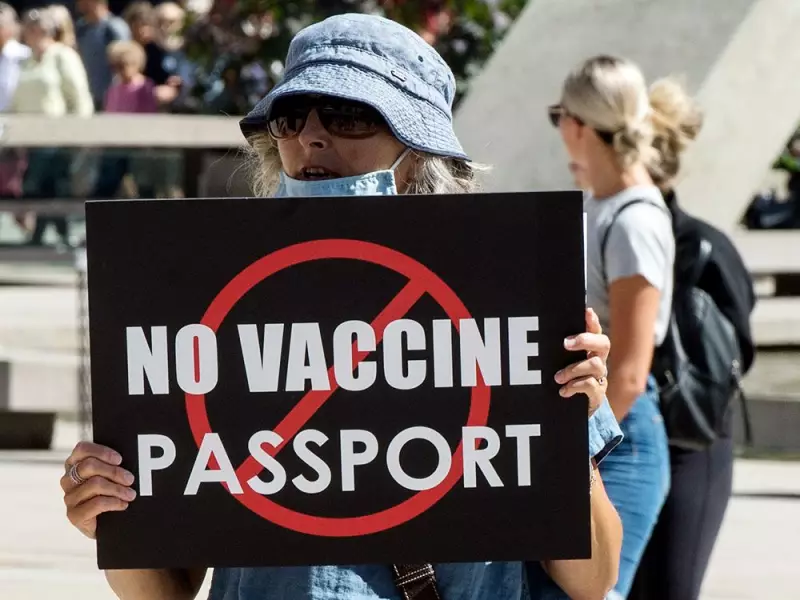
A new Canadian research paper is tackling one of the most divisive legacies of the COVID-19 pandemic: vaccine certificates. The study aims to establish clear conditions under which such proof-of-immunization requirements should—or should not—ever be deployed again in a future public health emergency.
The Ethical Flashpoint of Pandemic Policy
The paper, published in late 2025, directly engages with the profound ethical debates that erupted during the pandemic. Vaccine certificates, often in the form of scannable QR codes, became a central policy tool across Canada in 2021. They granted the fully vaccinated access to restaurants, theatres, and other indoor venues before being phased out in 2022.
These measures were unprecedented in modern Canada and proved intensely contentious. They fueled widespread protest, most notably the "Freedom Convoy" that saw truckers and others occupy downtown Ottawa for nearly a month in early 2022. Co-author Maxwell Smith, Director of Western University’s Centre for Bioethics, notes that the opposition was framed in ethical terms.

"If you look at some of the language used even during the convoy, it was ethics language. It was informed consent; it was around freedom and liberty and coercion," Smith said. "These are profoundly ethical ideas. We need to confront that these are the sorts of concerns that people have... We need to get ahead of them."
A Three-Factor Framework for Future Crises
The researchers argue that future pandemic preparedness must extend beyond stockpiling medical supplies and increasing hospital capacity. It must also grapple with the difficult ethical trade-offs highlighted by COVID-19. Their proposed framework suggests that the justification for vaccine certificates intensifies as three key factors increase:
- Pathogenicity: The severity of the illness caused by the virus.
- Prevalence: How widespread the virus is within the population.
- Vaccine Protection: The effectiveness of available vaccines at preventing serious harm and transmission.
"Higher scores for all three 'will provide stronger justification for trade-offs with liberty,'" wrote Smith and his co-authors, the University of Ottawa’s Cecile Bensimon and Dr. Kumanan Wilson. Conversely, lower levels across these factors diminish the ethical justification for implementing certificate systems.
Moving Beyond the COVID-19 Divide
The study, arriving as the world marks six years since the first reports of a mysterious viral pneumonia in Wuhan, China, on December 31, 2019, seeks to provide a rational tool for future decision-making. The World Health Organization estimates the pandemic has contributed to seven million deaths globally.
The authors contend their model could "quickly and clearly" dismiss arguments for certificates in some scenarios while offering "compelling reasons" to consider them in others. The crucial step, according to Smith, is for society to determine collectively what level of threat is "sufficiently" severe to warrant such measures. This proactive ethical planning, they conclude, is essential for navigating future pandemics with greater clarity and public trust.