President Donald Trump's unilateral decision to start a war with Iran has already cost Americans tens of billions of dollars in higher prices, and new government data suggests things are about to get even worse.
Wholesale Prices Surge
The Producer Price Index, which measures wholesale costs paid by businesses that are then passed along to consumers, came in Wednesday at the highest level since early 2022: a 1.4% increase over March and a whopping 6% jump since last April.
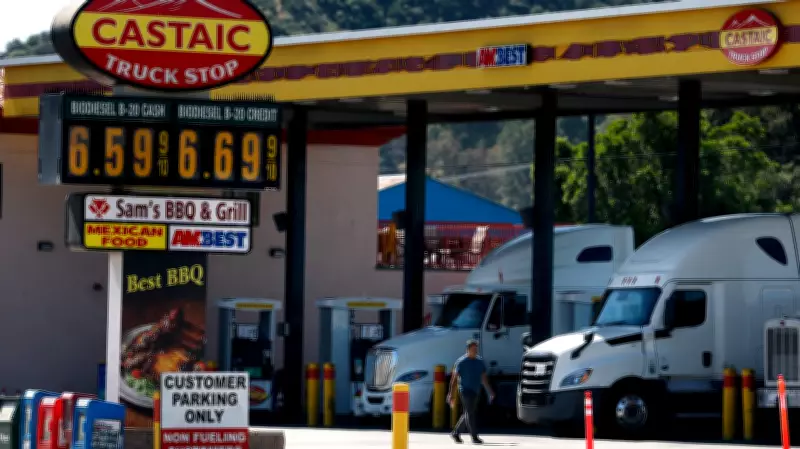
A big driver in wholesale prices was diesel fuel, which is used by both trains and trucks — meaning virtually every product in America becomes more expensive as diesel costs increase. Diesel now costs $1.80 more per gallon than it did before the war began, a 50% increase.

University of Michigan economist Justin Wolfers said prices that businesses pay are a leading indicator of what's ahead for consumers.
Some of those price hikes are already visible to Americans at grocery stores, retailers and certainly at gas stations.
Consumer Inflation Hits 3.8%
On Tuesday, the Consumer Price Index, which measures the costs that everyday Americans pay for goods and services, came in at a 3.8% increase over the past 12 months, a level also not seen in three years.
With most Americans driving cars to get around, the country typically goes through 370 million gallons of gasoline a day. With the price a dollar and a half per gallon higher than before Feb. 28, the war is now costing drivers more than half a billion dollars a day in the aggregate just for gas.
The war has now gone on for 74 days, and a Brown University analysis estimates that, to date, Americans have cumulatively spent nearly $38 billion more on gasoline and diesel fuel since the war began.
Trump's False Claims
Trump, as he often does when facing bad news, simply lied about it and then claimed the problem would resolve itself as soon as the war against Iran ended.
He told reporters as he left the White House Tuesday on a trip to China: "My policies are working incredibly. If you go back to just before the war, for the last three months, inflation was at 1.7 percent."
The figures he cited for pre-war inflation, however, were not accurate. In reality, inflation in those months was running at 2.4% — about the same as it was in the final six months of 2024 under former President Joe Biden.
Inflation continued to remain under 3% in Trump's first two months in office, but then began to rise again after Trump started his trade war against the rest of the world in April 2025. It came down again in late 2025 after he backed off many of his massive tariffs against China, but then began increasing after he began attacking Iran on Feb. 28 and crude oil prices spiked as a result.
Political Fallout
Biden's approval ratings never recovered after the post-COVID economic recovery pushed inflation to 9% in 2022, and many Republicans fear Trump's current low ratings will drag them down in the coming midterm elections if prices, particularly for gasoline, remain high.
As he was running to regain the White House, Trump repeatedly claimed he would cut the price of energy, including gasoline and electricity, by at least 50% in his first year in office. He failed to keep that promise even before the Iran war increased energy costs to much higher levels than they had been on the day he retook office.