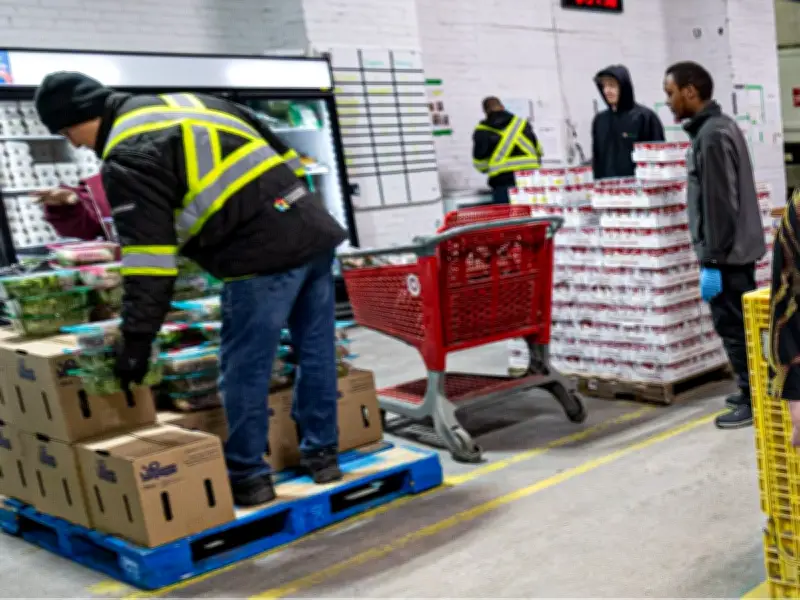
Schools in Saskatchewan will be wrapping up for the summer this month, leaving some children having to access food banks in lieu of school lunch programs. Laurie O’Connor, executive director of the Saskatoon Food Bank and Learning Centre, said they prepare for an influx of families with kids during the summer months.
“We have stubbornly high levels of child poverty in our province,” O’Connor said, adding that understanding why Saskatchewan has this problem — and tackling it — is essential. Families with children make up around 40 per cent of Saskatoon Food Bank users, while the national average is closer to one-third.
O’Connor noted that Saskatchewan has a fairly decent unemployment rate compared to other provinces, suggesting the economy is stronger, but more thought needs to be put toward keeping families fed and housed.

The Report Card
Food Banks Canada recently released its poverty report card for 2026. It found the issue is not solely tied to Saskatchewan, but overall, there is not much improvement. “A strong and resilient Canada can only exist when everyone can afford the food and essentials they need to achieve their full potential,” the report states. This requires fundamental changes to the labour market, housing market, social safety nets, and how food insecurity is addressed in northern communities.
“Too many people have incomes that do not meet the cost of living,” the report adds. Canada as a whole received a D+ on the report card. Saskatchewan received the same grade, beating out provinces like Alberta (D-) and New Brunswick (F). The highest grade was given to Quebec: C.
The most recent data from 2024 shows that Saskatchewan’s poverty rate (11.6 per cent) is higher than the national average (11.1 per cent). Overall unemployment rates are sitting at about six per cent nationally, but youth unemployment (ages 15 to 24) hit 13.8 per cent in March 2026 — one of the highest levels in decades.
Spending and Costs
The report also examined spending, showing that about 56 per cent of income from the average Canadian is spent on fixed costs outside of housing. That number jumped to more than 100 per cent when housing costs were included for lower-income households. Food and shelter costs have risen by 30 per cent since 2021, according to the report. It found that incomes and benefits have not kept pace with that increase.
“Governments have introduced a range of affordability measures, but these have not increased incomes at the scale required to close the gap,” the report states.
Food Insecurities
While Food Banks Canada’s report card shows small improvements in certain areas, O’Connor said “the things we’ve been talking about for a number of years now still exist for folks.” The persistent issues highlight the need for continued attention and action to address food insecurity and poverty in Saskatchewan and across Canada.