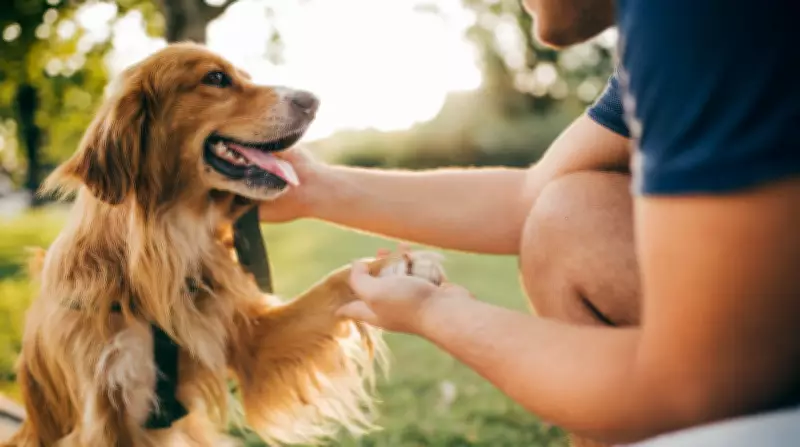
Most dog owners would likely love to know what their pet is thinking. Unfortunately, our dogs cannot tell us, so it can be challenging to determine if they are truly happy or simply adapting to their surroundings. While no one can read a dog's mind, veterinarians are the closest we have to dog interpreters. They indicate that certain behaviors and patterns can reveal if your dog is living a happy, content life. And no, tail-wagging does not necessarily mean your dog is full of glee.
Basic Needs Are Met
It is difficult to be joyful if your basic needs are not met, and the same applies to dogs. Dr. Kate Anderson, a veterinary behaviorist at Cornell University's Duffield Institute for Animal Behavior in New York, explained, "When I think of 'happy,' I think about welfare and that a dog has all their needs met. That idea goes back to the '60s." She referenced the five freedoms of animal welfare: freedom from hunger and thirst; freedom from discomfort; freedom from pain, injury, and disease; freedom to exhibit normal behavior; and freedom from fear and distress. Anderson noted that today's understanding of dog happiness goes beyond these simple criteria, but having basic needs met is a step in the right direction.
Relaxed Body Language
"Happy dogs should have very loose body language," Anderson said. "They should not have any tension. Their ears should not be pulled back. You should not see the whites of their eyes. Their tail should be at a normal angle to their body, depending on breed, or just relaxed." Dr. Kristi Flynn, a primary care veterinarian at the University of Minnesota's College of Veterinary Medicine, added that a dog's weight should be evenly distributed on all four limbs, without leaning back or holding a paw up. "We can think of dogs just laying out in the yard in the sun, on their side with their body all relaxed. That, to me, is a sign of a happy or content dog," Flynn said. Anderson added that a dog is likely happy if their movements are "loose and they look like noodles."

Relaxed Facial Expressions
Dogs and humans share similar facial muscles, Flynn explained, so certain expressions can show contentment. These include the absence of a furrowed brow and a relaxed look around the eyes and mouth. When you are upset, your mouth may droop and your eyes may squint. Similarly, a calm, relaxed facial expression in your dog indicates a good mood.
Consistent Routine
Like toddlers and young children, dogs prefer predictability, Anderson said. "It is not that they do not want novelty and excitement, but they do not want the whole world to be constantly different." The toughest times for dogs are when human schedules change, such as during holidays, big trips, or a return to the office. While vacations are allowed and schedule changes are sometimes unavoidable, sticking to a routine as much as possible and establishing a new routine when change occurs is important.
Enrichment Activities
Providing your dog with plenty of exercise is important for weight management and enrichment. "I categorize exercise under enrichment, and enrichment is a really broad topic. It is kind of the things in your life that are your self-care," Anderson explained. Mental stimulation, such as puzzle toys or training classes, also counts. "I advocate for and use evidence-based, humane training methods with my dogs and recommend that clients and pet owners use the same, just because it shows that it reduces stress and conflict," Flynn said. Training keeps a dog's mind sharp regardless of age. "That can really bring them joy, and it is a great way to bond with your pet and strengthen that relationship," Flynn added.

Owner Advocacy
Your dog may exhibit body language showing how they feel, but they cannot tell someone to back off. You can. It is okay to voice your dog's comforts and discomforts to others, whether loved ones or strangers, Flynn said. All dogs have unique personalities; some are social, others introverted. If you have a shy dog, advocate by letting people know your pet's preferences, such as asking strangers not to pet your dog or telling friends to leave your dog alone when they visit. "It can be hard to manage the social pressure from the human side and make sure that your dog is comfortable. I think sometimes I have inadvertently let my dog be in a position where he was not as comfortable as he could have been," Flynn said. She added that giving dogs space and respecting their boundaries is important. Just as humans have preferences, dogs do too. Forcing your pet to go against their natural instincts or personality takes away from their joy.