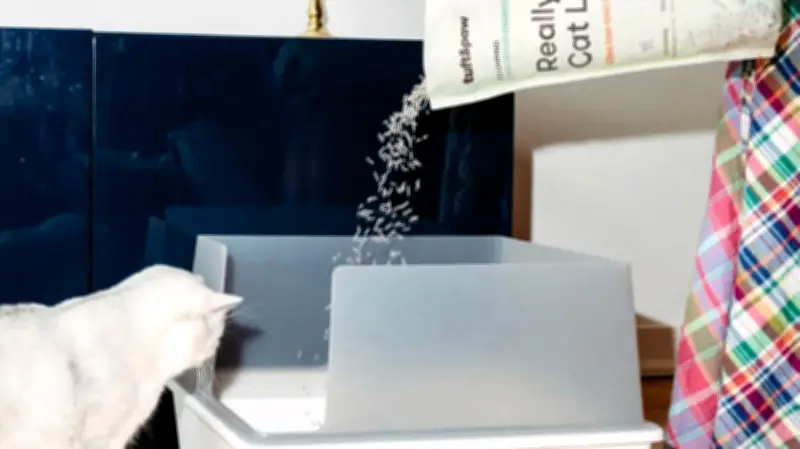
For most of my life, I have been a cat owner, which means I am highly familiar with all aspects of cat litter: what makes a particular formula good, unfavorable, or even less safe. However, after testing numerous litter materials, textures, and gimmicky promises, I had never encountered tofu litter until recently. This type of litter claims to be a superior and safer alternative for both me and my pet.
What Is Tofu Litter?
According to Dr. Jennifer Taketani, a veterinarian and medical director at Corona Del Mar Animal Hospital, a Thrive Pet Healthcare partner, tofu litter is not actually made from tofu but from the byproducts of its manufacturing. These include food-grade byproducts such as soy, pea, and cornstarch, making the litter all-natural, non-toxic, biodegradable, and even flushable. Taketani states, "Most cats are smart enough not to eat litter in general, but if they do, no worries with this product."
How Does It Work?
First developed and patented in Japan in 1995, tofu litter uses soy or pea fibers to absorb liquid and bind with natural starches, forming a solid clump around urine or feces. These clumps can be easily removed, leaving cleaner litter and reducing the risk of conditions like urinary tract infections for your cat. Taketani notes that "the clumping ability seems similar to that of clay litter," and adds that "tofu litter claims to be better at odor neutralization than traditional litter, as it traps odors without strong artificial scents."

User Experiences
One Amazon customer who works in veterinary medicine switched to tofu litter and called it a "game-changer." By the third day without scooping, they still could not detect any odor, a stark contrast to their previous clay litter experience. According to Taketani, "This litter is also ultra-low dust, improving indoor air quality and respiratory health for cats and their people." She attributes the reduced dust to the pellet shape of tofu litter, which also means no dusty paw prints tracked around the house.
Benefits and Options
Tofu litter is lighter than traditional 40-pound boxes of bentonite clay-based litters, making it easier to handle. Many tofu litters are similar, but several options cater to different litter box types, budgets, and preferences. Below are some recommended products (experts do not necessarily endorse these unless noted).
1. Vetreska Tofu Cat Litter
This deodorizing litter features added 5% deodorizing beads for effective odor neutralization. Made from corn starch and pea dregs, it offers low dust, strong and instant clumping, and high hardness to prevent mess at the bottom of the box. Available in scents like natural cherry blossom extract. Two bags: $28 at Amazon; single bag: $8+ (with auto-shipping) at Chewy.
2. Four Paws Cat Litter
Made with pea powder and edible starch, this litter promises low tracking, lightweight, and no sticking to fur. The green tea fragrance contains antibacterial and deodorizing ingredients. Safe for flushing but not compatible with automatic litter boxes. $15 at Amazon.
3. Pidan Tofu Litter
This 100% dust-free litter uses a blend of soy and pea pulp fiber, cassava-wheat-corn starch, and flour for "sponge-like absorption." It offers no dust, low tracking, good clumping, and excellent odor control. Features two different-sized elongated pellets for tight and solid clumping. Also available in a 70%-30% tofu and clay blend. $16+ at Amazon, Chewy, and Petco.
4. Michu Tofu Litter
This Australian-founded brand offers a recognizable formula in a wide array of scents, including peach, watermelon, and coffee (unscented also available). Made from natural peas, it is 99.9% dust-free, traps liquids fast, and forms sturdy clumps that won't crumble when scooped. $19+ at Amazon, Chewy, and Petco.
5. Happy & Polly Tofu Litter
Perfect for multi-cat homes, this litter comes in economy sizes up to 20-pound buckets with scented and unscented options. Made from food-grade pea fiber and corn starch, it uses a three-step elimination process for superior odor control. $13+ (with auto-shipping) at Chewy.
This story was originally published on HuffPost at an earlier date.