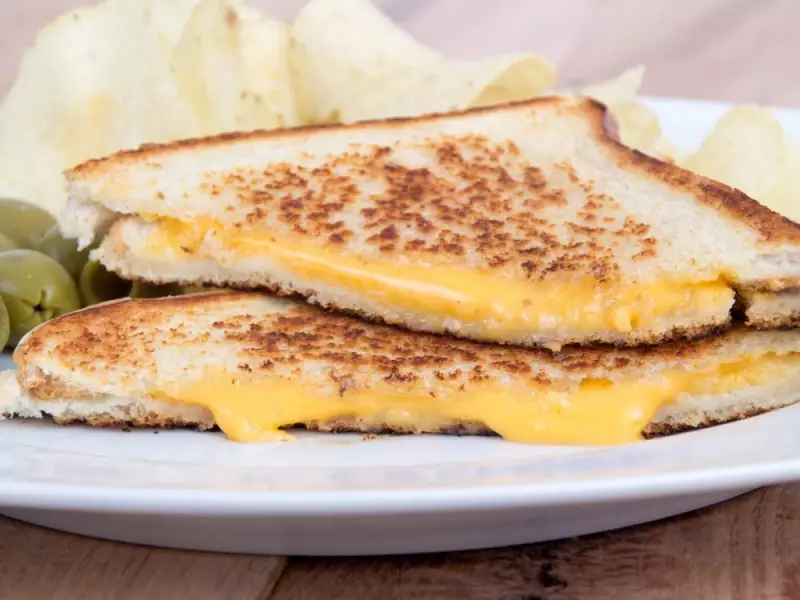
A recent Swedish study suggesting a link between eating high-fat cheese and a reduced risk of dementia has captured headlines, but a leading Canadian scientist is urging the public to take the findings with a large grain of salt. Dr. Joe Schwarcz, director of McGill University’s Office for Science and Society, dissects the research and separates the science from the sensationalism.
The Dementia and Cheese Study: A Closer Look
The study, published in the journal Neurology, followed participants for up to 25 years. It concluded that people who consumed 50 grams or more of high-fat cheese daily had a 13 per cent lower risk of dementia compared to those who ate less than 15 grams. This finding sparked a media frenzy, with many outlets proclaiming cheese as a new brain-health food.
However, Schwarcz points to several critical limitations. "What we have here is yet another paper destined to be tossed on the growing heap of nutritional studies that may have been properly carried out as far as methodology goes, but have essentially no practical significance," he writes.

The statistical significance of the results is borderline, and the study relied on food frequency questionnaires filled out only once at the beginning of the decades-long trial, assuming diets remained unchanged. Most tellingly, the greatest reduction in dementia risk was seen in subjects who not only ate more cheese but also reduced their intake of processed and red meat. This suggests the benefit may stem from what they stopped eating, not what they started.
Deconstructing the Daily Grilled Cheese
So, does this mean a daily grilled cheese sandwich is a ticket to cognitive health? Schwarcz is skeptical. "I don’t think its 50-gram content of cheese is going to have an impact on the risk of dementia, especially given that daily consumption over decades is an unlikely scenario," he states.
He also addresses health concerns about the sandwich's saturated fat content. While saturated fat can raise LDL cholesterol, recent meta-analyses have not found clear evidence linking it directly to a greater risk of coronary heart disease. Cheese consumption itself isn't strongly linked to higher cardiovascular disease, possibly because its fat is trapped in a protein matrix, leading to poorer absorption.
The Perfect Grilled Cheese: A Matter of Chemistry
With health concerns addressed, Schwarcz turns to the art and science of crafting the perfect sandwich. The goal is perfectly melted cheese and golden, unburned bread.
The classic choices are cheddar or American processed cheese because they melt smoothly without protein clumping. Cheese melting is a matter of chemistry: fat trapped in a network of proteins held together by calcium ions. Heat breaks some calcium bridges, letting proteins move freely and act as emulsifiers. Too many broken bridges, however, causes clumping.
The ideal pH for smooth melting is between 5.3 and 5.5, achieved through the cheddaring process. American cheese is made by "processing" cheddar with sodium citrate or phosphate, which replaces calcium and ensures a consistently smooth melt. "Although processed cheese is often denigrated by food snobs, the fact is that there is no nutritional difference between it and regular cheese," Schwarcz notes.
For enhanced flavour, add grated Parmesan or Gruyère to the cheddar. For the bread, seek out a great sourdough loaf. Schwarcz recommends coating the outside with butter and a layer of mayonnaise blended with grated Parmesan. The butter aids heat transfer, while the mayo's amino acids engage in the Maillard reaction with the bread's sugars, creating the desirable brown colour and complex flavours.
Cook on medium-low heat, flipping after about three minutes when golden brown. The final touch? "The diagonal cut maximizes exposed surface area meaning that more volatile compounds reach the nose per bite, which the brain interprets as 'better taste,'" Schwarcz explains.
While your sandwich is unlikely to fetch $28,000 on eBay like a famous Virgin Mary-shaped one did in 2004, following this scientific guidance will ensure it is, at the very least, profitable to the palate.