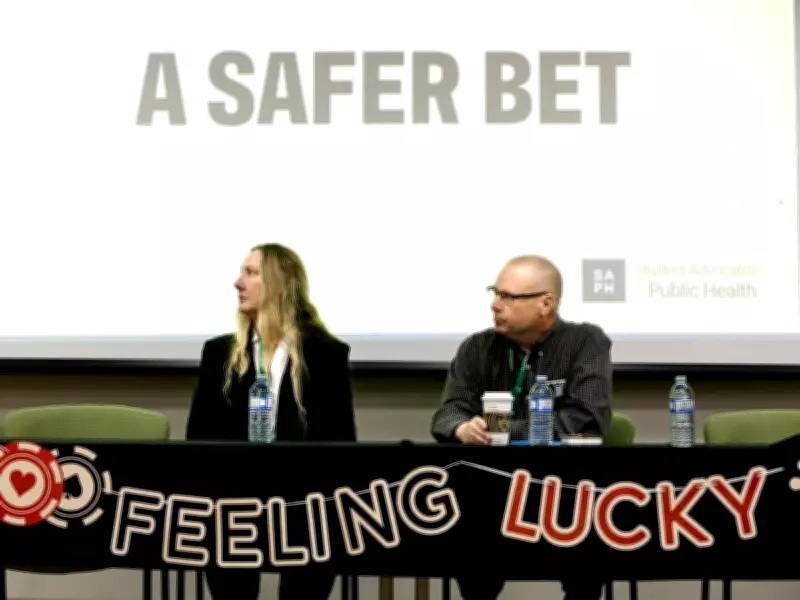
As Alberta advances its online betting and gambling privatization efforts through Bill 48, a coalition of University of Alberta students is mobilizing to demand a comprehensive ban on all online gambling advertising. The Student Advocates for Public Health (SAPH) argue that the province should not compromise mental well-being for potential revenue gains, emphasizing the urgent need for enhanced protective measures.
Student-Led Advocacy for Public Health
The SAPH group, based at the University of Alberta in Edmonton, recently hosted an expert panel discussion to address the escalating concerns surrounding online gambling. Dr. Carrie Shaw and Leif Gregersen participated in this critical dialogue, which focused on the intersection of gambling expansion and public health risks. The students are calling for significant reforms, including lower betting caps—reducing the current limit of $20,000 per event—and the implementation of more robust safeguards to prevent addiction and financial harm.
Mental Health and Gambling: A Vicious Cycle
SAPH team member Sarah Toay highlighted the dangerous links between problem gambling and mental disorders. "There are clear connections between gambling addiction and mental health issues," Toay explained. "The stress from debt and compulsive behaviors can trap individuals in a downward spiral, isolating them from support networks and exacerbating existing conditions. Whether mental disorders or gambling come first is irrelevant—it's exploitative either way." The group warns that gambling-adjacent activities, such as 50/50 fundraisers and video games, often present betting in a deceptively fun or charitable light, potentially priming younger audiences for future engagement.

Targeting Celebrity Endorsements and Advertising
In a bold move, the SAPH team sent an open letter to Edmonton Oilers captain Connor McDavid and the team, urging them to reconsider their partnerships with online gambling companies like BetMGM. The advertisements, which feature McDavid and other players in playful scenarios, briefly mention responsible gambling tools but are criticized for normalizing high-risk behavior. "Online gambling companies deliberately partner with athletes to build credibility and attract younger audiences," the letter states. "This marketing strategy is designed to create new gamblers, not cater to existing ones, and it dangerously downplays the risks involved."
Comparisons to Tobacco and Real-World Impacts
SAPH member Thomas Anglin drew a stark comparison between gambling advertising and historical tobacco marketing. "We don't see cigarette ads at hockey games anymore because we recognized the harm in targeting kids," Anglin noted. "Similarly, gambling ads normalize and invite young people into a harmful system, regardless of intent." Reflecting on his experience in the contracting industry, Anglin shared anecdotes of young men with modest incomes losing hundreds of dollars within seconds during hockey games, underscoring the real-world financial and emotional toll.
Provincial Revenue vs. Public Health Costs
While the province anticipates significant revenue from the expanded gambling market, similar to Ontario's experience, students question the long-term costs. "More cash for provincial coffers is great, but at what cost to mental health and community well-being?" Anglin remarked. The SAPH advocates for a balanced approach that prioritizes public health over profit, urging policymakers to reconsider Bill 48's implications and implement stricter regulations to protect vulnerable populations.
The ongoing debate highlights a growing tension between economic incentives and ethical responsibilities, with University of Alberta students at the forefront of advocating for a safer, more responsible gambling framework in Alberta.