The Hidden Health Hazard of Your Desk Job: How Sitting Wrecks Your Hips
You might want to stand up and stretch while reading this. Research has definitively shown that prolonged sitting is detrimental to our health, linking it to serious conditions like high blood pressure, heart disease, and diabetes. But could it also be the culprit behind that nagging back pain or the knee discomfort that flares up during a jog?
While back and knee pain have multiple causes, spending all day seated at a desk job is a significant contributing factor. Here is what you need to understand about this modern health issue.
Why Sitting Tightens Your Hip Flexors
Sitting for extended periods can lead to tight hip flexor muscles. Dr. Michael Fredericson, a professor of sports medicine and director of Stanford Lifestyle Medicine in California, explains: "A lot depends on your sitting posture, but essentially, prolonged sitting places your iliopsoas—your primary hip flexor—into a shortened position."

Hip flexors are a muscle group that enables you to lift your knee and are engaged when stepping up or bending forward. "If you remain in that position for seven or eight hours daily, it becomes chronically tight, resulting in what we term passive muscle stiffness," Fredericson adds.
This issue is not exclusive to desk workers. Brian Kracyla, a physical therapist and owner of Cloudline Physical Therapy in Philadelphia, notes it is also common among runners and cyclists.
Melanie McNeal, physical and occupational therapy manager at Baylor College of Medicine in Texas, emphasizes its prevalence: "Most everyone has tight hip flexors because we are a society that sits a lot, making it a huge issue." She points out that men are often more affected "because males tend to be tighter than females overall."
How Tight Hip Flexors Lead to Pain
Tight hip flexors can cause pain and mobility problems that many people do not associate with their hips. One common issue is knee pain. McNeal states, "If your hip flexor is tight, it compresses your kneecap (patella), which can cause knee pain, especially during activities like jogging, running, or fast walking."
Kracyla adds that tight hip flexors shorten your stride length when walking or running, contributing to the shuffling gait often seen in older adults.
Posture problems and back pain are also consequences. "You will experience an anterior pelvic tilt, increasing the curve of your spine in the back," Kracyla explains. "This often manifests as lumbar extension compensation, leading to more low-back stiffness during activity due to tight hip flexors."
Fredericson notes, "That is why stretching the hip flexors frequently alleviates back pain for many people."
Better Sitting Habits and Movement Breaks
For those with desk jobs and long commutes, avoiding prolonged sitting is challenging. However, improving how you sit can make a difference. The problem, according to Fredericson, is the slouching and slumping common when using computers, tablets, or phones, rather than actively engaging core and postural muscles to maintain a neutral pelvic position.
"When slouched all day, hip flexors stay in a chronically shortened position," Fredericson says. "But people with better posture keep their pelvis in a more neutral position, engaging muscles for what we call active sitting."
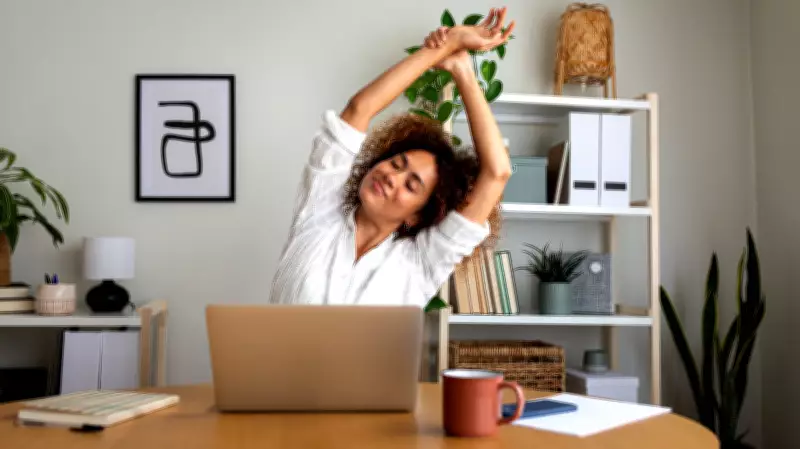
Beyond posture, it is crucial to stand and move for at least five minutes every half-hour. Fredericson recommends activities like walking, grabbing a snack, stretching, or using a walking pad during calls. "This benefits not only your hip flexors and flexibility but also your entire metabolic system. People who do this have lower blood pressure and fewer cardiovascular risk factors," he asserts.
Exercise Alone Is Not Enough
While exercise is beneficial, hitting the gym after sitting eight hours daily, five days a week, does not fully counteract inactivity. "You might falsely believe you are in great shape from gym sessions, but sitting all day still takes a toll—it does not work that way," Fredericson cautions.

This does not diminish the value of exercise. For optimal body function, combine good sitting posture, regular movement breaks, and a consistent exercise regimen. "The more active we can be, the fewer problems we have," McNeal summarizes.
Treating Tight Hip Flexors
Addressing tight hip flexors requires a multi-pronged approach, Kracyla advises, including stretching, mobility work, and strength training. According to the Hospital for Special Surgery, effective stretches include:
- The half-kneeling stretch
- The 90/90 stretch
- Child’s pose
- Low-lunge stretch
McNeal stresses that brief stretches are insufficient: aim to hold each stretch for 30 seconds and repeat it three times.
If you experience pain or difficulty with movement or stretching, consult a doctor to see if physical therapy could help. "There is nuance to it," Kracyla says, "and often requires a clinical eye for proper treatment prescription."