Therapist Insights: Why Influencer Silence on ICE Violence Sparks Public Outrage
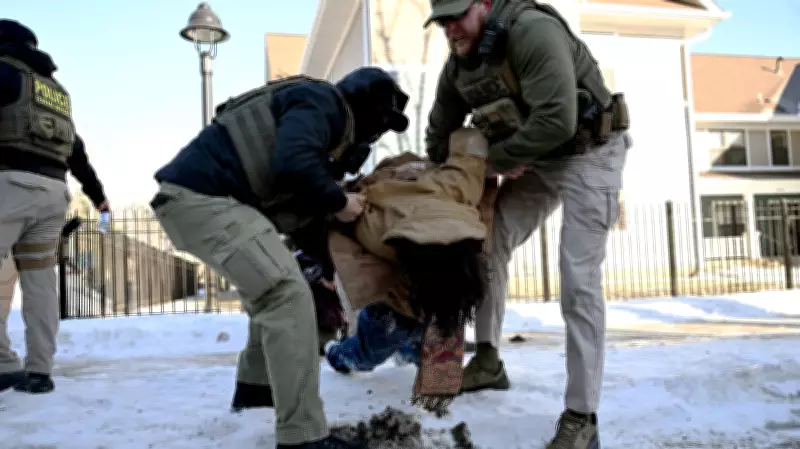
Scrolling through comment sections on prominent social media influencers' posts currently reveals a consistent pattern: followers are demanding statements about U.S. Immigration and Customs Enforcement (ICE) actions. The public outcry stems from documented incidents involving the killing of American citizens, family separations, and detainments—including children—by ICE officers. Many are urging content creators with substantial platforms to condemn this violence and mistreatment directly.
Yet numerous influencers continue posting regular content or sharing vague, apolitical messages that avoid addressing the situation. A recurring justification emerges: maintaining accounts as "light" spaces or declaring "I don't 'do' politics." Mental health professionals confirm that feeling anger and disappointment toward this silence is completely natural, even when followers don't personally know the creators they follow.
Parasocial Attachments and Relational Abandonment
"Your relationship to an influencer in the psych world, we kind of think about it as a parasocial attachment figure," explained Emma Shandy Anway, a licensed marriage and family therapist based in California and owner of ESA Counseling Services. "These are people that we don't really actually know, but we trust them and we admire them."

When someone you feel attached to remains silent during periods of "collective universal harm," it creates feelings of relational abandonment, Shandy Anway added. Influencers who have supported followers through personal milestones—breakups, pregnancies, travels, home renovations—suddenly become absent during crucial societal moments. This dynamic explains why rage toward silent creators burns more intensely during current political conflicts compared to previous ones.
Silence as Implicit Alignment with Power
"Silence can read as an alignment with power," said Meghan Watson, founder and clinical director of Bloom Psychology & Wellness in Toronto. When individuals don't speak out, others reasonably interpret this as agreement with ongoing events.
"A lot of what we've been seeing with ICE is a complete abuse of power—that almost seems a bit weak to say, it's more than just an abuse of power. It's a degradation of humanity and the norms of engagement in society," Watson emphasized.
This behavior has fundamentally altered how people interact with power structures, she noted. As communities become more vocal, they expect brands, celebrities, and influencers to join them. "When you are silent, that implicit alignment with the power ... is, I think, anger-inducing to a lot of people," Watson observed.
Emma Mahony, a therapist practicing in Pennsylvania and the U.K., highlighted that influencers typically maintain remarkable transparency about their personal lives—relationships, skincare routines, health issues. When this transparency becomes opaque during humanitarian crises, followers who have come to expect honesty and shared values experience profound frustration.
The Problematic Nature of Neutrality
While some influencers choose complete silence regarding ICE controversies, others attempt "neutral" positions that prove equally troubling to their audiences. Consider TikTok influencer Taylor Frankie Paul, star of Hulu's "The Secret Lives of Mormon Wives" and ABC's upcoming "The Bachelorette" season. Her statement comparing the murder of Alex Pretti by Border Patrol agents to Charlie Kirk's murder—"both were devastating to watch. Both are not okay"—drew sharp criticism.
Social media responses included: "This is human rights, girl!! not silly little MomTok drama!!" and "She said a whole lot of nothing." Other creators have posted variations of "I usually don't post about politics because I like to create a joyful place for my followers" or "I don't want politics to divide us." Therapists confirm these approaches can be as problematic as outright silence.
"Neutrality is one of those things that really requires a distance from harm," Shandy Anway explained. "You can afford not to engage." This stance essentially communicates "I'm not at risk" and "I don't have to have a feeling about this," representing significant privilege, she added.

While families endure confrontations and communities worry about neighbors, watching influencers share clothing hauls creates cognitive dissonance. "There's relational ruptures when creators or influencers don't use their influence in the way that an audience expects, or their values diverge," Watson said. "When people are facing execution, detention, deportation, family separation, extreme trauma, this 'both sides' conversation language feels like an erasure of lived harm."
Watson further noted that neutrality is only possible when individuals themselves face no risk, which intensifies the rupture many feel with influencers currently. "It feels like people aren't just angry. They're really grieving a values mismatch and they're setting expectations around participation in developing a moral and just society with those who have influence," she described.
Broken Trust and Community Betrayal
Influencers regularly thank followers for support, but silence or neutrality during immense harm reveals the limits of that gratitude. Common refrains like "Pre-order my cookbook!" or "Use my discount code to buy these pajamas!" demonstrate how creators rely on followers' compliance for income. Without communities engaging with posts and purchasing recommended products, influencers would cease to exist. Mahony identified this as central to current social media anger.
"These are people whose careers and followings have benefited off of community ... but when it comes to that person showing collective support back to other people, [some] are unwilling to do that," Mahony stated.
Watson emphasized that influencers differ from traditional celebrities—they were elevated from "regular people" to their status through follower support. When someone refuses to support their community, "it almost feels like the door closed behind them, not just literally, but systematically, too. They're disinterested in the people that built their platform," Watson said. "Whether that's for monetary reasons or for just their pure political beliefs, it's very disheartening to see someone make that decision that their community matters up to an extent."
This dynamic breaks trust fundamentally, Mahony noted. Followers who have spent years adhering to parenting or skincare advice now question their alignment with these creators. "It does make you question the authenticity of the person," Shandy Anway confirmed.
The Responsibility of Influence
Influencers participate in a forum of reciprocity, according to Watson. They exchange knowledge and taste for follows, likes, and purchases. "From an influencer perspective, I think if you are going to participate in the marketplace of exchange, you need to be prepared to give," she asserted.
"If you are asking people to give time, attention, money, energy, in exchange for influence and power and access and privilege and voice, that voice may be asked—demanded, in fact—of you to be used to support the people that got you to where you are," Watson elaborated.
While speaking up during current events is crucial, therapists acknowledge this responsibility extends beyond immediate moments. "As a Black woman, I do see a lot of content from people of color on my feed, especially ... Black people who are really commenting on the ways in which there is just a lot of shock from the communities around them," Watson shared.
Posts declaring "this isn't the America I know" have become ubiquitous, yet for many communities, this statement lacks truth. "It almost feels like a sick joke," Watson expressed. "I don't know a single Black person that is unsurprised by this. I don't know a single Palestinian that's unsurprised by this—we watched people get executed on the world stage for years, and everyone seemed to be OK with it, but now it's impacting a different intersection."
Watson stressed this perspective doesn't diminish the value of recent lives lost—including Renee Good and Alex Pretti—but noted that Keith Porter, a Black man fatally shot by an off-duty ICE officer on New Year's Eve, receives less recognition. "Even when you're demanding people speak out, the context to which they speak out is also extremely disappointing, because they have been executing Black people in the streets for years and years and years in the United States, since the history of the country," Watson reflected. "We're kind of now ready to fight. It wasn't a five-alarm fire then, but it's a five-alarm fire now."