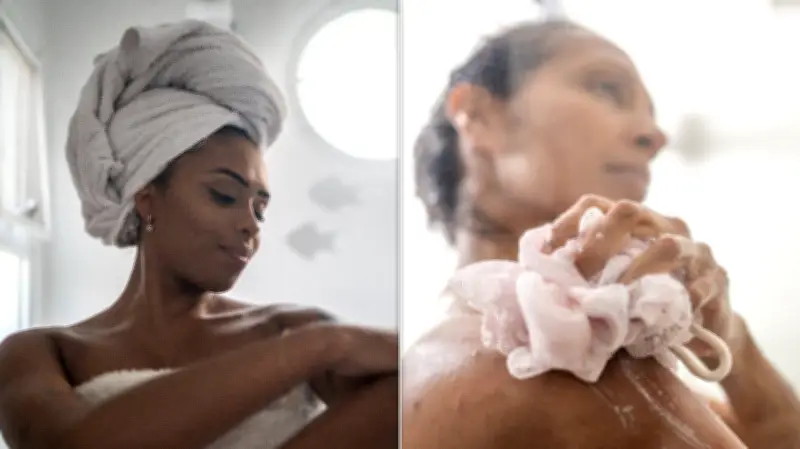
Washcloths and loofahs are common in bathrooms, hotels, and gyms, helping people feel deeply clean and spread soap suds. However, dermatologists tell HuffPost these tools are not necessary and may not be the best cleaning method.
Hands Are the Safest and Most Effective Option
Dr. Lauren Taglia, a dermatologist with Northwestern Medicine Regional Medical Group in Illinois, said, “I think most dermatologists would favor washing with the hand over, say, washcloth versus say loofah, just as an across-the-board recommendation.” Dr. Katie Lynam, an assistant professor of dermatology at the Medical University of South Carolina, agreed, noting that while there is no single right or wrong way, she recommends hands for cleaning.
Hands provide optimal pressure for washing with bar or liquid soap, according to Taglia. Additionally, “if the [hands have] been cleansed prior to washing the body, we know that it’s less likely to transfer, say, bacteria or other potential infection,” she explained.

Protecting the Skin Barrier
For people with sensitive skin, using hands can protect the skin barrier, Lynam noted. “Whereas using things like a washcloth or a loofah can disrupt the skin barrier by essentially over exfoliating and starting to disrupt this barrier called the stratum corneum that keeps pathogens and dirt and things out of the inside of our skin, and also holds good things like water in.”
Loofahs are rarely washed and can harbor bacteria, increasing infection risk, especially for those with compromised skin barriers. Taglia, who has eczema, said, “We worry about infection risk with loofahs, and same thing for people who are more breakout- or acne-prone or prone to cysts or boils ... if you’re not washing [the loofah] between each and every wash, then we recommend that you don’t use it.”
Lynam added, “For most of my patients that I treat for eczema, psoriasis, patients with sensitive skin, more mature skin, and then infants as well, I’m recommending just cleansing with the hands.”
When a Washcloth Can Be Useful
Washcloths can be helpful for stuck-on dirt and grime, providing mild exfoliation to remove dead skin cells that cause roughness or bumps. However, they should not be used every day to avoid disrupting the skin barrier. Taglia recommends washing washcloths after each use; Lynam suggests at least weekly washing and proper drying—hung, not balled up—to prevent bacterial growth.
Chemical exfoliants like glycolic, lactic, or salicylic acid can be used once or twice a week instead. Lynam advises against physical exfoliants like scrubs with beads or grit, as they disrupt the skin barrier.
Adequate Clean Without Tools
Ultimately, hands alone provide an adequate clean for daily life. “You can usually get an adequate clean from our day-to-day with your hands,” Lynam said. Washing with hands is sufficient, just as handwashing with soap and water cleans hands effectively.