As I enter the eighth decade of my life, I find that I no longer want to kill anything. Anything at all. This realization struck me one recent night while brushing my teeth. A fly was buzzing around in its chaotic, seemingly aimless path, and I absent-mindedly swatted at it with my free hand. It was a lucky swat, sending the fly spiraling down into the sink drain hole. As it lay there, weakly flailing alongside the stopper, a perfect victim waiting to be washed away, I reached for the faucet handle—and stopped myself, feeling a twinge of misgiving.
About a fly. How did I come to this? Growing up in a family where hunting season meant putting food on the table, I often hunted with my father. I killed numerous creatures, including deer and antelope. I would join in field-dressing the carcasses—these were not fancy hunts with a guide; it was just my dad and me, bumping along snowy gravel roads in a battered Chevy pickup. I was immersed in the visceral aftermath, and whatever misgivings or remorse I had were overwhelmed by the work at hand.
A Childhood Shaped by Hunting
My father had no remorse. He grew up in northern Montana over a hundred years ago, one of eight children living on a homestead in a shack without electricity or running water. Hunting was an intrinsic part of life for him and his brothers—a never-ending exercise to bring home protein for a large family. Beyond that, they took joy in the act itself: the rush of pursuing, shooting, and killing. I know it's unbelievable to many, but for some, it's undeniably true. That's the dividing line between those who hunt and those who find it repulsive.

As a kid, I had none of the privations my dad experienced, but I was introduced early to that thrill of the hunt and the kill. In my childhood home, autumn meant football, Halloween, and deer season. Then the day came for me to leave. I went off to college in a big city and started a career in journalism, where co-workers were almost all anti-gun and anti-hunting. Within an otherwise like-minded bubble, I was an outlier who thought it was OK for a sane, trained person to own a gun and shoot an animal for food. I didn't hide my feelings, but I didn't advertise them either.
A Return to Hunting—and a Shift
This changed one September when an in-law who was a veteran hunter persuaded me to go deer-hunting with him. I thought it would be interesting to revisit the experience and reexamine the notion of the joy of hunting. I pitched a story to my newspaper's Sunday magazine editor, Jeffrey Klein, who signed off with enthusiasm. The story ended up being about the nature of hunting, with only a brief description of the few confused minutes when I shot a buck.
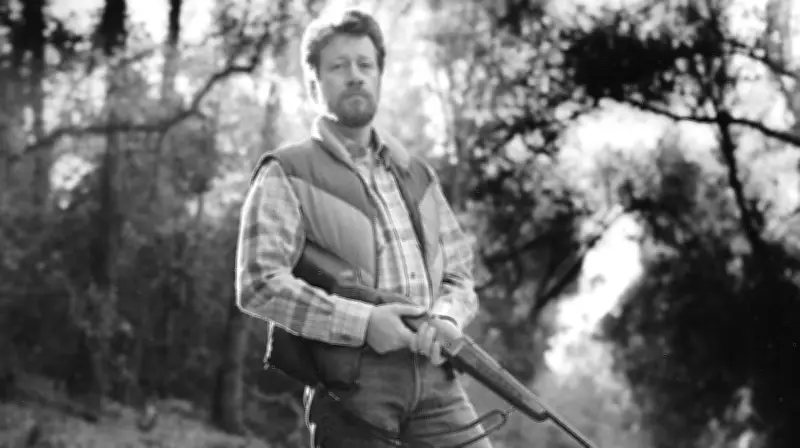
When published—with a photo of me carrying a rifle and wearing a scowl—it elicited hateful mail and a subtle shift among my colleagues. But the larger shift occurred internally. I brooded over the lapse between when the animal was struck and when it died. As someone with easy access to humanely processed protein, I asked myself: How could I justify that lapse just for a taste of some atavistic thrill? I couldn't. That realization started my transformation.
Gradual Change and Live-and-Let-Live
At first, the change was gradual. My wife and I live in a semi-rural area, so we have numerous critters. A horseshoer warned us about diurnal skunks, which he claimed are inevitably rabid. But one afternoon, a skunk appeared between my legs as I entered an outbuilding. It waddled under the building without emitting its usual odor—just a faint whiff. I felt no more inclined to shoot it than my own dog. That image awakened a sensibility of live-and-let-live.
Over time, there were more skunks, possums in the garage, raccoons, crows, and others. We cohabitated without incident, though the lawn and dog water bowls suffered. This became the rhythm of life for years.
From Live-and-Let-Live to Helping Everything Live
Then came a sudden intensification. I swung to where live-and-let-live became live-and-let-everything live—and help them live. There was the mouse the cat fetched indoors; I gently swept it into a dustpan and released it outside. Another mouse fell into the pool; I scooped it out. A wolf spider, a lizard, a hummingbird trapped in the garage—all relocated. Even a nest of yellowjackets was gingerly moved to the back pasture.

And then the fly, dazed at the sinkhole, my hand at the faucet handle, brought me back to the question: How did I come to this? Answer: I got old.
Facing Mortality at 70
After age 30, birthdays were inconsequential. But the 70th wasn't another day—it was the day. At 70, a gossamer notion became fact: Everybody must die—shockingly, even me. Facing this, I realized I had no interest in hastening others to their fate. I thought of Robert Burns' mouse: ...thy poor, earth-born companion, / An' fellow-mortal! On this earth, we fellow-mortals are all crowded onto one path to the same end. So don't let me rush you.
Some will remind me that there always will be blood. Old fools cannot change the dynamic of dog-eat-dog and kill-or-be-killed. Albert Schweitzer's 'Reverence for Life' is delusional. I'm unmanly, sentimental, weak. Yeah, I'm good with all that.
As for the fly: I wrapped it in tissue, took it outside, and laid it on the porch. The next morning, it was gone.