Regina Scientists Pioneer Novel Antibiotic Solutions to Combat Deadly Superbugs
Researchers at the University of Regina are spearheading groundbreaking work to address what they describe as one of the most pressing health crises of our era: antimicrobial resistance. This escalating threat, where bacteria evolve to withstand conventional antibiotic treatments, claims approximately 14,000 lives in Canada each year according to federal data.
Out-of-the-Box Thinking for Critical Health Challenges
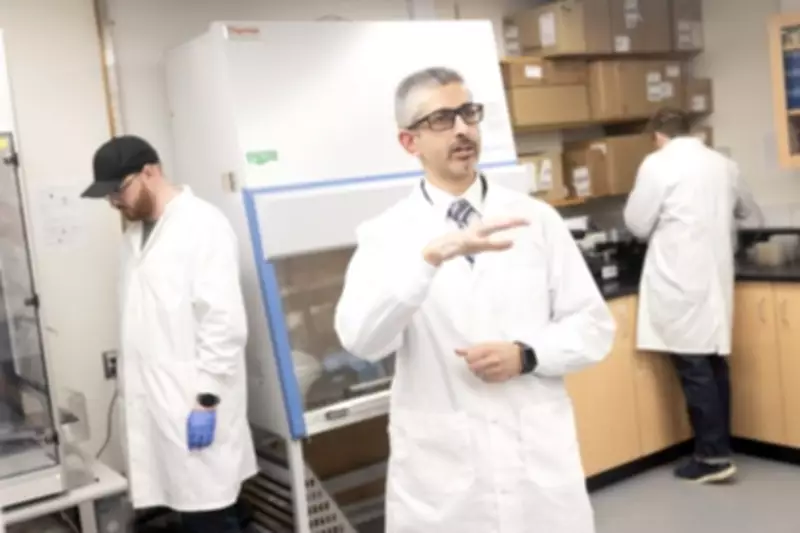
"We need out-of-the-box solutions. We cannot rely on the same solutions over and over," emphasized Dr. Omar El-Halfawy, an associate professor of biochemistry at the University of Regina and Canada Research Chair in Chemogenomics and AMR. His laboratory focuses exclusively on antimicrobial resistance, a problem that continues to spread globally as microbes develop sophisticated defenses against existing medications.
Dr. El-Halfawy's team has already achieved significant milestones, filing two patents in 2023 targeting priority pathogens. One discovery enhances the effectiveness of existing antibiotics, while another neutralizes harmful bacteria by disarming their defensive mechanisms. "We're punching above our weight," El-Halfawy noted with pride regarding his laboratory's accomplishments.

Strategic Funding for Cutting-Edge Research Infrastructure
Recent support from Innovation Saskatchewan, a provincial agency dedicated to advancing research initiatives, has provided $205,779 to upgrade the laboratory's capabilities. This investment enables the acquisition of specialized equipment that will dramatically enhance the team's research potential.
"This funding allows us to have those cutting-edge tools that makes us very competitive," El-Halfawy explained. The advanced technology will help replicate human physiological conditions more accurately, allowing researchers to study how infections circulate through blood streams and lung tissues with unprecedented precision.
Modernizing Outdated Treatment Approaches
The researcher highlighted that much current antimicrobial research relies on methodologies developed decades ago, with corresponding treatment medications similarly outdated. His laboratory aims to revolutionize this field by developing contemporary solutions that address modern bacterial threats.
"We continuously push the limit of the conditions we test," El-Halfawy stated. Rather than remaining reactive to bacterial infections, his objective is to position Canadian research and medicine proactively ahead of emerging threats.
Accelerating Pre-Clinical Testing Through Innovation
The laboratory's upgraded capabilities will facilitate more sophisticated safety testing using human cell cultures and enable researchers to mimic human biological systems more faithfully. This approach addresses a fundamental challenge in antibiotic development: substances that eliminate bacteria effectively in standard laboratory conditions often prove less effective within the complex environment of the human body.
"We know that we can easily kill bacteria in standard test conditions, but the issue is, is this going to translate to efficacy in our body or not?" El-Halfawy questioned. "So that's the key that we're after."
By improving pre-clinical testing accuracy, the research team hopes to accelerate the development of more effective drug treatments. El-Halfawy remains optimistic that his laboratory's discoveries will inspire pharmaceutical companies to update antibiotic formulations, potentially saving countless lives threatened by resistant infections.
Ultimately, the Regina-based research represents a vital front in the global battle against antimicrobial resistance, combining innovative thinking with advanced technology to develop solutions for one of humanity's most persistent health challenges.