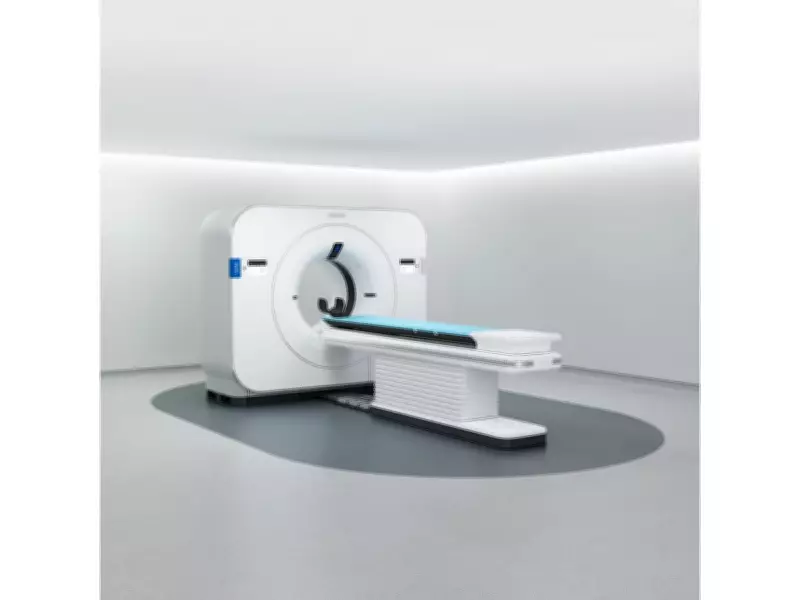
Royal Philips, a global leader in health technology, has achieved a significant milestone with the U.S. Food and Drug Administration granting 510(k) clearance for its Philips Spectral CT Verida system. This marks the introduction of the world's first AI-powered detector-based spectral CT to the United States, promising to revolutionize diagnostic imaging across multiple clinical fields.
Advancing Diagnostic Precision with AI Integration
The Verida system combines always-on spectral imaging with an AI-based deep learning reconstruction engine, designed to deliver enhanced image quality, efficiency, and clinical insight. This integration aims to reduce noise and improve clarity in CT applications, allowing clinicians to customize image de-noising according to their specific preferences.
Dan Xu, Business Leader of CT at Philips, emphasized the system's potential, stating, "With FDA clearance for Verida, we are bringing the next evolution of spectral CT to more markets. By combining always-on spectral imaging with AI-powered reconstruction, Verida enables clinicians to see more, first time right, supporting faster, more informed decisions and expanding the role of CT across clinical pathways."

Clinical Versatility and Efficiency
Built on Philips' industry-leading detector-based spectral CT technology, Verida enables always-on spectral imaging without requiring separate scans or workflow changes. The system reconstructs 145 images per second, allowing entire exams to appear in less than 30 seconds – twice as fast as previous models. This enhancement supports up to 270 exams daily, significantly boosting clinical throughput.
By capturing both high- and low-energy data in a single acquisition, clinicians can access conventional and spectral results simultaneously. This capability supports enhanced tissue characterization and material differentiation, eliminating the need for pre-selection or repeat scans and enabling first-time-right imaging across a broad range of applications.
Broad Clinical Applications
The Verida system is intended for diagnostic imaging in radiology, interventional radiology, and cardiology, as well as in oncology for treatment preparation and radiation therapy planning. It is indicated for head, whole body, cardiac, and vascular CT applications in patients of all ages. Additionally, the system can be used for low-dose CT lung cancer screening when performed within established protocols.
Extended field-of-view images and respiratory correlated scanning (4DCT) are specifically designed for treatment preparation and radiation therapy planning or simulation use only. The system's software and hardware enhancements, including improvements to the spectral result generation pipeline and updated computing infrastructure, are tailored to support clinical workflow and usability.
This FDA clearance represents a pivotal step in advancing medical imaging technology, with the potential to improve diagnostic accuracy and patient outcomes across diverse healthcare settings.