The Overlooked Giant of Montreal Neuroscience
When visitors enter the art deco doors of Montreal's renowned Neurological Institute, they encounter a pantheon of neuroscience greats: Alzheimer, Cajal, Sherrington, Pavlov, and of course, Wilder Penfield. The pioneering neurosurgeon's name graces a Montreal avenue, his likeness has appeared on postage stamps, and his revolutionary epilepsy treatments became iconic through Canadian heritage minutes.
Yet conspicuously absent from this celebration is Dr. William Cone, Penfield's longtime medical partner who co-founded the Neuro in 1934 and whose contributions have faded into obscurity despite being arguably as significant as those of his more famous colleague.
The Partnership That Built a World-Class Institution
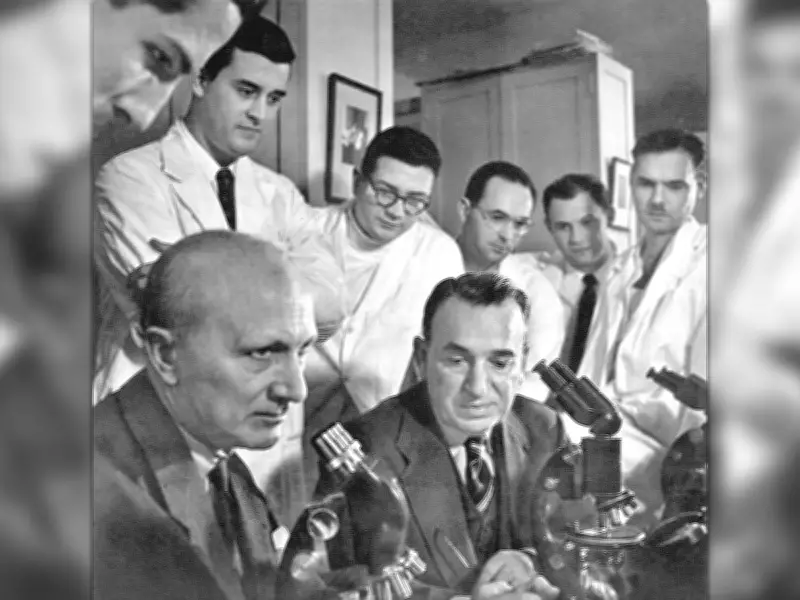
Journalist Eric Andrew-Gee's new book, The Mind Mappers: Friendship, Betrayal and the Obsessive Quest to Chart the Brain, sheds fresh light on the complex relationship between these two medical giants. The work reveals how the charming, brilliant Penfield came to eclipse the shy, workaholic Cone, despite their careers being deeply intertwined from their partnership's beginning in New York City through their recruitment to Montreal's Royal Victoria Hospital and McGill University in 1928.

"It doesn't get more cut and dry than the case of Cone. He was a hero by any standards," Andrew-Gee asserts during a tour of the institute his subjects helped create.
While Penfield developed the revolutionary "Montreal procedure" for treating epilepsy by stimulating conscious patients' brains, he relied heavily on Cone's precise surgical skills and meticulous infection control. The two worked "in double harness," with Cone handling the bulk of tumor removals, spinal cord injuries, and head traumas common in a city where hockey accidents, dangerous staircases, and mob violence created constant demand for neurosurgical expertise.
A Compassionate Surgeon and Global Mentor
Cone distinguished himself through both technical mastery and compassionate care. Unlike many surgeons of his era, he regularly visited hospital wards and assisted nurses with basic patient care tasks like changing bedpans and dressings. His bedside manner was particularly noted when treating children.
During World War II, Cone served as Canada's chief neurosurgeon, leading the No. 1 Neurological Hospital in England where he operated on Blitz victims. One of Britain's top neurosurgeons declared Cone the greatest surgeon he had ever witnessed.
Perhaps Cone's most enduring legacy lies in his mentorship. The Neuro under his guidance trained the first ten Indian neurosurgeons, some of the first Japanese neurosurgeons, the first Chinese neurosurgeon, the first two African-American neurosurgeons, and the first neurosurgeon in the Arab world. He broke barriers at a time when racism and discrimination limited medical education opportunities worldwide.
The Tragic End and Fading Memory
Cone's memory began to fade following his tragic death by suicide on May 4, 1959. The stigma surrounding mental health at the time meant the circumstances were hushed up, even as tributes poured in from around the globe and his passing made the New York Times.
Several factors contributed to Cone's diminished legacy. He was passed over as the Neuro's director when Penfield retired, preferring clinical work to administrative duties and research papers. This professional slight deeply wounded him and may have exacerbated existing mental health struggles.
"He had none of the instincts that build people a legacy in our world," Andrew-Gee observes, noting Cone's inventions went unpatented because he was too busy operating and didn't seek personal glory.
Enduring Contributions and Ghostly Presence
Cone's practical innovations continue serving patients today. His inflatable mattress for preventing bedsores during lengthy surgeries remains in use, as do various pneumatic drills, bone punches, and traction tongs he designed. These tools revolutionized neurosurgical practice worldwide.

Within the Neuro, some staff members believe Cone's spirit still inhabits the building. Unexplained noises from empty offices, phantom typing sounds, and even a spectral tap on a nurse's shoulder during an emergency have been attributed to the surgeon who died in the institution he helped create.
A 1954 mural titled The Advancement of Neurology captures the essence of the Penfield-Cone partnership. While Penfield gazes toward the horizon with arms extended, Cone focuses intently on the patient beside him—a perfect visual metaphor for their complementary approaches.
The Case for Recognition
Following Cone's death, colleagues established the Cone Laboratory of Neurological Research and the William Cone Professor of Neurosurgery position. Dr. William Feindel, the first to hold this professorship, used the resources to bring Montreal its first CT, MRI, and PET scanners, establishing the city as a global neuro-imaging leader.
Yet today, as the Neuro prepares to move to the MUHC Glen site, there appears to be institutional hesitation about formally recognizing Cone's contributions. Dr. Rolando Del Maestro suggests this reluctance stems from difficulty changing established historical narratives.
Andrew-Gee argues Cone deserves tangible recognition in Montreal, perhaps through a street name that would symbolically reunite the partners who mapped the human brain together. "He was a model Montrealer. Someone who embraced the city's global vocation, its diversity, its linguistic duality," the journalist contends. "He should be in the fabric of the city somewhere because it wouldn't be the place it is without him."
While Montreal's toponymy committee now prioritizes naming public spaces after women, minorities, and Indigenous figures, Cone's potential status as a closeted gay man in an intolerant era might strengthen his case for commemoration today. What remains clear is that William Cone's story represents more than historical footnote—it's a crucial chapter in Montreal's emergence as a world leader in neuroscience that deserves proper acknowledgment alongside his more celebrated partner.