Alex Hankin Hart lives with complex regional pain syndrome (CRPS), a condition the McGill Pain Index ranks as the most painful known to medicine. It is considered more painful than fibromyalgia, childbirth, or even amputating a finger without anesthesia. An estimated 200,000 Americans struggle with this chronic, debilitating condition, which has no cure.
A Life Altered by Pain
Hart's ordeal began in spring 2002 after a workplace football accident in Seattle left her with a fractured finger, sprained wrist, and damaged rotator cuff. Following cast removal, a simple act of washing her hands caused her to pass out from pain. She was diagnosed with CRPS, a condition where pain is far more severe and long-lasting than the initial injury. As the U.K.'s National Health Services explains, the skin can become so sensitive that a slight touch, bump, or temperature change causes intense pain, with swelling, stiffness, and color or temperature fluctuations.
Hart describes her baseline pain as feeling like her skin is on fire inside yet freezing outside, bones feel broken, and skin is so sensitive that wearing clothes or shoes is difficult. The simplest touch feels like being stabbed with a red-hot poker. Her condition has progressed from the original injury site to her entire body. The left side of her face feels like Mike Tyson is constantly punching her cheekbone; her arms are too sensitive for long sleeves; and her feet feel like walking on broken glass.

Daily Struggles and Flare-Ups
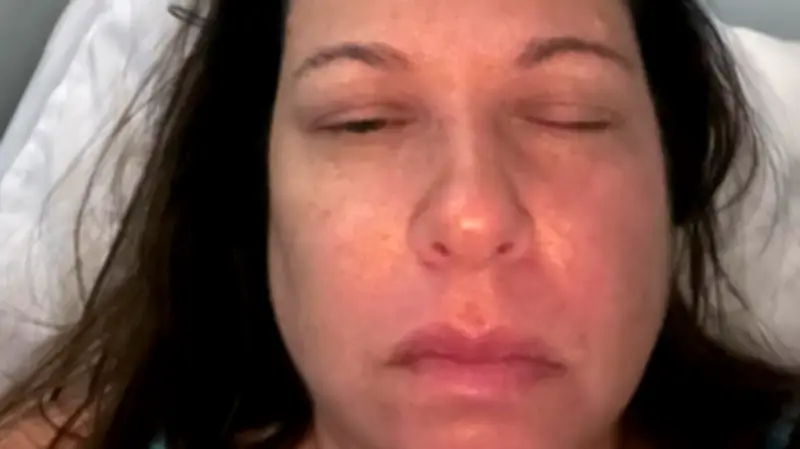
About twice a month, often due to weather changes or overexertion, Hart experiences severe pain flares. Her face swells, sometimes preventing her from seeing or eating. The pain in her feet becomes so excruciating that she can barely walk 20 steps to the bathroom. She uses cannabis to soften the pain about three times a day, but this prevents her from traveling to states where it is illegal, forcing her to miss vacations and family celebrations. During especially bad flares, she stays in bed for up to two weeks, missing her children's activities and canceling plans so often that friends stop inviting her.
Hart has tried numerous treatments without lasting success: Lyrica, gabapentin, naltrexone, PTSD medication, every SSRI on the market, stellate ganglion blocks, spinal cord stimulators, lidocaine infusions, ketamine, physical therapy, trauma therapy, psychotherapy, massage, acupuncture, reiki, essential oils, and grief retreats. She has seen over 20 doctors in four states. In a “good year,” she paid $10,000 out of pocket for medical appointments, prescriptions, and one round of ketamine infusions, plus $5,200 on medical cannabis.
Remission and Relapse
Hart's CRPS has gone into remission three times. The first two remissions occurred when pain was mainly in her left arm, following implantation of a spinal cord stimulator—a pacemaker-like device that interrupts pain signals. She has undergone six surgeries to replace the stimulator and wires. The third remission came after multiple high-dose ketamine infusions over four days. However, the condition returned each time. After more than 20 years, doctors have told her it will probably never go into remission again.
Hart notes that many CRPS patients do achieve remission months or years after diagnosis, and up to 80% of those who undergo physical therapy experience some pain reduction. However, physical therapy failed for her, and the pain spread. She believes only two treatments work for long-term CRPS: repeated high-dose ketamine infusions and Calmare biofeedback, both of which reset the brain's pain signals. However, these are available only at a few locations and are not covered by her insurance.
The Opioid Crisis and Chronic Pain
Ironically, the opioid crisis has made it nearly impossible for Hart to obtain pain medications. Despite no history of abuse and willingness to undergo regular drug tests, she cannot get a single oxycodone or hydrocodone pill. She currently takes nine other prescription medications, none for pain and none effective. According to a 2021 CDC study, 20.9% of U.S. adults had chronic pain lasting more than three months, and 6.9% had high-impact chronic pain limiting daily activities. Hart argues that the medical community, focused on the opioid crisis, ignores the needs of chronic pain patients.

Hart calls for better education on pain management in nursing and medical schools, improved research on opioids and non-addictive painkillers, and greater access to treatments like ketamine infusions and Calmare biofeedback. She also advocates for cannabis legalization in all 50 states. She dreams of a non-addictive painkiller covered by insurance, Medicare, and Medicaid.
Finding a New Path
As of writing, Hart is finishing a five-week intensive outpatient program combining ketamine infusions, physical therapy, occupational therapy, medicine management, and pain psychology. She is learning about neurobiology—how physical and emotional pain are processed similarly—and incorporating acceptance and commitment therapy (ACT), cognitive behavioral therapy (CBT), and dialectical behavioral therapy (DBT). She has found a supportive community of others with severe chronic pain.
Hart is learning to grieve her former life, accepting that she may never again hike or wear high heels. She refuses to let CRPS define her entire story. “There is only so much I can control, and I don’t know what’s ahead for me. I will most likely always have CRPS, but I refuse to let my condition write my entire story,” she writes. She wants to live as fully as possible and help others with similar challenges.