800 Days in Death's Shadow: The Grueling Work of Israel's Forensic Anthropologist
When Hamas terrorists launched their devastating assault on southern Israel on October 7, 2023, the aftermath created what Dr. Alon Barash describes as "one big crime scene." For nearly 800 days, this physical anthropologist and anatomy professor has worked in death's shadow, performing what he calls "very disturbing and very difficult" forensic identification work.
The Final Hostage Identification
The case of Ran Gvili, a 24-year-old Israeli police officer, exemplifies the painstaking nature of Barash's work. Despite being on medical leave with a broken shoulder, Gvili rushed to help during the attacks, evacuating Nova festival survivors before falling in battle at Kibbutz Alumim near the Gaza border. His body was taken into Gaza, becoming one of 251 hostages.
"There was a lot of pressure to find him in Gaza. We worked night and day, under fire. It's in the middle of Gaza," Barash explained about the search for Gvili, who by January 2026 remained the final hostage.

Following intelligence from a Palestinian Islamic Jihad operative, Israeli Defense Forces and the Military Rabbinate exhumed approximately 250 bodies from the Al-Batash Muslim cemetery in east Gaza City. On January 26, 2026, they located what appeared to be Gvili's remains.
Forensic Verification Process
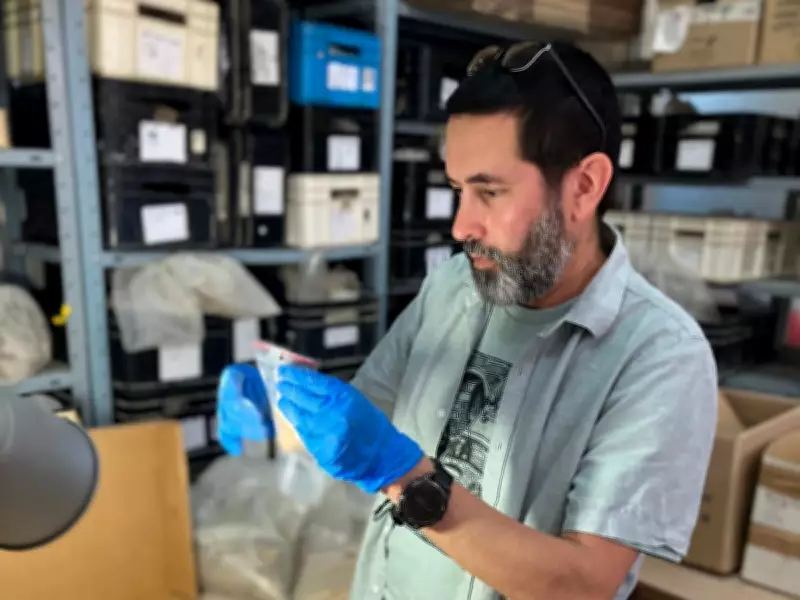
The identification fell to Barash and his team to confirm. "I am called whenever there's only bones or there's very few remains," he noted about his specialized role.
The forensic verification process involved multiple independent methods:
- Re-examination of the exhumed jaw using Gvili's enlistment X-rays and civilian dental records
- Full-body CT imaging analysis
- DNA sampling from bone and teeth material
Only when at least two independent methods aligned did Barash sign off on the identification, allowing the IDF to notify Gvili's family. "It was almost personal," Barash reflected, noting he had become intimately familiar with Gvili's story, wounds, and even the clothing he wore when he fell.
The Larger Forensic Mission
Barash's involvement began about a week after the October 7 attacks when he was called to Israel's Abu Kabir forensic medical facility in Tel Aviv. Authorities had "run into a wall" trying to identify certain body parts, and Barash's expertise in skeletal remains became crucial.
"It's the most important thing I've ever done in my life. And there's no way I'm going to refuse doing it," he stated about his work identifying war and terror victims.
As Israel marked the 900th day after the Hamas-led attacks on March 25, Barash prepared to share his experiences with a Toronto audience via video link at an event organized by Canadian Friends of Bar-Ilan. He described working with little rest, analyzing and identifying remains to bring closure to families awaiting answers about missing loved ones.
The ravaged kibbutzim presented unprecedented forensic challenges, with Barash noting the scenes were unlike anything he had encountered before. His work continues as part of Israel's broader effort to account for all victims of the October 7 atrocities, a mission that has consumed nearly 800 days of meticulous, emotionally taxing forensic analysis.