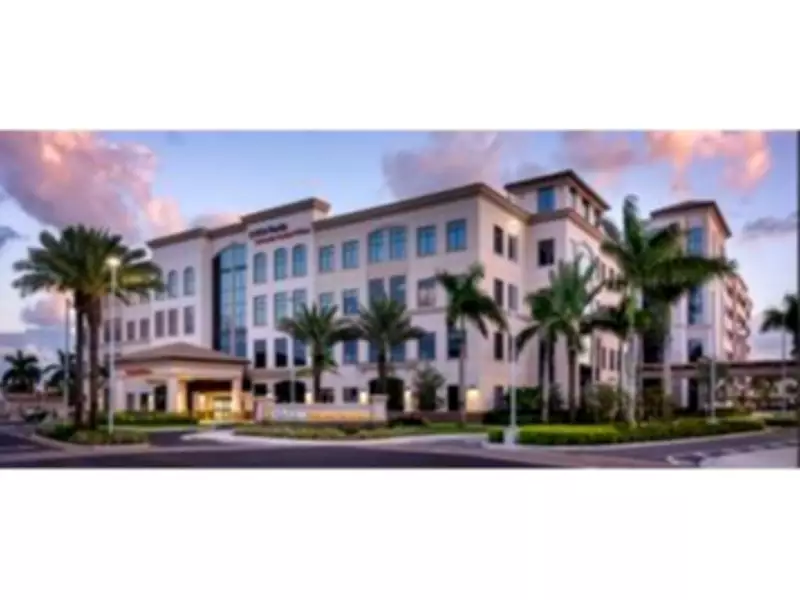
Algernon Health Inc., a Canadian medical technology company trading on the CSE as AGN, has announced a significant expansion into the United States healthcare market. The company will establish its first brain-dedicated Positron Emission Tomography (PET) scanning clinic at the HCA Florida University Medical Office Building in Davie, Florida. This facility represents a pioneering development in neuroimaging within the U.S., specifically designed to address growing needs in neurological diagnostics.
A New Era in Neurological Diagnostics
The Davie clinic will be the first of its kind in the United States to offer specialized brain PET scans exclusively for neurological conditions. This focused approach aims to enhance detection capabilities for several critical disorders including Alzheimer's Disease, various forms of dementia, epilepsy, neuro-oncology cases, and movement disorders such as Parkinson's disease. The facility's specialized nature addresses a significant gap in current medical imaging infrastructure.
Algernon USA LLC, the company's wholly owned subsidiary, has secured a five-year lease for the clinic space with an option to renew for an additional five years. This strategic location on the campus of HCA Florida University Hospital positions the clinic within an established healthcare ecosystem, facilitating collaboration with existing medical professionals and institutions.

Advanced Technology with Patient Benefits
The clinic will feature the CareMiBrain™ system, a groundbreaking standalone diagnostic PET scanner that has received clearance from the U.S. Food and Drug Administration. Unlike traditional PET/CT hybrid systems, this innovative technology operates without an integrated Computed Tomography component while still producing high-quality diagnostic images.
This technological advancement offers substantial patient benefits, including approximately 25% less radiation exposure compared to conventional scanning methods. The reduced radiation dosage represents a significant improvement in patient safety, particularly important for individuals who may require multiple scans over time to monitor disease progression.
Addressing Critical Healthcare Needs
The timing of this clinic opening coincides with important developments in Alzheimer's treatment. Two recently FDA-approved monoclonal antibody treatments—Leqembi (developed by Eisai and Biogen) and Kisunla (from Eli Lilly)—require positive beta-amyloid brain scans or spinal tap results for patient authorization. These treatments, covered by Medicare, Medicaid, and private insurance, have created substantial demand for specialized brain imaging services.
The current U.S. healthcare infrastructure faces significant challenges in meeting this emerging demand. Approximately 45% of existing PET/CT scanners are located in hospitals where they are primarily prioritized for cancer diagnostics, theranostic applications, and cardiac imaging. This allocation creates scheduling difficulties for brain-specific scans, potentially delaying critical diagnoses and treatment initiation.
Insurance Coverage and Accessibility
Brain PET scans for beta-amyloid plaque detection, which are associated with advancing Alzheimer's Disease, receive coverage from Medicare, Medicaid, and private insurance providers for patients aged 65 and older. This insurance support enhances accessibility to these diagnostic services for the population most affected by neurodegenerative conditions.
The emergence of effective Alzheimer's treatments combined with insurance coverage has created what industry analysts describe as a billion-dollar market opportunity in the brain-specific PET scan and Alzheimer's treatment sector. Algernon's specialized clinic model directly addresses this growing market need.
Strategic Business Approach
Algernon has developed a comprehensive business strategy to ensure the clinic's success and expansion. The company plans to establish partnerships with neurologists, geriatricians, primary care physicians, and other medical professionals in the local Florida market to generate patient referrals for brain PET scans.

Additionally, Algernon will implement direct marketing initiatives targeting the general population aged 50 and older. These educational campaigns will focus on the benefits of early detection and management of Alzheimer's onset, introducing potential patients to cognitive testing, blood biomarker analysis, and brain PET scanning options.
Early detection represents a crucial advantage in neurodegenerative disease management, as beta-amyloid plaques can begin accumulating in the brain 15 to 20 years before cognitive symptoms become apparent. This extended preclinical phase provides a significant window for intervention when detection methods are available.
Leadership Perspective
Christopher J. Moreau, CEO of Algernon, expressed enthusiasm about the clinic opening: "We are very pleased to be opening our first neuroimaging clinic in a brand-new suite at the HCA Florida University Medical Office Building. We look forward to delivering the highest level of care possible to our patients in Florida, as part of a professional healthcare community that is dedicated to medical excellence."
The Davie location represents just the beginning of Algernon's expansion plans. The company has indicated intentions to open multiple clinics throughout the United States, suggesting this Florida facility serves as a prototype for a broader national network of specialized brain imaging centers.
This development marks an important advancement in specialized medical imaging, potentially improving diagnostic capabilities for millions of Americans affected by neurological conditions while creating new standards for patient safety through reduced radiation exposure technology.