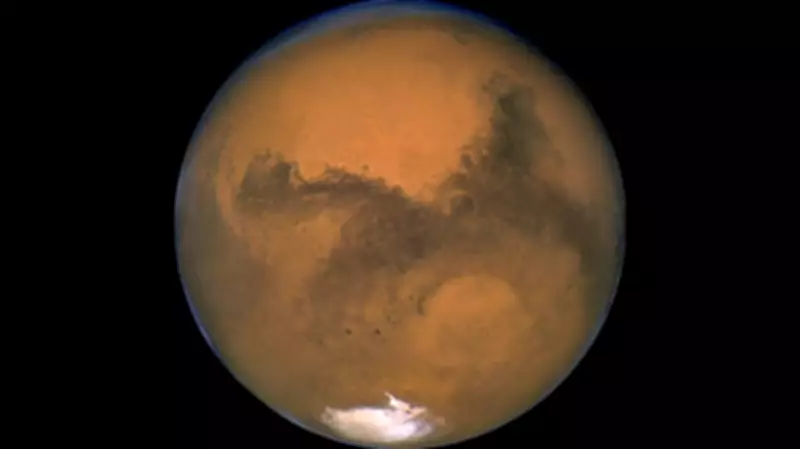
NASA's Curiosity rover has achieved a historic first on Mars, detecting the building blocks of life in a groundbreaking experiment. The rover's Sample Analysis at Mars (SAM) instrument identified organic molecules in soil samples from Gale Crater, a site believed to have once hosted a lake. This discovery marks the first time such compounds have been confirmed on the Red Planet, offering tantalizing clues about Mars' potential to have supported microbial life.
Breakthrough in Martian Exploration
The experiment, conducted in late 2025 and analyzed over subsequent months, revealed complex carbon-based molecules, including thiophenes and aromatic compounds. These organic molecules are essential for life as we know it, though their presence does not confirm past or present biology. Non-biological processes, such as volcanic activity or meteorite impacts, could also produce them. Nonetheless, the finding significantly advances the search for life beyond Earth.
Implications for Astrobiology
Scientists are particularly excited because the molecules were found in ancient sedimentary rocks, dating back 3.5 billion years. This suggests that Mars once had conditions favorable for life. The SAM instrument heated the samples to release gases, which were then analyzed by mass spectrometry. The detected compounds resemble those found in Earth's organic-rich shales.

Curiosity's discovery builds on earlier detections of methane in the Martian atmosphere and organic carbon in rocks. However, this is the first direct identification of complex organic molecules in soil. The rover's ongoing mission continues to explore the Gale Crater, targeting regions with higher potential for preserved organics.
Challenges and Next Steps
The experiment faced challenges, including contamination from Earth-derived materials and the harsh Martian environment, which degrades organic compounds. To mitigate this, Curiosity used a specialized drilling technique to collect samples from below the surface, where they are shielded from radiation. The rover also performed blank tests to ensure the results were not due to contamination.
NASA plans to follow up with more detailed analyses, including searching for specific biomarkers that could indicate biological activity. The Mars 2020 Perseverance rover, which is caching samples for future return to Earth, will complement these efforts. If organic molecules are confirmed in returned samples, it would be a major leap in understanding Mars' habitability.
The discovery has reignited enthusiasm for Mars exploration, with scientists emphasizing that while this is not proof of life, it is a crucial step toward answering one of humanity's oldest questions: Are we alone in the universe?