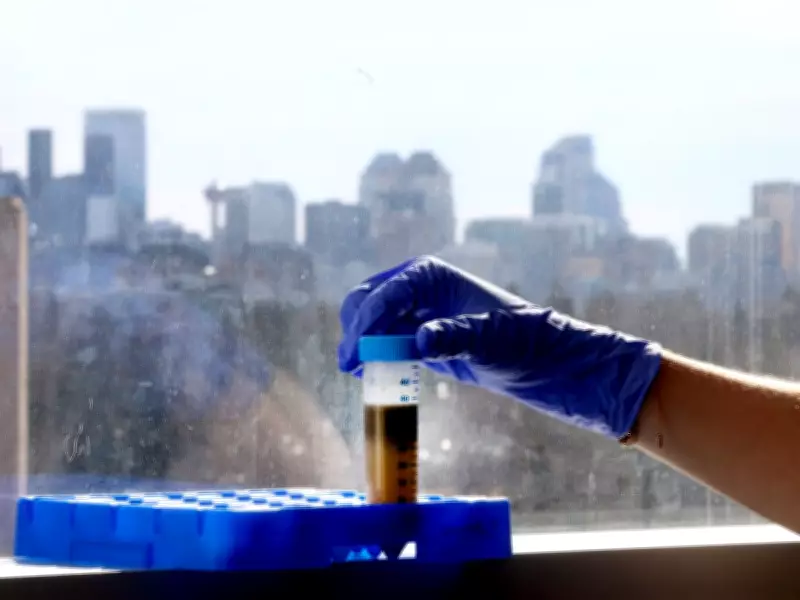
Calgary Researchers Transform Wastewater into Public Health Treasure Trove
What appears to most people as mere sewage represents a revolutionary window into population health for Calgary scientists. Researchers at the University of Calgary who gained prominence through their groundbreaking wastewater COVID-19 tracker are now receiving a substantial multimillion-dollar federal funding injection to advance their innovative surveillance program.
Federal Investment in Public Health Innovation
Dr. Michael Parkins and Dr. Casey Hubert have secured a $4-million commitment through the Canada Foundation for Innovation's Innovation Fund to support their real-time wastewater surveillance work. This significant financial boost will enable the team to enhance their monitoring capabilities and expand the program's applications beyond its initial pandemic-tracking purpose.
The research team first rose to prominence in 2020 when they launched their wastewater COVID-19 tracker, which provided early insights into infection trends during the pandemic. Since that initial success, they have systematically broadened the program's scope to detect and monitor dozens of pathogens, chemicals, and other crucial public health indicators.

From Pandemic Tracking to Comprehensive Health Monitoring
"Knowledge is power," emphasized Dr. Hubert, a professor in the University of Calgary's faculty of science. "If you have data about what's going on, you have the option of doing something about it." This philosophy has driven the team's expansion from COVID-19 monitoring to tackling a diverse range of pressing public health challenges.
Over the past six years, the researchers have constructed a province-wide network that collects and analyzes wastewater samples from treatment plants, neighborhoods, and individual facilities. The system includes approximately 40 automated samplers installed across Alberta, with comprehensive coverage in all Calgary-area hospitals.
The Gold Mine of Wastewater Data
The approach offers a remarkably cost-effective and minimally intrusive method for understanding population health dynamics. A single one-litre wastewater sample can represent data from roughly one million people, making it an extraordinarily efficient surveillance tool.
"It's like a gold mine of information," Dr. Hubert explained, highlighting the program's potential. Dr. Parkins, a professor in the Cumming School of Medicine, added, "Wastewater can give a million answers to public health issues. That's the beauty of this technology."
Addressing the Toxic Drug Crisis
A significant portion of the new funding will be directed toward upgraded equipment that will strengthen the program's ability to monitor changes in Alberta's illicit drug supply and help prevent overdose deaths. The enhanced capabilities aim to deliver real-time data that can inform faster, more targeted interventions during public health emergencies.
The program currently utilizes collection devices installed at facilities serving populations disproportionately affected by substance use, allowing researchers to monitor emerging trends as they develop. With the upgraded instruments, the team will gain improved capacity to detect a broader range of indicators, including new and previously unknown substances entering the drug supply.
Beyond COVID-19: A Multifaceted Public Health Tool
The expanded wastewater monitoring program now addresses multiple critical health concerns beyond infectious diseases. The technology helps track antimicrobial resistance in hospitals, monitors environmental contaminants, and provides insights into community health patterns that would otherwise remain invisible to public health officials.
This innovative approach represents a paradigm shift in how public health surveillance can be conducted, moving from reactive measures to proactive, data-driven interventions. The University of Calgary team's work demonstrates how seemingly mundane wastewater can be transformed into a powerful tool for protecting community health and saving lives across Alberta and potentially beyond.