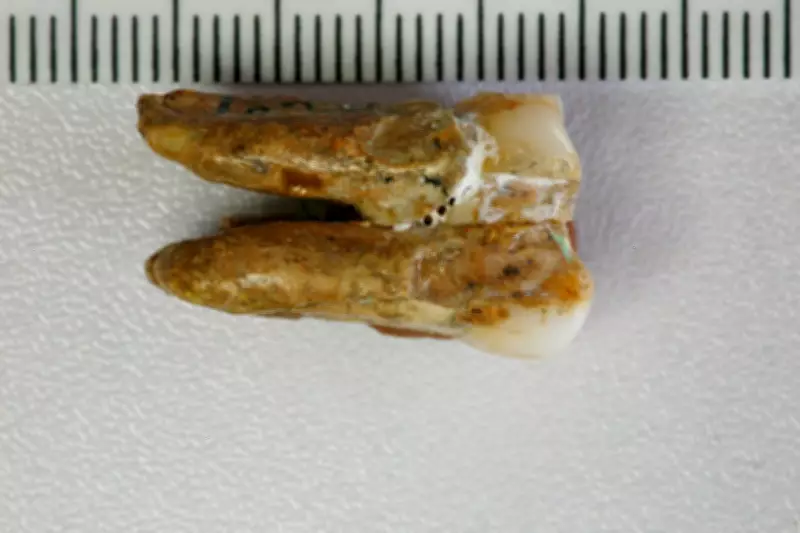
Fossilized teeth discovered at the Zhoukoudian archaeological site in eastern China are providing new evidence of interbreeding between early human relatives, according to a study published Wednesday. The findings suggest that Neanderthals and Denisovans, two distinct groups of ancient hominins, may have interbred much earlier than previously believed.
Discovery at Zhoukoudian
The teeth, which date back approximately 200,000 years, were analyzed by an international team of researchers led by the Institute of Vertebrate Paleontology and Paleoanthropology at the Chinese Academy of Sciences. Using advanced imaging and protein analysis, the scientists determined that the teeth possess a mix of physical traits characteristic of both Neanderthals and Denisovans.
“This is the first direct evidence of interbreeding between these two groups in East Asia,” said Dr. Li Hua, the study’s lead author. “It suggests that their interactions were more complex and occurred over a wider geographic area than we had assumed.”

Implications for Human Evolution
Previous genetic studies have indicated that Neanderthals and Denisovans interbred, but the timing and location of such events have remained unclear. The new findings push back the earliest known interbreeding by tens of thousands of years and extend it to East Asia, where Denisovan fossils have been scarce.
“The teeth provide a rare glimpse into the lives of these ancient hominins,” added Dr. Sarah Johnson, a paleoanthropologist not involved in the study. “They show that human evolution was not a simple linear progression but a network of interbreeding and migration.”
Broader Context
The Zhoukoudian site is famous for the discovery of Peking Man, a Homo erectus specimen, but the new teeth belong to a different lineage. The research team plans to conduct further excavations in the region to uncover more fossils that could shed light on the interactions between early human relatives.
“We are only scratching the surface,” said Dr. Li. “Each new fossil adds a piece to the puzzle of our shared ancestry.”
The study was published in the journal Nature and has already sparked discussions among anthropologists about the need to revise existing models of human evolution.