A groundbreaking development at the McGill University Health Centre (MUHC) is poised to redefine the future of respiratory medicine. A researcher has successfully leveraged 3D printing technology to create functional lung tissue, a feat that could dramatically alter how we treat and study respiratory diseases.
The Convergence of 3D Printing and Virtual Reality
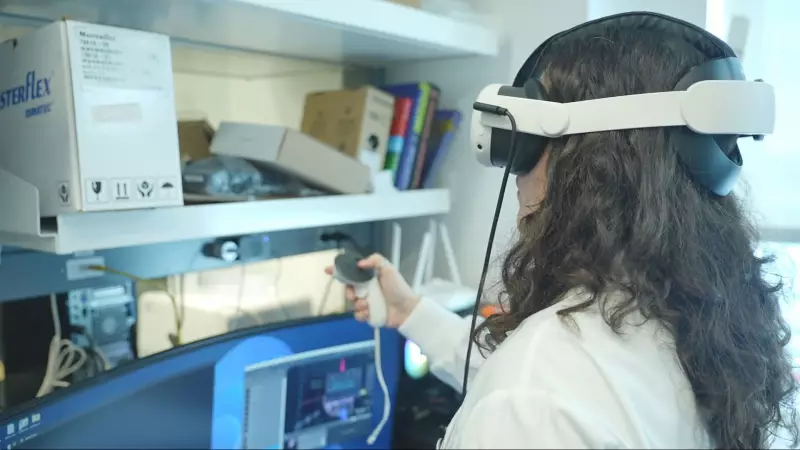
The innovative process, detailed on December 31, 2025, involves more than just advanced bioprinting. The MUHC researcher utilizes virtual reality (VR) technology to meticulously examine and model complex lung structures before and during the printing process. This integration allows for an unprecedented level of precision in replicating the intricate architecture of human alveoli and airways.
This method represents a significant leap from traditional tissue engineering. By combining additive manufacturing with immersive digital visualization, scientists can create more accurate and viable tissue samples. The VR component enables researchers to navigate and analyze the synthetic tissue in a three-dimensional space, identifying potential issues and optimizing design in a virtual environment before physical creation.

Potential to Revolutionize Treatment and Research
The implications of this advancement are profound for respiratory care. This lab-grown tissue could serve multiple revolutionary purposes. Primarily, it offers a new avenue for drug testing and development. Pharmaceutical companies could use these accurate 3D models to test new medications for conditions like asthma, chronic obstructive pulmonary disease (COPD), and pulmonary fibrosis, potentially speeding up the research pipeline and reducing reliance on animal testing.
Furthermore, the technology holds long-term promise for regenerative medicine. While not yet ready for full organ transplants, the printed tissue could eventually be used to repair damaged sections of lung or to provide a platform for studying disease progression and personalized treatment responses. This could lead to tailored therapies for patients with severe respiratory illnesses.
A New Frontier for Canadian Medical Innovation
This breakthrough, emerging from Montreal's MUHC, positions Canada at the forefront of biotechnological and medical research. The work underscores the growing importance of interdisciplinary approaches, where fields like robotics, software development, and biology converge to solve complex health challenges.
The development of 3D-printed lung tissue is more than a laboratory achievement; it is a beacon of hope for millions suffering from respiratory conditions worldwide. As this technology matures, it could alleviate the burden on transplant waiting lists and provide new, more effective treatment modalities, fundamentally changing the landscape of pulmonary healthcare for generations to come.