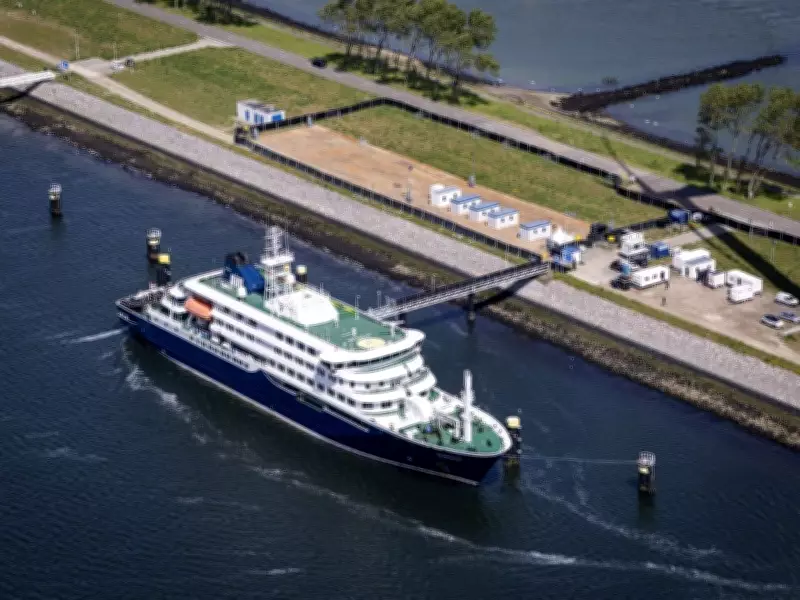
The cruise ship at the center of a hantavirus outbreak has docked at a port in the Netherlands, where it will undergo thorough disinfection. The MV Hondius arrived in Rotterdam, and the remaining 27 people on board will leave the vessel and enter quarantine, according to authorities.
Details of the Outbreak
The ship, operated by Dutch company Oceanwide Expeditions, was carrying 150 passengers, including Canadians, when the World Health Organization first reported severe respiratory illnesses on May 2. Three people have died: a Dutch couple whose bodies have been repatriated, and a German woman whose remains will be cremated in the Netherlands and sent home.
In addition to the deaths, there have been eight confirmed and two probable cases of hantavirus infection on board. The Public Health Agency of Canada confirmed a positive case in a Yukon resident in their 70s, who is being treated in a Victoria hospital and is one of four quarantining in British Columbia.

No Risk to Rotterdam Public
Hantavirus is typically spread through urine, feces, and saliva of small rodents, and can cause Hantavirus Pulmonary Syndrome, a severe respiratory disease. The incubation period can last up to six weeks, and there is no specific treatment. The WHO stated the threat to the general public is low, and there is no comparison with the COVID-19 pandemic.
“There is no risk for Rotterdam and no risk in that sense,” said Tjalling Leenstra, head of the Dutch coordination centre for communicable disease control at the National Institute for Public Health and the Environment (RIVM).
Quarantine and Disinfection Plans
Of the passengers disembarking in Rotterdam, 17 are from the Philippines, four from the Netherlands (two crew and two medical staff), four from Ukraine, one from Russia, and one from Poland. Some will stay in quarantine facilities at the port, while others will self-isolate at home.
The MV Hondius began its journey on April 1 from Ushuaia, Argentina, where hantavirus is endemic. The vessel traveled through southern Atlantic islands before heading to Cape Verde, where the trip was supposed to end. However, the ship diverted to Tenerife in the Canary Islands for plane evacuations after Cape Verde refused to accept the ship. Spain allowed evacuation, but the regional government of the Canary Islands strongly opposed it.