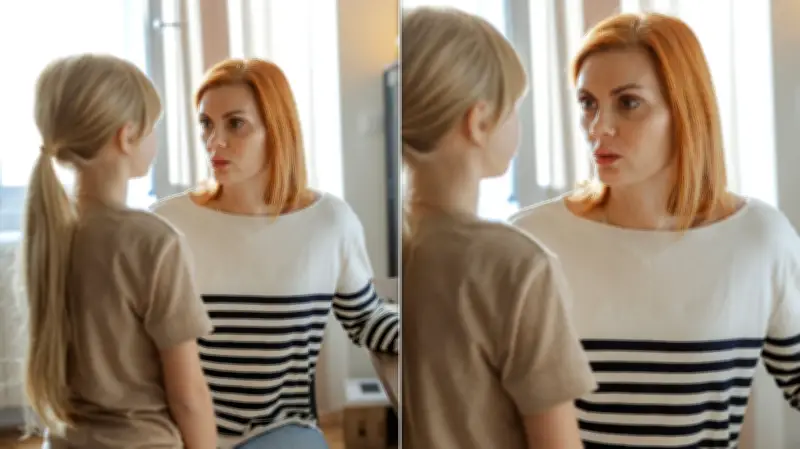
Licensed clinical psychologist JJ Kelly, known as the “Punk Rock Doc,” observes a noticeable decline in children’s social skills, attributing it largely to phones and social media. “I absolutely see a drop-off in kids’ social skills, and phones and social media are a big part of it,” she said. Technology acts as a barrier to communication, with screens serving as a shield from real-world interactions.
Parenting and life coach Randi Crawford notes that digital devices have “replaced the practice of living IRL.” Previously, children learned through awkward conversations, reading the room, making mistakes, and adjusting. Now, both kids and adults can “curate everything behind a screen.” According to Kelly, technology “has taken away infinite numbers of daily opportunities to practice bravery in real life.” This includes basic skills like making eye contact, navigating awkward moments, resolving conflict, or saying something vulnerable in person. Instead, kids resort to passive aggression, ghosting, and public shaming online—a behavior Kelly calls “normalized hiding.”
The Importance of Discomfort in Social Growth
“Social skills are built in discomfort,” said Crawford. “It’s not fun, but that’s how we learn.” While texting or social media may feel safer, face-to-face interactions remain essential for developing communication skills. Kelly emphasizes that the problem is solvable: “Kids aren’t getting worse. They’re just, very simply, getting fewer chances to practice being brave humans.”

Kelly Gonderman, a licensed clinical psychologist and clinical director at We Conquer Together in Orange County, California, suggests five specific conversations families can have to teach fundamental social skills and help children become well-rounded, empathetic adults.
Five Key Conversations to Build Social Skills
1. How to End a Conversation
“Screens have made this [skill] invisible,” said Gonderman. “You just stop responding, and kids are bringing that habit into face-to-face interactions where it reads as rude or dismissive.” Ending a conversation gracefully signals that the interaction had a natural arc—a beginning, middle, and end. Without it, people are left wondering where they stand. Kids who can end conversations gracefully feel less socially anxious, as they are not trapped in unwanted interactions nor accidentally leaving people feeling dismissed.
Parents can model this by saying, “It was really good to talk to you, I’m going to go check on something.” Practice at home during dinnertime chats: have your child close a conversation with, “That was a great talk, I’m going to go do homework now.” Low-stakes practice makes it automatic in higher-stakes situations.
2. How to Disagree Without an Audience
“Social media rewards public callouts,” Gonderman said. Real life requires the ability to tell someone directly that something bothered you, without performing for others. This skill keeps relationships intact long term. A child who can say, “Hey, that hurt my feelings” one-on-one will have healthier friendships and adult relationships.
Parents can model disagreement in front of their kids, such as addressing something directly with a partner instead of venting. Role-play at home: “Pretend I said something that bothered you. What would you say to me?” Practicing out loud in a safe context reduces fear in real life.
3. How to Be With Someone Who’s Upset—Without Fixing It
“A lot of kids default to jokes or distraction when a friend is struggling because sitting with discomfort is a skill nobody taught them,” said Gonderman. The ability to sit with someone in discomfort without immediately trying to solve it is a high-value emotional skill. A child who can just be present with an upset friend will be trusted deeply.
Parents can demonstrate curiosity by asking, “Do you want me to help you figure it out, or do you just want to vent?” Then follow through. Practice when emotions are small: when your child is mildly frustrated, resist fixing it and simply say, “That sounds really frustrating.” This models that feelings don’t need to be solved, just acknowledged.

4. How to Be a Good Witness When Something’s Wrong
“Bystanders aren’t bad people; they’re unprepared people,” Gonderman said. Kids often don’t know how to step in without making things worse, so they do nothing. Teaching them what to do changes that. A child who knows how to be a good witness gains confidence, self-respect, and stronger relationships.
Parents can debrief real scenarios: when your child mentions something at school, ask what they did, what they wish they’d done, and what they might do next time—without judgment. Practice specific scenarios, e.g., “What would you say if you saw someone sitting alone at lunch being made fun of by the table next to them?”
5. How to Lose Well
“Competition, disappointment, not getting what they wanted—these are things kids used to learn through constant low-stakes repetition,” Gonderman observed. Losing well teaches emotional regulation and resilience. A child who falls apart at every loss will struggle with disappointment throughout life. Knowing how to lose gracefully makes a child someone others want to play with, compete against, and work with.
Parents should not rush past the feeling: let them be disappointed, then talk about what was hard and what they’d do differently. Practice at home with board games or card games where someone has to lose. Make losing a regular, low-stakes occurrence so it stops feeling catastrophic.
Foundational Steps for Parents
Before these conversations, parents must take two fundamental steps. First, reassess the role of phones and devices. “If you want your kids’ social skills to get back on track, you have to be willing to set real boundaries around technology,” said Kelly. This may mean delaying phone ownership and introducing apps slowly as a privilege earned over time. Parental controls are important for safety, not surveillance.
Second, reassess how you respond when your child brings conflict home. “That’s where the gold is,” said Kelly. “They’re trusting you.” Start with validation, like “That sounds really hard,” then ask if they want you to listen or help problem-solve. “When parents keep the conversation open, instead of dismissing it, kids learn to effectively navigate conflict, align with their personal values, and treat others the way they want to be treated,” said Kelly.
Kelly reminds parents that “courage very rarely backfires.” If there is anything you’re afraid to talk to your kid about, it probably means you need to have that conversation. Even if they scoff or feel awkward, they will remember the conversation and your ability to have it. Leaning into discomfort sets both parents and children up for success.