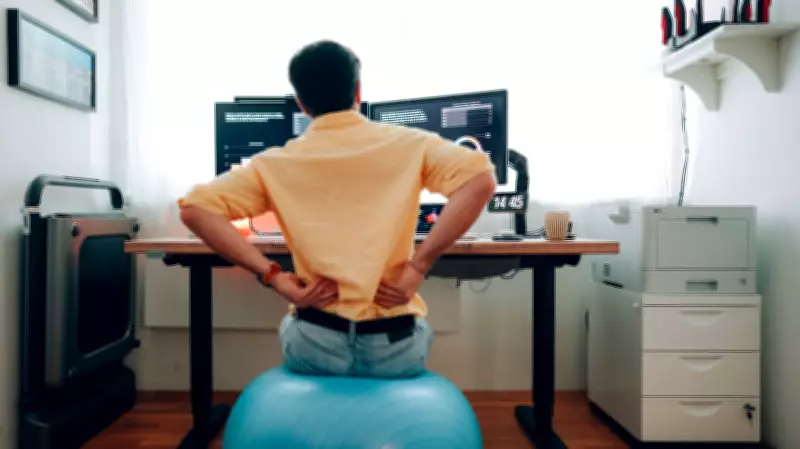
You'll probably want to stand up while you read this. While we all know that sitting all day is linked to all kinds of conditions — back pain, neck pain, bad posture, carpal tunnel and more — it can also cause problems for a less-talked-about part of your body: your buttocks. Many folks notice butt numbness or pain after sitting all day long, which is a common health issue known officially as gluteal amnesia but is also referred to as 'dead glute syndrome' or 'dead butt syndrome.'
What Is Dead Glute Syndrome?
In dead glute syndrome, your gluteal muscles start to weaken, said Arlen Ray, a physical therapist and director of outpatient physical and occupational therapy at Hackensack Meridian JFK Johnson Rehabilitation Institute in New Jersey. This happens because of lifestyle, often in people who sit for prolonged periods, Ray said.
'So, basically, what happens is the glute doesn't activate, you have tightness in the hip flexors and the hamstrings,' Ray noted.

'Oftentimes, when you're sitting for long periods of time, your iliopsoas is shortened because it's held in a tight position, and your gluteus medius becomes weak because it's not really being asked to do anything in that seated position,' said Dr. Jennifer O'Connell, a physiatrist at the Hospital for Special Surgery in New York. As time goes on, this weakness can cause damage to the tendon, O'Connell added. O'Connell said she sees 'several people with this every single day.'
Who Is at Risk?
But just because you have a desk job doesn't mean you're doomed to have dead glutes. 'It's really for people that don't take their time to work on glute strengthening and stretching of the hip flexors and the hamstrings,' Ray said. So it depends on someone's fitness regimen and daily activity, Ray noted. Someone may work out regularly but not work out their glutes and have this problem, Ray noted. While someone who sits all day but makes a point to frequently move around may not have this problem.
Signs and Symptoms
'Dead glute syndrome' can show up as butt pain along with other symptoms. When it comes to dead glute syndrome, it's common to have butt pain or numbness in the rear, said Kate Lombardo, the yoga director at YogaRenew in New Jersey. It may also show up as tingling in the butt that goes into the leg, Ray said. The pain may present on one side of the butt or both sides, added O'Connell.
'Sometimes it can manifest also as back pain, hip pain, and it can even cause other deficits and cause injuries, maybe to the knee or the ankle, because our glutes are really a powerhouse and help to maintain our balance, stability and our posture,' Ray said. Someone with dead glute syndrome may also find that they have trouble going up or down the stairs, doing lunges or even standing up, Ray noted.
Prevention Tips
Moving around throughout the day is one way to prevent this from happening, and experts have some other tips, too. People who sit all day for work or live a sedentary lifestyle are at higher risk of developing dead glute syndrome than those who are on their feet all day.
If you have a job that requires you to be at a desk all day, consider getting a standing desk, said O'Connell. 'I like to have [people] standing for at least five minutes out of every half an hour,' noted O'Connell. If you don't have a standing desk, try to make a point to take a stroll around your office, fill up your water bottle in your kitchen or even just do a few stretches, said Lombardo.
Exercise, in general, is also an important way to prevent pain from happening. According to Ray, exercises that target the gluteal muscles are important to add to your workout regimen. This includes bridges, clamshells, lunges and squats, she said. Lombardo added yoga poses such as chair pose, pigeon pose or a seated figure four pose, which can help stretch the outer hip.
It's important not only to stretch but to strengthen the glutes, Ray noted. By doing a mix of the exercises mentioned above, you will both stretch and strengthen your glutes. 'If we're just regularly moving, we naturally get the mix of the strengthening and stretching,' added Lombardo. 'That's how our bodies were designed to work.'

It's common for folks to immediately turn to stretching when they notice pain, but that can 'actually exacerbate the problem,' Lombardo said, again stressing the importance of stretching and strengthening.
When to See a Doctor
This problem doesn't always require medical attention but may in certain cases. O'Connell said if you notice minor derriere pain, it's OK to try to manage it at home, as long as it goes away quickly and without any other issues. Ray added, 'If anybody has pain, especially pain that doesn't go away within a few days, they should see their doctor to see where it could be coming from,' because dead glute syndrome isn't the only culprit for many of the aches and pains associated with it.
Additionally, if the pain isn't proportional to what you'd expect, you should see your doctor, said O'Connell. 'If this is something that's keeping you up at night, if it's severely affecting your quality of life, that's something to come in for,' added O'Connell.
Even if you don't have pain yet, or the pain doesn't disrupt your quality of life, you can still consider seeing a physical therapist who can help address muscle imbalances, weakness or tightness in your glutes, hip or back, said Ray. 'They can guide you with the proper exercises and cue you with the right alignment in doing these exercises,' added Ray.
Any kind of movement is a beneficial way to keep your glutes (and entire body) healthy, said Lombardo. 'As human beings, you want to do things that make [you] feel better,' Lombardo said. 'So, I think it's just being open enough to say yes to some movement just to get started.' You don't need to sign up for a marathon or compete in a big bike race; instead, you can commit to micro movements to help kick-start healthier habits, Lombardo said.