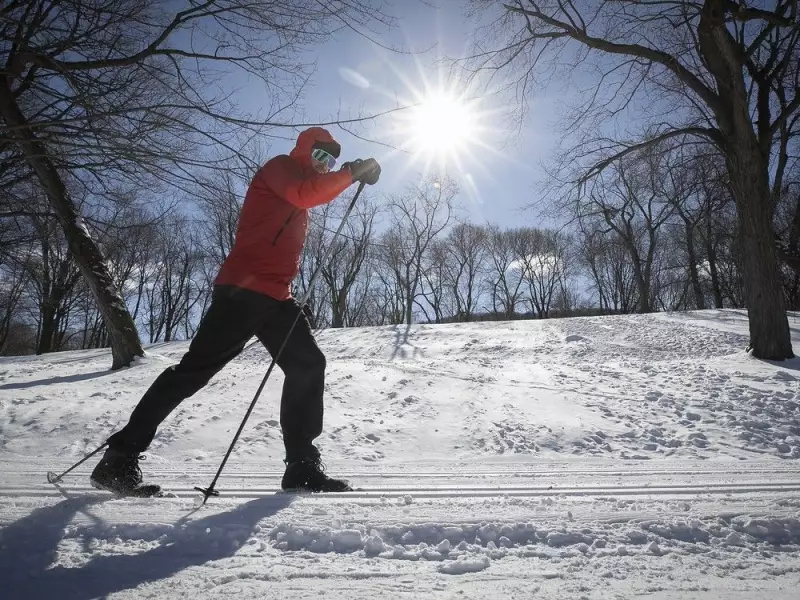
For many Canadians, winter evokes a complex mix of admiration and dread. When bitter winds howl and ice glazes the landscape, the season feels unforgiving. Yet, on those brilliant days where sunshine sparkles on fresh snow and temperatures hover near zero, winter reveals its magnificent potential. On such days, staying indoors feels like a missed opportunity, especially given the wealth of invigorating outdoor activities available.
The Mental and Physical Perks of Cold-Weather Exercise
Moving your fitness routine outside during the colder months offers profound benefits. The combination of fresh air, natural sunlight, and the serene sights and sounds of a snowy landscape acts as a powerful mood enhancer. This natural boost is a welcome contrast to the often stale, fluorescent-lit environment of an indoor gym. Activities like skiing, skating, a game of shinny, or even a brisk walk can effectively combat the winter doldrums that come from excessive time spent indoors.
Beyond mental well-being, winter sports provide unique physical challenges. Here’s a breakdown of the fitness benefits offered by some of Canada’s favourite cold-weather pastimes.

Cross-Country Skiing: The Ultimate Endurance Challenge
Cross-country skiing stands out as one of the most physiologically demanding endurance sports available. It engages the entire body, providing a superior aerobic workout. The varied terrain—featuring uphill climbs, downhill glides, and flat stretches—creates a natural form of interval training. This constant variation keeps your heart rate within an effective training zone for the entire session.
What truly distinguishes Nordic skiing is its intense demand on the upper body, including the back, shoulders, and triceps. The skating technique is particularly taxing due to the powerful double-poling motion. Even the classic diagonal stride technique quickly fatigues the smaller arm muscles. For runners and cyclists, cross-country skiing serves as excellent cross-training, leveraging their existing aerobic fitness while adding a crucial upper-body component.
Calorie burn is significant, though it varies based on terrain, technique, speed, and body weight. Heavier skiers typically expend more calories per hour. On average, participants can expect to burn between 400 and 1,000 calories in a single hour on the trails.
Downhill Skiing: Power, Control, and Neuromuscular Fitness
The physiological profile of alpine skiing contrasts sharply with its cross-country cousin. Here, mechanical lifts handle the ascent, and the workout occurs during the descent. The lower body’s large muscle groups work hard to carve turns, with intensity fluctuating based on speed, turn sharpness, hill steepness, snow conditions, and the skier’s skill level.
Each run, typically lasting one to five minutes, tests muscular endurance. While the heart and lungs get a workout, studies indicate that downhill skiers need approximately 2.5 hours on the slopes to match the calorie burn of a one-hour cross-country ski session.
A unique benefit of downhill skiing is its demand on neuromuscular control. Navigating speed and uneven terrain enhances brain-to-muscle communication, improving stability, reflexes, and overall motor skills—valuable tools for functional movement in daily life.
Skating and Hockey: Joint-Friendly Aerobics and Balance Training
With an abundance of outdoor rinks and frozen ponds, skating is a quintessential Canadian activity. A significant advantage is its low impact on joints, making it a lifelong pursuit. The skating stride powerfully engages the legs, glutes, and core, while the sustained motion builds aerobic fitness.
In hockey, players alternate between short, powerful bursts of speed and periods of recovery, with shifts lasting 30 to 60 seconds. This pattern demands considerable lower-body strength and conditioning. Whether playing shinny for fun or competing for an Olympic medal, the fundamental physical demands of the game remain consistent.
Perhaps the most critical functional benefit is the constant challenge to your balance—a system that naturally declines with age. Regular skating promotes better stability, coordination, and reaction time.

Curling: A Surprising Full-Body Workout
While primarily an indoor ice sport, curling deserves mention as a valuable winter activity. Modern elite curlers are athletes who train for strength, endurance, balance, and flexibility. Success on the rink requires significant coordination and strength to deliver the rock with accuracy, especially as games progress.
Sweeping is a rigorous full-body task demanding muscular endurance to maintain brisk broom strokes and apply correct pressure for 8 to 24 seconds as you travel down the ice. For many recreational players, the biggest challenge is the flexibility and balance needed to execute a proper slide from the hack.
The large, functional movements involved in curling—the slide, delivery, and sweeping—make it an exceptionally valuable activity. Improving these skills not only enhances your game but also contributes to better overall movement patterns off the ice.
This winter, consider layering up and stepping outside. The combination of physical exertion and nature’s therapy can transform the coldest season into your fittest and most uplifting time of year.