Barefoot shoes, characterized by thin, flexible soles, wide toe boxes, and zero heel-to-toe drop, are gaining popularity for their potential to strengthen feet and improve natural movement. Unlike traditional athletic shoes with cushioning and arch support, barefoot shoes aim to mimic walking or running without shoes. “Biomechanically, barefoot shoes allow the foot to move more freely and encourage greater engagement of the foot’s natural shock-absorbing structures,” says Dr. Bobby Pourziaee, owner of Rodeo Drive Podiatry in Beverly Hills. He notes that while traditional shoes reduce stress on certain tissues, they may also weaken the foot’s intrinsic muscles.
How Barefoot Shoes May Support Stronger Feet
The foot contains dozens of muscles that stabilize the body during standing, walking, and athletic movement. Pourziaee explains that strengthening these muscles may improve arch support, balance, and the foot’s ability to adapt to uneven surfaces. Dr. Nelya Lobkova, founder of Step Up Footcare in New York City, adds that barefoot shoes may increase range of motion across the foot and ankle joints, especially at the big toe joint. “This important functional movement is needed for many activities: 15 degrees is required for walking, 30 degrees for running, and 90 degrees of flexion of the big toe joint is required for lunging and planking.”
What To Know Before Switching To Barefoot Shoes
Because barefoot shoes are typically zero-drop and minimally cushioned, easing in slowly is crucial to prevent discomfort or injury. “I recommend wearing a lower drop shoe first and avoiding incline walking until you are used to them, which may take a few weeks,” says Lobkova. “There will likely be soreness in the back of the heel and calf muscle because zero drop keeps the Achilles in a stretched configuration.” She also notes that barefoot shoes are not ideal for everyone or every activity. Those doing high-impact exercise in barefoot shoes, where forces can reach up to three times body weight through the feet, may face a higher risk of foot issues. “People who have fat pad atrophy, which involves the loss of the natural fatty pad in the ball of the feet, are at higher risk as well. The loss of cushioning causes a lower threshold for stress on the ball of the foot, causing stress fracture or neuroma.”

Top Barefoot Shoe Picks
1. An Essential for Transitioning: Altra Torin 8
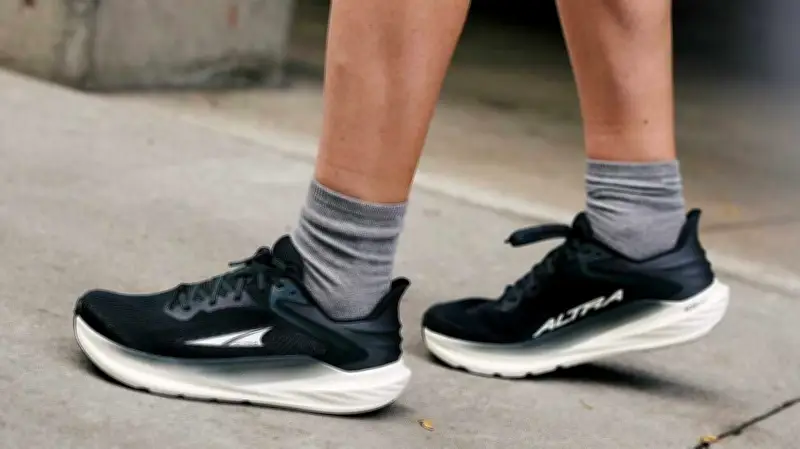
Lobkova points to Altra as a solid transitional option because, even though the brand features low or zero-drop designs, it still incorporates cushioning to help protect from the hard ground. “They’re [also] notably wider than many other barefoot shoes,” she notes. Built on a zero-millimeter heel-to-toe drop, the Altra Torin 8 includes Altra’s FootShape toe box, giving the forefoot more room to spread compared to conventional running shoes. It features a 30 millimeter stack height, offering enough cushioning for long walks and easy runs. In women’s, this shoe is available in 12 colors, including tan, navy and light blue, in sizes 5.5 to 12. In men’s, it comes in 10 colors, including a light gray, a dark gray and blue combo, plus a black and white combo, in sizes 7 to 15. Prices start at $111 on Amazon.
2. A Barefoot Pick for Gym Sessions: Lonowear Flow 2
Lobkova also highlights the Lonowear Flow 2 barefoot training shoes as one of her top picks. “There are reinforced guide rails and an enhanced or deeper heel cup for natural movement. For a non-supportive shoe, these two features are important for lateral stability,” she says. Designed for cross-training, strength and mobility workouts, short runs and everyday movement, the shoe sits on a three-millimeter sole base. The upper is knit and stretchy, allowing it to move with the foot through a range of movement. They come in unisex sizing, ranging from EU 36 to 46 (women’s 6 to 11 and men’s 7.5 to 13), and are available in three colorways, including off-white and black. Price: $112 at Lono.

3. A Lifestyle Sneaker for Everyday Wear: Vivobarefoot Gobi II
Pourziaee points to Vivobarefoot as one of his favorite barefoot shoe brands, highlighting its ultra-thin, highly flexible soles and anatomically shaped wide toe box. “The flexible sole allows the foot to move naturally and provides excellent ground feedback. This sensory input can help improve proprioception, while encouraging the foot's stabilizing muscles to work more actively,” he says. The Vivobarefoot Gobi II premium leather sneaker blends barefoot principles with a style-forward design. It is constructed with 98% natural materials and features a 2.4 millimeter sole base, making it best suited for everyday wear, commuting and travel. In women’s, this style comes in two color options (tan and white) in sizes 4.5 to 11, while in men’s it’s available in four color options (black, white, and tan) in sizes 8 to 14. Prices start at $120 on Amazon.
4. A Lightweight Shoe for Running: Vivobarefoot Primus Lite Knit
Built on a two-millimeter sole base and designed primarily for running, the Vivobarefoot Primus Lite knit running shoe is a lightweight, highly flexible option that also works well for walking and everyday wear. The ultra-thin sole and knit upper adapt closely to the foot, molding to its shape for a snug, comfortable fit. In women’s, this style is available in four color options (silver, black and white) in sizes 5 to 11. In men’s, it comes in seven options (gray, off-white and green) in sizes 7 through 15. Prices start at $110 on Amazon.
5. For Trail Adventures: Xero Scrambler Low EV
Designed for those who want the ground feel of a barefoot shoe but still need enough grip and durability to handle uneven terrain, the Xero Scrambler low EV uses a Michelin Fiberlite outsole with embedded TrailFoam technology, creating a sole that’s lightweight, flexible and grippy. Deep lugs help provide traction on dirt, gravel and loose surfaces, and an abrasion-resistant mesh upper keeps debris out while staying breathable and moisture-wicking. Available in women’s (army green and cream, sizes 5 to 12) and men’s (army green and black, sizes 7 to 15). Price: $160 at REI.
6. A Retro-Inspired Pick: Xero Wynn
A minimalist sneaker designed to bring a retro-inspired everyday look, the Xero Wynn is one of the brand’s more lifestyle-leaning models, built for walking, commuting and casual daily wear. The upper combines nylon fabric with suede overlays, giving it a throwback feel that pairs easily with jeans or casual outfits. In women’s, three color options (red, light grey and dark grey) in sizes 5 to 12. In men’s, two color options (blue, grey and red combo; white, grey and navy combo) in sizes 6.5 to 15. Prices start at $85 on Amazon (regularly $120) or $120 at REI.
7. A Low Profile Shoe for Active Lifestyles: Merrell Vapor Glove 7
One of the most minimal road and light-trail shoes in Merrell’s lineup, the Vapor Glove 7 is a true barefoot-style trainer designed to maximize natural foot movement while still providing a thin protective layer underfoot. In addition to its zero-drop platform, it features an eight-millimeter stack height for close ground contact. Underfoot, it uses a Vibram TC5+ outsole, which delivers grip on pavement, gym floors and outdoor terrain. In women’s, three color options (black, white, and cream) in sizes 5 to 11. In men’s, four color options (black, white, and sage) in sizes 7 through 15. Price: $110 at Amazon or Merrell.