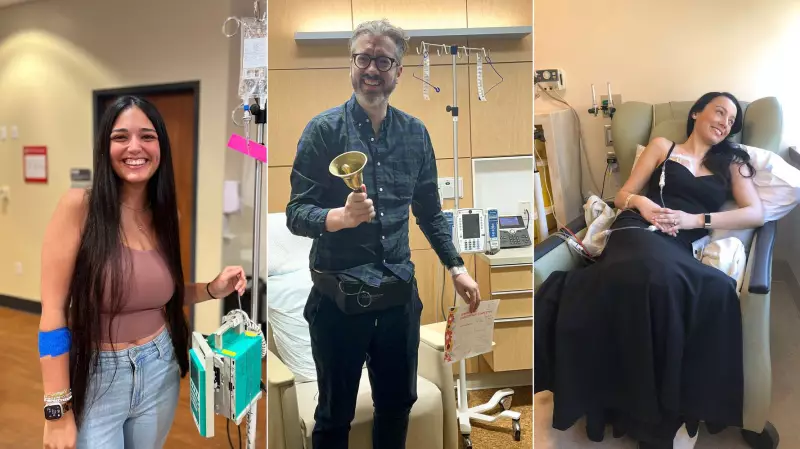
Receiving a cancer diagnosis is a moment for which nothing can prepare you. Yet, for a growing number of young, healthy adults, that terrifying moment is arriving decades earlier than expected. This is the story of one man's battle and a disturbing public health trend that threatens a generation.
The Personal Shock: A Diagnosis That Defies Age
In August 2023, a 44-year-old man in good health, a regular gym-goer and marathon runner, received news he never anticipated: he had colon cancer. His only symptom had been blood in his stool, easily dismissed. The diagnosis left him numb, a stark contrast to the "devastated" emotion often portrayed. His treatment involved a six-hour surgery, followed by six months of brutal chemotherapy with Oxaliplatin, and eventually another surgery on his liver. Today, he is in a good place with "no evidence of disease" for over a year, but his story is far from unique.
The average age for a colon cancer diagnosis in men is 66. At 44, he felt this was something for "old people." Yet, data reveals a alarming shift. The incidence of colorectal cancer is rising sharply among younger generations. Generation Z, millennials, and Generation X are now more likely to develop it in their 30s and 40s than people from earlier generations were at the same age.

A Public Health Crisis: Why Are Young, Healthy People Getting Sick?
Dr. John Marshall, clinical director of oncology at Georgetown University Hospital, notes the typical new patient is someone "who's trying not to get cancer"—fit, health-conscious individuals in their 30s and 40s with no family history. High-profile cases like actor Chadwick Boseman, who died at 43, and James Van Der Beek, diagnosed at 47, underscore the trend.
Statistics paint a grim picture. While death rates are falling in older adults, they have been increasing among young people since the mid-2000s. In 1995, 11% of colorectal cancer cases occurred in people 54 or younger. By 2019, that proportion had jumped to 20%. Cases among Americans aged 20 to 34 are projected to increase by a staggering 90% by 2030.
This surge has prompted updated screening guidelines, now recommending people begin screening at 45 instead of 50. Experts point to potential causes like changes in gut bacteria influenced by diet, antibiotic use, microplastics, and environmental chemicals, but Dr. Marshall admits, "To be honest, we all don't know."
The Funding Fight: Scientific Progress Stalls Amid Political Cuts
Despite the alarming trend, treatment innovation for colorectal cancer has lagged. Dr. Marshall states he is still giving the same post-operative treatment he used 20 years ago, partly because the pharmaceutical industry sees financial risk. This is where federally funded research is supposed to bridge the gap, funding the foundational science that private companies may avoid.
However, that engine of innovation is under threat. Between February and August, funding ceased for 383 studies by the National Institutes of Health (NIH), including over 100 cancer research grants. Proposals to shrink the NIH budget by nearly 40% have sparked outrage. Senator Bernie Sanders has called such moves an "attack against anyone who has ever loved someone with cancer."
This comes at a critical time. The American Cancer Society credits federal research with helping drop the overall cancer death rate by 34% since the early 1990s. Breakthroughs like immunotherapy, which has delivered miraculous results for some patients, often originate from publicly funded science. "The threat is all around us that we will come to a screeching halt," warns Dr. Marshall.
Patient Voices: From Hope to Heartbreak
Patients and survivors embody both the promise of science and the cost of delay. Jessica Acosta, diagnosed at 29, benefited from a cutting-edge immunotherapy clinical trial that completely eradicated her tumor. The treatment, approved in December 2024, wouldn't have been available a year earlier. "It's incredible to see how much science can happen in such a short period of time," she said.

In stark contrast, Micah Lio of Cleveland was 29 at his diagnosis in 2021. Despite treatments including brain surgery and endless chemotherapy, he died last year at 33. His wife, Marissa, shared his story with the Colorectal Cancer Alliance, stating, "My husband was young and healthy and full of life... science didn't move fast enough for him."
Other survivors, like Diana Zepeda (diagnosed at 33) and Liz Healy (diagnosed at 45), echo the urgent need for continued research. For them, federal funding is more than money; it's validation and hope. "You feel seen. That my life matters," said Healy.
The collective message from patients, doctors, and advocates is clear: the rising tide of young-onset colorectal cancer demands a robust, publicly funded scientific response. Bravery alone won't cure cancer; sustained investment in research will. As cases climb among younger Canadians and their neighbours, the question remains whether political will can match the medical urgency to save lives.