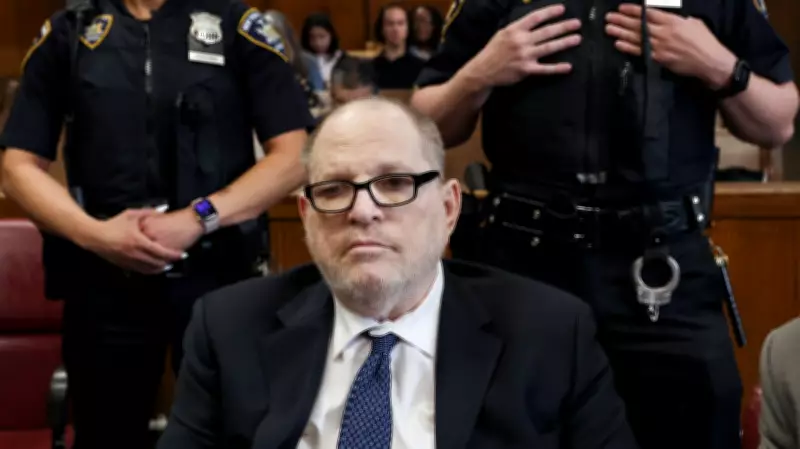
A mistrial was declared Friday in Harvey Weinstein's rape retrial after the jury announced it was deadlocked, leaving the former Hollywood mogul's New York rape charge unresolved after three trials. Weinstein, who has been convicted of other sex crimes in New York and Los Angeles and remains incarcerated, showed no emotion as he was wheeled out of the courtroom by court officers.
Jury Deadlock Ends Retrial
The majority-male Manhattan jury had been deliberating whether Weinstein raped Jessica Mann, a hairstylist and aspiring actor, in 2013. Weinstein's defense maintained the encounter was consensual, part of a complex relationship between the then-married producer and the much younger woman. On the third day of deliberations, the jury sent a note stating they could not reach a unanimous verdict. Judge Curtis Farber instructed them to continue, as is standard procedure in New York courts, but the deadlock persisted.
Next Steps in the Case
A hearing is scheduled for June 24 to determine whether prosecutors will pursue a fourth trial. The mistrial leaves the rape charge in legal limbo, as Weinstein already serves a prison sentence for other convictions.

Background of the Allegations
Weinstein, once a powerhouse producer and Democratic donor, was brought down in 2017 by a wave of sexual misconduct allegations that sparked the #MeToo movement. He was convicted of rape in New York in 2020, but that verdict was overturned on appeal. A 2025 retrial also ended in a deadlock, leading to the current proceedings.
Mann, now 40, testified that she met Weinstein at a Los Angeles party in early 2013 and hoped to advance her acting career. She said his advances were unwelcome, but she eventually agreed to a relationship. In March 2013, she alleged Weinstein raped her in a Manhattan hotel room after she repeatedly said no and tried to leave. She did not report the incident for years and continued communicating with Weinstein, which the defense used to argue the relationship was consensual.
Weinstein's Defense
Weinstein did not testify. His lawyers portrayed Mann as a willing partner who benefited from Weinstein's connections, including help with auditions and financial support. They highlighted her continued contact with him, including emails expressing affection, as evidence of a consensual relationship. Mann explained she felt conflicted and sought validation for her acting dreams.
The case has been closely watched as a pivotal moment in the #MeToo era, highlighting the challenges of prosecuting sexual assault allegations years after the fact.