If you’ve spent time on social media lately, you may have noticed a new kind of wellness icon emerging. This beloved figure is not a biohacker or a fitness influencer but someone’s Italian grandmother. It’s all part of a trend called “nonnamaxxing,” which is less about optimizing and more about embracing simplicity.
“‘Nonnamaxxing’ is a recent trend where people adopt the daily rhythms of an Italian grandmother, or nonna,” Martina Carucci, a strategist with the language learning app Preply, told HuffPost. “It’s essentially borrowing a lifestyle that Italian culture has practiced for generations and giving it a fun name.”
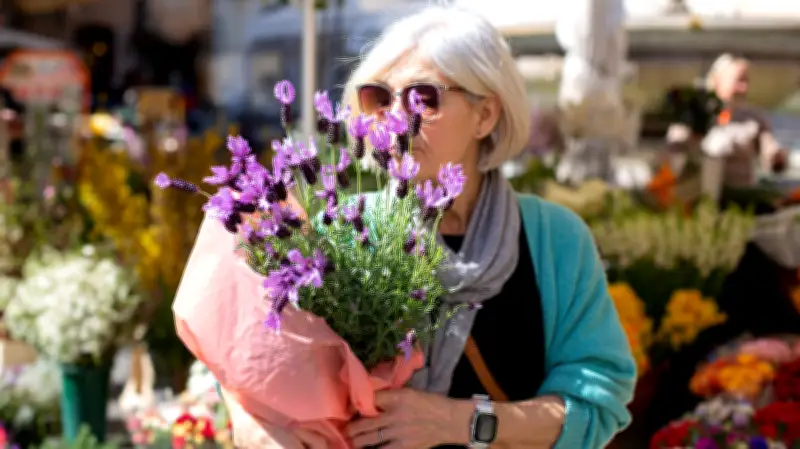
This nonna lifestyle, she explained, can include “cooking old-fashioned recipes from scratch like handmade gnocchi or osso buco, tending an herb garden, taking slow walks or ‘passeggiata,’ sharing long meals with loved ones, and limiting screen time.”

Reverence for older women and their practices goes back generations in that part of the world. “But ‘nonnamaxxing’ as a term has traveled well beyond Italy,” said Noël Wolf, a linguist and cultural expert at the language learning platform Babbel. “It’s been adopted across cultures to describe a universal archetype ― the older woman who lives simply, cooks well, stays socially connected and moves through life at a sustainable pace.”
The nonna ethos is about taking care of yourself, staying embedded in your community and resisting the pressure to keep up with the frenetic pace of modern life and get burned out.
“There’s a growing awareness that the pace most of us are living at simply isn’t sustainable ― long hours, constant connectivity and very little genuine rest. Against that backdrop, the nonna offers a compelling counter-model,” Wolf said. “The nonna doesn’t have a strict wellness routine. Their lives are naturally extraordinarily well-designed.”
Carucci similarly views the nonna lifestyle as an antidote to the fast pace and demands of modern life. “In Italy, sitting down for a proper meal with your family isn’t a wellness trend, it’s just regular life,” she explained. “This shows people are doing more than romanticizing nonnas ― they are genuinely craving the whole Italian way of life.”
The term might be new, but the benefits are entrenched and real.
“Research backs up what Italian nonnas have always known,” Carucci said. “Regular conversation, social meals, daily movement and hands-on activities like cooking or gardening support long-term health.”
Both she and Wolf pointed to the wealth of studies around “Blue Zones,” regions where people live significantly longer, healthier lives compared to the rest of the world. One well-known example is the Italian island of Sardinia, which has one of the highest concentrations of centenarians on Earth. “Researchers have spent decades trying to understand why, and the answer keeps coming back to the same things ― consistent movement built into daily life, home-cooked food, strong social ties and an unhurried relationship with time,” Wolf said.
Nonnamaxxing thus has the power to bring real longevity benefits, from a longer life and healthier body to a “genuine sense of connection and calm” that’s hard to maintain these days, she added.
“Blue Zone research consistently links this kind of lifestyle — unhurried, communal, physically active by default — to lower rates of chronic illness, sharper cognitive function in later life, and measurably greater well-being,” Wolf explained. “The nonna, it turns out, has been running the optimal program for decades.”
Kathryn “Nin” Emery, a licensed professional counselor with Thriveworks, believes nonnamaxxing represents what therapists, spiritual leaders, doctors and more have been trying to encourage in the general public for years. “We have decades of research, maybe not on nonnamaxxing specifically, but on what nonnamaxxing represents, that supports the lifelong benefits such a practice can bring,” she said. “Slowing down. Living in the present. Spending less time in escapism. Breaking the habit of worrying about the future or fretting about the past, neither of which we have full control.”
She praised the way this practice makes the most of the present moment and enhances the tiny joys of daily life and social connection.

“Actually noticing and enjoying that first bit of a delicious meal, the refreshing sip of water, the sound of your uncle’s trademark laugh, and the way your chair cushion has perfectly molded to you,” she said. “Noticing the smells, the tastes, the sounds of a Tuesday afternoon. The lingering warmth of a loving hug. This is the stuff of the good life. And is clinically proven to fight depression and anxiety.”
Dr. Sue Varma, a clinical assistant professor of psychiatry at New York University Grossman School of Medicine, points to the neuroscience behind why these small, focused activities feel so good.
“Nonna practices help us achieve a flow state where we can immerse ourselves in a project and lose track of time,” she said. “This helps prevent us from ruminating. There’s a part of our brain called the default mode network that becomes activated when we are sitting idle, and that’s when we start to perseverate and worry.”
She added that activities requiring focus and a desire to improve ― whether it’s cooking, gardening or a craft ― activate the brain’s reward systems.
“It recruits and mobilizes our dopamine and norepinephrine systems,” Varma said. “It’s a task that’s interesting and engaging enough to keep you interested, but not so hard that you become frustrated. Nonna activities hit the sweet spot for flow and mastery.”
This unhurried mindset is broadly baked into the Italian language and culture as well. “Dolce far niente, the Italian concept meaning ‘the sweetness of doing nothing,’ captures something the nonna understands intuitively,” Wolf said. “It has no direct English equivalent, and that absence is telling. English is a language built for productivity, while Italian has found room to name the value of an unhurried afternoon as something distinct and worthy.”
There’s also the Italian phrase “piano, piano,” which means “slowly, slowly.” For Wolf, that common utterance “reflects a cultural comfort with gradualness” that also stands in stark contrast to the urgency of modern culture and life in the U.S. In Italy, slowness isn’t a sign of failure but of wisdom and intention.
“What’s beautiful about this trend is that it might just be the nudge people need to travel to Italy, my home country, and speak some Italian,” Carucci said. “The popularity of nonnamaxxing is proof that slowing down to engage more deeply, with food, with people, with a comforting culture, is always worth the time.”
While people may travel to Italy for the pasta and scenery, it’s the calm pace of life and sense of presence that may bring them back.
But there are some pitfalls to keep in mind. As with any viral trend, there are some pitfalls worth watching out for.
“The one risk is treating it like any other trend, so if you’re nonnamaxxing just for the aesthetic and social media likes rather than the values, you might not get the full benefits,” Carucci said.
Remember: It’s about the actual practice, not the display of the practice.
“There’s a certain irony in people sharing aspirational pasta sauce recipes and sundress links on social media, not to slow down, but to commodify the nonna vibe entirely,” Wolf said. “The act of packaging and selling a lifestyle built on resisting consumption is, in itself, a contradiction the algorithm doesn’t seem to notice.”
True nonnamaxxing isn't about social media or aesthetics but daily rituals. She added that the nonna’s contentment builds over time through daily habits, deep-rooted community and a cultural understanding of time that developed over generations.
“The aesthetic is the easy part,” Wolf said. “The slower pace is the work. If nonnamaxxing prompts people to genuinely interrogate how they’re spending their time, rather than just curating the look of it, then the trend has real value.”
And if the aesthetic doesn’t come easily to you, that’s OK too. You don’t need to make osso buco from scratch to get the benefits of nonnamaxxing. Something as simple as walking to the farmers market, taking your time selecting produce and then chopping the vegetables at home can capture the same meditative, unhurried spirit.
“Any small change in a daily pattern of dissociation, screens and isolation, would prove beneficial,” Emery said. “The risk comes with rigidity and perfectionism, trying to do it all and throwing yourself off-balance. Pressuring oneself to work a full-time job, and then come home in the evening to create home-made from scratch meals every night could certainly burn someone out.”
And remember: Nonnamaxxing is not about looking perfect on Instagram ― it’s about being where your feet are.
“It can backfire if you feel the need to post about whatever craft, dish, hobby or lifestyle you have undertaken on social media,” Varma said. “You can keep some of your hobbies just for yourself. If you do not feel a pressure to constantly be doing something so that you can sound interesting, if you can naturally meet people through the hobbies that you already have, I’m all for it.”
Here’s how to incorporate nonnamaxxing into your life.
If the idea of nonnamaxxing intrigues you, you don’t have to overhaul your life to get started.
“You could start by sharing one meal a week cooked from scratch with someone you love, with no phones at the table, as any Italian nonna would insist,” Carucci said. “From there, add a daily walk without headphones, or a small windowsill herb garden. The goal is slowing down and enjoying, not perfection.”
Focus on the “nonna” more than the “maxxing.”
“A real nonna isn’t optimizing anything, she’s just living,” said Chloë Bean, a licensed marriage and family therapist. “The minute you turn slowing down into one more thing to ‘win,’ you’re recreating the exact pressure you were trying to escape.”
Wolf similarly recommended starting small and resisting the urge to overcomplicate the nonna lifestyle. “Walk somewhere you’d normally get a bus,” she suggested. “Cook a meal properly, without a screen in your hand. Sit outside for 10 minutes and do nothing in particular. Rebuild the habit of being present in your immediate community, whether that’s knowing your neighbors or simply being less frantic about the day. These aren’t revolutionary ideas, but they are countercultural ones right now.”
Don’t be discouraged if the practice feels off at the beginning of your nonnamaxxing experiment. “If you’re wired and busy, slowing down can feel uncomfortable at first, and even bring up some anxiety,” Bean said. “That’s completely normal because a nervous system that’s used to running hot reads stillness as unfamiliar, sometimes even unsafe, so there can be some resistance. I recommend people gradually start with a few minutes at a time to let your body learn that slow is safe. It gets easier the more you do it, and then it becomes a way of life.”
And if you feel particularly inspired by their “nonnamaxxing” experiences, you might even want to engage further with Italian culture through language-learning, regional food traditions, travel and a general embrace of “la bella vita.” “But the foundation is simpler than any of that,” Wolf said. “Stop, slow down and live in the moment.”