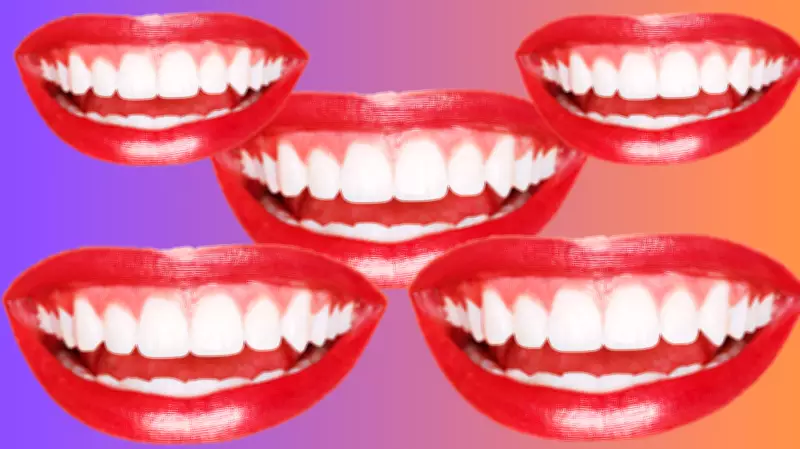
The Cultural Divide of American Smiles: How Perfect Teeth Spark Suspicion Abroad
Tawanna Marie Woolfolk remained quiet during her 36-hour bus journey across Western Australia, but her teeth spoke volumes. Traveling to the Dampier Peninsula for fieldwork in Aboriginal communities, she smiled at a fellow passenger. The response was immediate and telling: "You have a nice smile. Are you American?"
Throughout her weeks in the remote community, similar comments surfaced repeatedly. "Your teeth are so white" or "they are really straight" were delivered as recognition rather than admiration, serving as clear indicators of her American origins. Woolfolk had never considered her smile remarkable back home, but abroad it became an unmistakable tell.
The American Dental Investment
The smile that revealed Woolfolk's nationality represents a significant American investment, with the U.S. cosmetic dentistry market projected to reach nearly $20 billion this year. The American ideal emphasizes teeth that are blindingly white and symmetrical to the millimeter. However, when exported beyond U.S. borders, this smile often meets with confusion, suspicion, or discomfort rather than admiration.

Amit Raj, a dental professional based in Scotland who works with clients on both sides of the Atlantic, notes that the United Kingdom already has terminology for this phenomenon. "In the U.K., there's already a name for it: turkey teeth," Raj explained. The term originally mocked Britons returning from Turkey with cheap, overdone veneers but now applies to any smile appearing excessively perfect.
"Whether it's veneers or not, people just call them turkey teeth," Raj said. The label has migrated to dating platforms, where numerous profiles on Tinder in the U.K. feature women listing "men with turkey teeth" as a major turn-off. Even professional video calls aren't immune, with Raj recalling an American executive whose fluorescent white teeth proved distracting during a service pitch.
Global Suspicion and Cultural Context
Dr. Kimberly Ivett, an Australian dentist, witnesses this discomfort regularly in her practice. Patients frequently express fear of ending up with what they describe as an "American smile." When viewing smile makeovers promoted by American dentists on Instagram, Ivett's reaction is immediate: "Personally, it just screams fake to me."
Her Australian patients seek the opposite: "Tastefully white, perfect in dimensions and balance, and elegantly natural. The kind of smile where people assume you have perfect teeth without noticing dental work." They specifically want to avoid attention-grabbing results that might prompt comments like those from "Uncle Barry" yelling across a room about newly brightened teeth.
Juan María Solare, born in Argentina and now living in Germany, explains that cultural reactions run deeper than simple distaste. "In my cultural context, if someone constantly showed such a smile, it would be perceived as slightly suspicious," Solare said. "The reaction might be: 'They are trying to gain your trust, but why, and for what?'"
Solare draws connections to animal behavior, noting that "in the animal world, showing teeth is rarely associated with happiness. It usually signals aggression or threat. Humans are animals with etiquette, but instinctive associations still survive under the surface." In Argentina, smiles typically show mainly the upper teeth, rarely the lower row—a pattern visible in photos of national icon Lionel Messi.
Beyond Teeth: Social Interactions
The suspicion extends beyond dental aesthetics to broader social interactions. Jiri Padour, living in the Czech Republic, describes confusion generated by the American approach to smiling at strangers. "If someone approached you with a big, open American smile, the reaction would be: Do I know this person? Are they trying to flirt?" he said. In Czech culture, such warmth is traditionally reserved for established acquaintances.

The American Dental Approach
Cultural reactions represent only one aspect of this phenomenon; the American approach to achieving the perfect smile reveals another significant divide. Dr. Ambereen Fatima, who trained in India before attending New York University and opening a Massachusetts practice, experienced immediate contrast. In India, dentistry focused almost entirely on functional needs, with patients seeking help only for broken or heavily stained teeth.
In the United States, requests shifted dramatically. "Patients are frequently willing to aggressively grind down perfectly healthy, virgin enamel just to achieve a manufactured, symmetrical Hollywood smile," Fatima observed. She expresses concern about American at-home practices, noting that while European Union regulations cap over-the-counter whitening products at 0.1% hydrogen peroxide, American drugstores openly sell far stronger formulas.
"High-concentration peroxide should be treated as a medical procedure," Fatima warned. "Over-the-counter whitening without custom-fitted trays can cause chemical burns on gums and permanent enamel damage."
Professional Perspectives and Global Standards
Dr. Anabella Oquendo, who leads both aesthetic dentistry and international programs at NYU College of Dentistry, regularly observes the gulf between American patient expectations and global norms. Growing up in Venezuela, she learned standards valuing warmth and facial harmony over extreme brightness. International dentists rotating through her program typically share this philosophy.
What surprises these international professionals most isn't American technology or techniques but rather the patients themselves. "Patients frequently arrive with clear expectations, inspiration images, and very specific requests," Oquendo noted. This contrasts with most countries where patients defer entirely to clinicians.
Oquendo's philosophy centers on "perfect imperfections," enhancing without overcorrecting and refining without losing individual character. This approach finds resonance in Japan, where slightly crooked teeth known as yaeba are considered youthful and charming, particularly among young women. Some Japanese individuals even undergo cosmetic procedures to make their teeth appear less straight—paying to achieve what many Americans pay to eliminate.
Finding Acceptance in Difference
Back on the Dampier Peninsula, Woolfolk's smile began acquiring new meaning. The gap between her front teeth, which had always felt like a flaw at home, transformed in Western Australia. Community members pointed to it while smiling to show their own dental variations. "You've got one too," they would say, grinning warmly.
"For literally the first time," Woolfolk reflected, "I wasn't ashamed of my smile." Her experience highlights how dental aesthetics serve as cultural markers, with American ideals of perfection often clashing with global preferences for authenticity and natural variation.