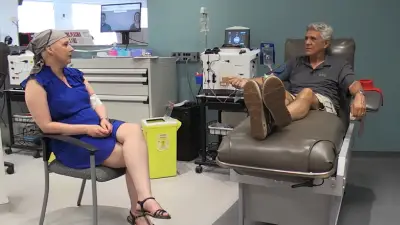
Aliza Virani lost her international event-planning career and her "prime dating years" during the COVID-19 pandemic and a subsequent health scare. In 2023, at age 33, she decided to freeze her eggs. However, her experience in Vancouver was far from ideal.
A Pressure Cooker Experience
Virani felt immense pressure to freeze her eggs before turning 35. With financial help from her parents, she paid $16,000 but only managed to freeze three eggs—a low result for a woman her age. She described the process as "emotional and disappointing," attributing the poor outcome partly to stress.
"We have the pressure to own a home, the pressure to have a career, the pressure to take care of our aging parents," Virani said. She also noted societal expectations to be married and "still look young and beautiful."

The ticking of her "biological clock" had motivated her to pursue egg-freezing, but afterward she felt uninformed about the odds of success and alone while dealing with harsh side-effects from the egg retrieval.
Industry Concerns
Virani's experience echoes findings from Fertility Inc., a five-part series by the Investigative Journalism Bureau and Postmedia News. The series examined the largely unregulated egg-freezing industry, documenting misleading advertising, emotional manipulation, high costs, and a lack of transparency about the chances of achieving a successful pregnancy.
Egg-freezing involves collecting and storing eggs until a woman wants to have a baby. The eggs are then thawed, fertilized with sperm to create embryos, and transferred to the uterus. While the procedure has been available since the 1980s for medical reasons, elective egg-freezing for family planning began in Canada in 2012.
The industry has boomed, more than doubling from 2020 to 2024. However, of the 4.1 million babies born in Canada between 2013 and 2023, only 70 are known to have come from frozen eggs, according to the Canadian Fertility and Andrology Society. Despite this, Canadian women have paid millions for the procedure.
Creating a Solution
Virani wished society would allow women to slow down and protect their health to improve natural fertility. But for those who choose to freeze eggs, she set out to address the problems she faced: high costs, lack of clear information, isolation, and emotional uncertainty. She created The Fertility Co-Living, an egg-freezing retreat in Mexico where women undergo the procedure together.
She held two retreats in July and November 2025, with eight clients from Canada, the U.S., and New Zealand, ranging in age from 31 to 43. The next retreat is scheduled for September, with four women already enrolled.