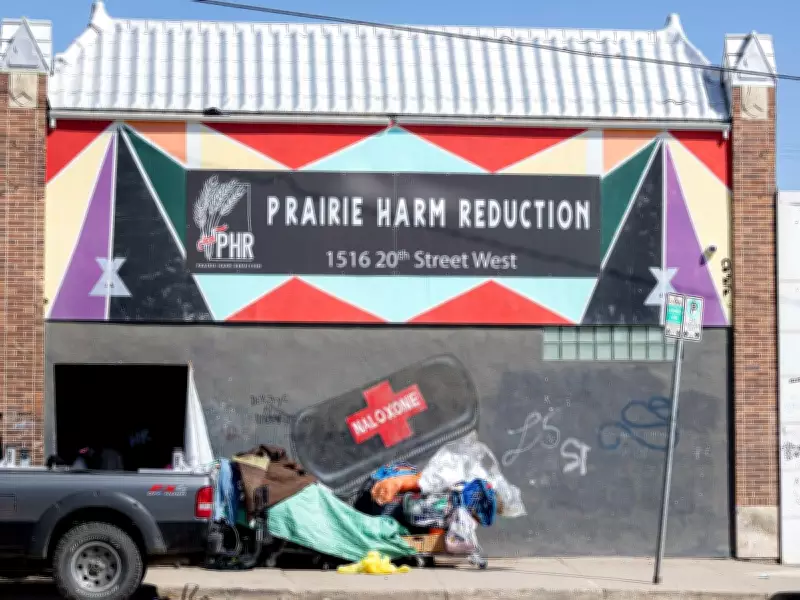
Saskatoon Organizations Assess Impact as PHR Consumption Site Closes
Community organizations in Saskatoon are grappling with uncertainty as they await the potential ripple effects from the closure of Prairie Harm Reduction's supervised consumption site. The facility, which provided critical harm reduction services, was suspended by Health Canada on March 25, citing significant funding shortfalls and organizational constraints that compromised its ability to operate safely.
Funding and Management Challenges
Prairie Harm Reduction, located on 20th Street in Saskatoon, relies primarily on community support for its funding. However, the organization has encountered a substantial cash deficit driven by escalating demand for services and what has been described as insufficient financial management. This financial strain led to the recent removal of executive director Kayla DeMong, according to PHR statements.
A Health Canada spokesperson clarified that the suspension requires the site to cease operations until further notice, without specifying if this measure is permanent. The agency emphasized that exemption holders must demonstrate adequate resources, including funding and organizational capacity, to meet public health and safety objectives under the Controlled Drugs and Substances Act.

Government Response and Contract Termination
The Saskatchewan Party government followed Health Canada's lead, announcing the termination of its contracts with Prairie Harm Reduction. Officials stressed that the government never supported the supervised consumption site component of PHR's operations.
The provincial health ministry had been providing $346,000 annually for outreach, education, and increasing access to take-home Naloxone kits. In a statement, the ministry confirmed it would work with other community-based organizations to ensure continuity of these essential services.
Additionally, the social services ministry had allocated $2.181 million to PHR for two youth homes and family support services. Authorities are now focused on ensuring there is no disruption in care for the affected youth during this transition period.
Exponential Growth in Demand
Prairie Harm Reduction reported in a news release that demand for its services surged by almost 300 percent over the past year. The organization acknowledged that in our effort to respond to that need and avoid turning people away, PHR spent more than our revenues allowed.
The most recent annual report available, covering the 2021-22 fiscal year, reveals the scale of operations: the drop-in centre received 23,876 visits, while the supervised consumption site recorded 4,590 visits from 577 unique individuals. During those visits, staff successfully reversed seven overdoses and made 585 referrals to various support programs.
Broader Context of Saskatoon's Challenges
The issues surrounding homelessness and addiction in Saskatoon have intensified dramatically since 2021. While no point-in-time homelessness count was conducted that year, the numbers have soared from 550 people counted in 2022 to 1,931 in 2025, highlighting the growing need for comprehensive support services.
Despite the suspension of the supervised consumption site, Prairie Harm Reduction's drop-in centre remains operational, providing some continuity of service. However, community organizations across Saskatoon now face the challenge of filling the gap left by the closure while assessing how this development will affect their own operations and the vulnerable populations they serve.
The coming weeks and months will reveal the full impact of this service reduction as organizations monitor service utilization patterns and collaborate to address the ongoing public health crisis affecting Saskatoon's most vulnerable residents.