A Formal Apology After Decades of Pain
My mother announced, as our therapy session began in her therapist’s San Francisco office, that she had prepared a list titled “the 40 most unforgivable things I’ve ever done to my daughters.” Fog drifted above the skylights while she fidgeted, twirling her blue chiffon scarf. I cringed, hating the idea of therapy, though my mother loved it. She had convinced me to attend despite my protests that I didn’t need apologies. At 30, I still felt frozen in fear, as if I were 7 years old hiding under my bed from a beating.
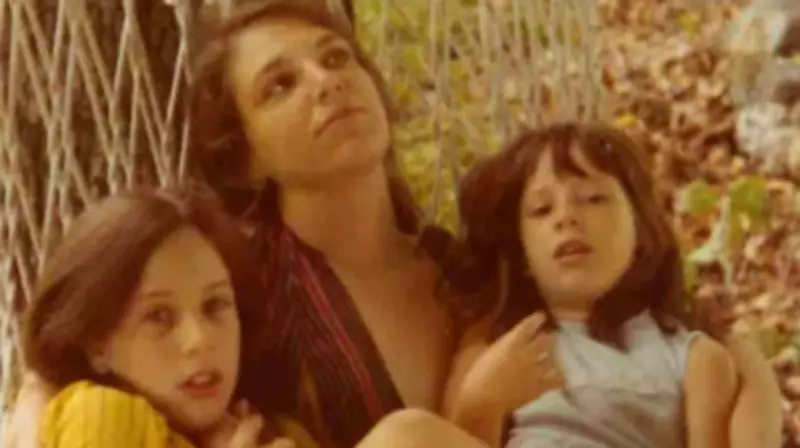
I sat opposite my mother as she smoothed her light pink matching skirt and jacket, as if erasing wrinkles could somehow iron out our relationship. My parents, Russian Jewish second cousins, met at a bar mitzvah and married at 19. My mother was 20 when I was born. She became addicted to speed to lose baby weight and used barbiturates to sleep. When I was 7, they divorced; my father moved to Mexico, while my mother, sister, and I stayed in New York City.
My mother had been seeing her psychoanalyst weekly for decades to process the guilt of having been an abuser during the first 13 years of my life. Meanwhile, focused on becoming a college professor and starting my own family, I spent those decades pretending I wasn’t damaged. Denial protected me, and I had never seen a mental health specialist. Twenty years after she got sober, she arranged this formal session to ask for forgiveness. Until then, we had enjoyed pleasant times by never discussing the past.

The Session Unfolds
My lower back ached as I settled into the stiff beige leather chair, wishing I wasn’t there. The therapist, Terry, said, “Today’s session is for your mom. She wants to tell you how sorry she is about the abuse that took place when you were young. She’s been plagued with guilt.” I looked at my 50-year-old mother, whose hazel green eyes I inherited, along with her petite frame and dimples. I also have her thick wavy brown hair and perhaps her tendency to fidget, as I nervously twisted a strand of hair while she spoke. In every other way, I felt nothing like her.
“The fact that your mom is about to apologize for specific acts of violence and neglect in no way excuses her past behavior,” Terry said. I sat motionless and mute, staring at Mom. I knew what she was going to say and didn’t want to hear it.
“When Leslie was 5, I repeatedly closed her in the garbage room and told her I didn’t want her anymore,” Mom read aloud. “Each time she tried to come out, I slammed the door shut and told her she was being thrown away.” I quivered as if she were still locking me in that rubbish room in our Manhattan apartment building. I shrank back to being tiny and helpless. Mom continued, “I know I can’t undo the past. I feel so much pain, I don’t want to die without saying how sorry I am for everything on my list.”
She read from her categorized maltreatments: strangling me, pulling my sisters and me around by our hair, hitting us at midnight when her speed kicked in, forcing us to clean at 2 a.m., repeatedly telling us she wished we were dead and had never been born, bringing home drug dealers, and holding primal scream groups where we had to hear adults yell obscenities several nights a week. Mom made it only partially through her list before I could barely stand it. My mouth was ajar, my breathing jagged, as if gasping for air in a room on fire. Ribbons of red streaked across the skyline as the sun set. The session ended with an eerie silence. Still pulled by a primal force to please her, I finally spoke: “Mom, I forgive you.”
I had not gotten over any of it—I had just gotten good at saying I had. Her description of each act reminded me of everything I tried to ignore. It was both re-traumatizing and validating to hear her voice these truths. Though I remembered it all, hearing the details woke me up to my deep, unprocessed pain.
Mom’s face went pale, her limbs limp. Perspiration lined her hairline as she tilted her head down and said softly, “I can’t believe how mercilessly I hurt my own babies.”

Lunch After the Apology
A late lunch at the Thai restaurant below her therapist’s office had been planned, but after the session I had no appetite. The scent of lemongrass and garlic wafted around, doing nothing to return me to my senses. Mom must have known. Before I scanned the menu, she said, “I don’t know how you can sit near me after hearing all that. You must think I’m a monster. How can you even stand to look at me?” I tried to dismiss her anxiety: “Oh, of course I can look at you and have lunch with you because I love you. That was all so long ago. We can move on now.”
Multicolored Christmas lights and twinkling mini-Buddhas surrounded our booth, but I felt anything but festive. As an abused child, I always craved my mother’s love and professed my own often, hoping for more. Over the years, I learned this behavior was typical. The menu blurred as I blinked back tears. I knew I was lying to myself and wasn’t ready to move on. I still harbored unresolved resentment and anger. Faking feelings was my jam, so I blurted out, “What great flavors!” after my first bite of pad Thai, even though I tasted nothing but bitterness. Though upset, I realized that Mom’s bravery in apologizing for specific offenses enabled me to understand that I would need to begin my own therapy someday. But I wasn’t ready yet. My fierce focus on forgetting continued for years.
A Shared Spiritual Journey
No one close to me could understand why I still had a relationship with my mom after the abuse ended. Therapy, which I finally began 10 years after that session, and Buddhism helped create loving emotional connections. We began practicing Buddhism when I was in seventh grade. My mother had planned to kill herself but instead tried an ancient meditation chant, Nam Myoho Renge Kyo, based on Mahayana Buddhist teachings. She dared me to try it with her for 100 days as a last attempt at happiness. I tried it initially to prove her wrong, but as we chanted day after day, I felt hope and noticed Mom becoming kinder.
Within that year, she stopped using drugs and hitting us. This motivated me to stay connected. The Sanskrit word myo means to revive. Through the visceral vibration of chanting daily, I started sensing maternal love from Mom. Her actions to transform our destiny began with our shared spiritual journey when I was a teenager, enabling me to enjoy time with her even though the trauma was still locked in my cells. Before I finished that school year, she began seeing her therapist.
The Long Road to Healing
I was 32 when I received her formal apology. It became a positive pivot, but I still couldn’t entirely move forward. Eight years later, I became so sick I ended up on the floor in a fetal position, unable to walk my kids to school. I was diagnosed with severe, chronic ulcerative colitis—an autoimmune disease. A Reiki practitioner I started seeing asked, “Did you ever experience any trauma?” I laughed nervously and said, “My mom used to smack, hit, and yell at me most days for over a decade, but that was so long ago, that can’t be why I’m sick.” She looked at me and said, “That’s exactly why you’re sick.” That’s when I finally started therapy and began to understand why it had been so life-changing for my mom.
Our braided spiritual journey and her atonement initiated reconciliation, but I had a lot of work to do if I truly wanted to heal. While we never had a second therapeutic hour together, I continued the work Mom set in motion on my own. My mother passed away from diabetes 10 years after I began processing my terrifying childhood. She was only 69.
Finding Peace After Her Death
I find comfort in having been able to experience joy with her during her lifetime, something I once thought impossible. On her deathbed, she looked up at me and said, “How can you truly love me?” Unlike the lie I told in the Thai restaurant years earlier, this time I meant it when I said, “Mom, I do love you. You can let go and go to your next life. I will be OK.” After her death, I found nine of her diaries while clearing out her office. She recounted the abusive years in each journal. I learned she was consumed by self-hatred for her entire life—that’s why she thought suicide was her only way out when I was in middle school. I also found the original atonement list in one of her notebooks. It spanned 10 pages. I discovered that her therapist had encouraged her to create that formal session to make amends.
Reading her words line by line, I was overwhelmed not only by her regret for hurting me, but also by how desperately she wanted my happiness. Mom halted generational trauma in its tracks by changing her behavior, which led to my ability to break the cycle. She continues to propel my healing even after her death. My daughters marvel at the transformation from one generation to another, and on more than one occasion, they have told me they’re proud of me for changing our family patterns.
I continue practicing the Buddhism my mother and I began when I was 13. I still go to therapy to process my painful past. But now, instead of only her wrath, I feel my mother’s courage to transform her life and repent. Remembering the words she said to me so long ago helps me heal as I continue to hear her apology in my head. I forgive her again and again. She showed me how darkness can turn into light. What greater love is there than that?