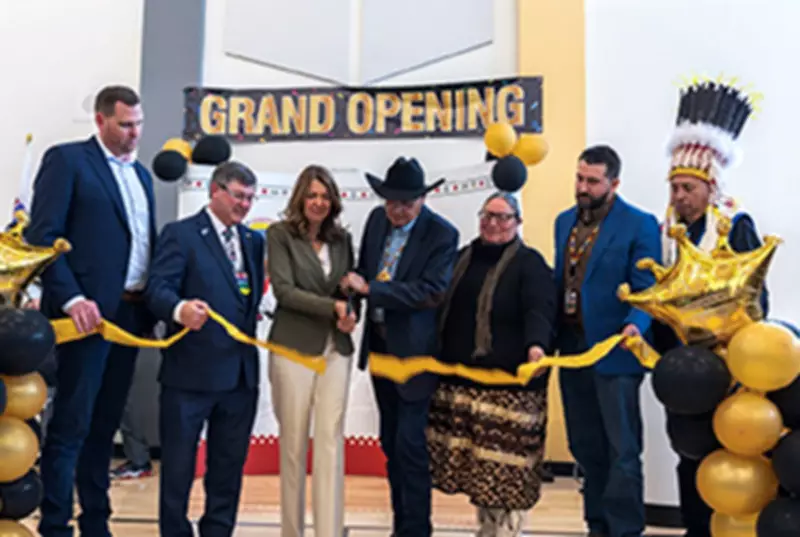
A new recovery community has opened its doors on the Blood Tribe reserve, providing much-needed addiction treatment services closer to home for Indigenous people in southern Alberta. The Blood Tribe Iitakamotsiipiohsopi Recovery Community was officially inaugurated on May 6, 2026, with Premier Danielle Smith and several provincial ministers in attendance.
A Milestone for Indigenous Health
The facility, whose name in Blackfoot means 'a place where we help each other,' is designed to offer culturally appropriate care for those struggling with substance use disorders. It is operated by the Blood Tribe Department of Health and represents a significant step forward in addressing the addiction crisis within Indigenous communities.
During the opening ceremony, Premier Smith emphasized the importance of community-led solutions. 'This recovery centre is a testament to what can be achieved when Indigenous communities take the lead in designing services that meet their unique needs,' Smith said.

Rick Wilson, minister of mental health and addiction, highlighted the government's commitment to supporting such initiatives. 'We are proud to partner with the Blood Tribe to bring recovery services closer to home, reducing barriers to treatment and supporting long-term healing,' Wilson stated.
Community Leaders Express Hope
Chief Traveller Plaited Hair expressed gratitude for the collaborative effort that made the centre a reality. 'This is a proud day for our people. We have long advocated for services that respect our culture and traditions, and this centre does exactly that,' he said.
Crystal Day Chief, representing the Blood Tribe Department of Health, noted that the facility will serve not only Blood Tribe members but also individuals from surrounding areas. 'Addiction does not discriminate, and neither does our centre. We welcome anyone seeking help,' she said.
The centre offers a range of services, including detoxification, counselling, and aftercare programs, all delivered in a setting that incorporates Indigenous healing practices. Traditional ceremonies and land-based activities are integral parts of the treatment approach.
Addressing a Critical Need
The opening comes at a time when Alberta, like much of Canada, is grappling with a devastating opioid crisis. Indigenous populations have been disproportionately affected, with higher rates of overdose and limited access to culturally safe care.
Kash Shade, CEO of the Blood Tribe Department of Health, emphasized the centre's potential impact. 'This is more than a building; it is a beacon of hope. We are committed to saving lives and rebuilding our community one person at a time,' Shade said.
Councillor Marcel Weasel Head, board chair of the Blood Tribe Department of Health, echoed that sentiment. 'Our ancestors taught us to care for one another. This centre is a modern expression of that ancient value.'
Provincial Support and Future Plans
The Alberta government provided funding for the centre through its recovery-oriented system of care. Officials indicated that similar projects are being considered for other Indigenous communities across the province.
MLA Joseph Schow, representing Cardston-Siksika, praised the collaboration. 'This is a model for how governments and First Nations can work together to achieve meaningful outcomes,' Schow said.
The Blood Tribe Iitakamotsiipiohsopi Recovery Community is now accepting referrals and is expected to serve hundreds of individuals annually. Its opening marks a new chapter in the fight against addiction, one rooted in community strength and cultural resilience.