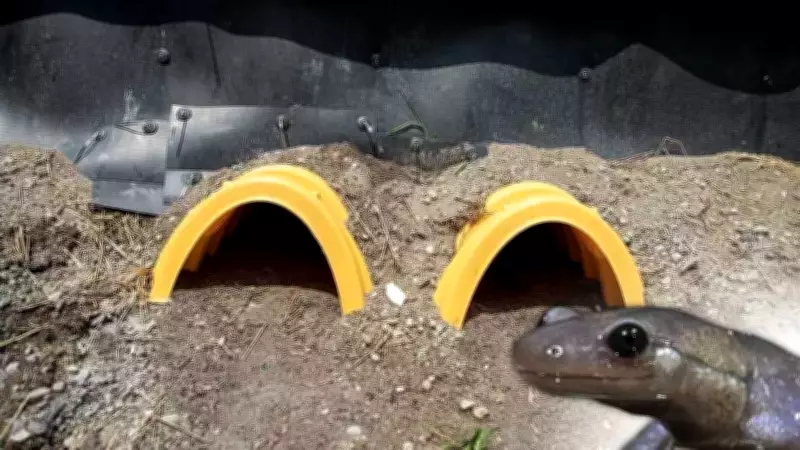
In a significant move for wildlife preservation, York Region has introduced a new tunnel system designed to protect the endangered Jefferson salamanders during their critical spring and fall migrations. This innovative infrastructure aims to reduce the risks these amphibians face when crossing busy roads in Richmond Hill.
Safer Migration for Endangered Amphibians
The annual journey of the Jefferson salamanders involves traversing Stouffville Road between Bayview Avenue and Leslie Street to reach their breeding wetlands and return to forest habitats for hibernation. Historically, this migration has posed severe dangers due to vehicle traffic, prompting temporary road closures during rainy nights to aid their safe passage.
However, the newly unveiled plastic tunnels, built last summer in collaboration with the Toronto and Region Conservation Authority, offer a permanent solution. These tunnels, accompanied by exclusion fencing, guide the greyish-brown, lizard-like amphibians safely under the two-lane road, minimizing human-wildlife conflicts.

Long-Term Conservation Strategy
Gerard Sullivan, an environmental specialist with York Region Public Works, emphasized the importance of this project in a promotional video. He stated, "The salamanders are an excellent indicator of healthy forests and ecosystems in this community. We hope these tunnels and continued support from the community and our partners will allow the Jefferson Salamanders to live long, healthy lives."
The area, located within the Oak Ridges Moraine, is one of the few known habitats for Jefferson salamanders outside the Niagara Escarpment, highlighting the urgency of these conservation measures.
Broader Efforts Across the Region
Similar initiatives are underway in other parts of Ontario. In Burlington, a section of King Road has been temporarily closed since March 11 to protect salamanders during their breeding migration, a practice ongoing since 2012 in partnership with Conservation Halton. Burlington Mayor Marianne Meed Ward explained the closure on social media, humorously noting, "We call our salamanders Sally and Jeff, and they need to mate to propagate the species. So we close the roads so Sally and Jeff don’t get squished when they’re crossing to go to their habitat."
This closure is set to remain in effect until April 8, demonstrating a regional commitment to safeguarding these vulnerable creatures.
Community and Environmental Impact
The tunnel project in York Region not only benefits the salamanders but also serves as a model for sustainable urban planning. By integrating wildlife corridors into infrastructure, it promotes biodiversity and ecosystem health, aligning with broader environmental goals.
As climate change and urbanization threaten natural habitats, such innovative approaches are crucial for preserving endangered species and maintaining ecological balance. The success of these tunnels could inspire similar projects nationwide, fostering a culture of conservation and responsible development.