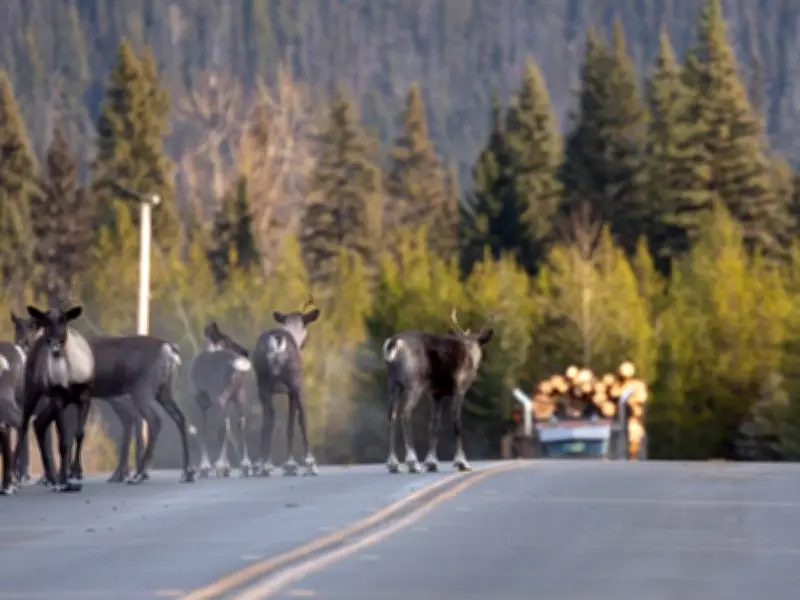
Environmental Organizations Launch Legal Action Against Federal Government Over Caribou Protection Delays
Several prominent British Columbia environmental groups have initiated legal proceedings against the federal government, alleging significant delays in protecting the threatened southern mountain caribou population. The lawsuit, filed in Federal Court on Monday, represents a critical escalation in the ongoing battle to preserve this iconic Canadian species.
Decades of Threatened Status with Limited Action
Southern mountain caribou have been officially classified as threatened under Canada's Species at Risk Act for more than twenty years. Despite this longstanding designation, conservation efforts have failed to prevent the extinction of eight distinct herds, highlighting the urgent need for comprehensive protective measures.
The environmental coalition, represented by Ecojustice and including Stand.earth, Wildsight, and the Wilderness Committee, contends that the federal Environment Ministry has delayed mapping the animal's critical habitat for more than eleven years beyond established deadlines.

Legal Basis and Government Obligations
According to the lawsuit, habitat mapping represents a fundamental first step under the Species at Risk Act for protecting and recovering caribou and other threatened and endangered species. The federal government released a recovery strategy in 2014 that included commitments for partial habitat mapping by the end of that year.
"More than a decade later, the groups say nothing has been done to fulfill these commitments," states the legal filing. The document specifically notes that more than eleven years have passed since the December 31, 2014 deadline, with the minister failing to publish an amended recovery strategy or action plans that fully map and identify critical habitat for southern mountain caribou.
Immediate Threats and Conservation Concerns
Caribou populations continue to decline primarily due to habitat loss resulting from logging operations and other industrial development activities across southern and central British Columbia. Of the original eighteen herds, eight have already been declared extinct, creating what conservationists describe as a biodiversity crisis.
Ecojustice lawyer Sean Nixon emphasized the severity of the situation, stating that "the government's continuing failure to finish habitat mapping for these caribou is causing serious harm to an iconic Canadian species."
Environmental Impact During Delays
During the years of governmental inaction, logging and industrial development have continued unabated across caribou habitat regions. Old-growth forests have undergone clearcutting operations, pushing remaining herds closer to extinction according to environmental experts.
Eddie Petryshen, a conservation specialist at Wildsight, expressed the urgency of the situation: "We cannot allow more localized extinctions to happen; the federal government must step up and fulfil its responsibility to protect this iconic and threatened species."
Legal Objectives and Conservation Demands
Legal representatives for the environmental coalition are seeking a court order declaring that the delay in habitat mapping constitutes unlawful action under Canadian environmental legislation. The lawsuit represents a strategic effort to compel governmental compliance with existing species protection laws.
Tegan Hansen, a senior forest campaigner at Stand.earth, highlighted the temporal urgency of the situation: "Eleven years is far too long to wait for the government to fulfil its pledge to map the habitat. While the ministry drags its feet, some southern mountain caribou herds have vanished."
Hansen further emphasized that "it shouldn't take a lawsuit for the government to meet its obligations, but we don't have another decade to waste if we want this species to survive. That's why we're headed to court."
Environment and Climate Change Canada has not yet responded to requests for comment regarding the ongoing legal proceedings. The case represents a significant test of federal environmental protection commitments and their implementation timelines for endangered species conservation.