In a significant victory for conservation efforts, the city of Calgary successfully reduced its daily water consumption into what officials are calling the 'sustainable zone' overnight. The achievement marks a critical turning point in managing the city's precious water resources.
A Community Effort Yields Results
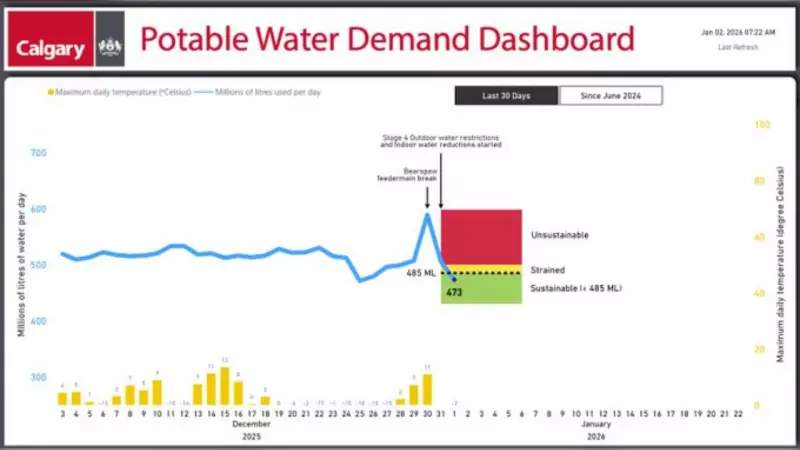
The milestone was recorded on Thursday, January 2, 2026, when total water use by residents and businesses fell to approximately 473 million litres. This figure represents a substantial decrease from previous levels and falls within a range that the city's infrastructure can support without strain. The dramatic drop is a direct result of a concerted public campaign urging Calgarians to be mindful of their water use.
The Path to Sustainability
Reaching this sustainable level did not happen by accident. It followed persistent calls from city officials and environmental advocates for reduced consumption. The community-wide response demonstrates a strong collective commitment to resource stewardship. While specific conservation tips were promoted, the core message focused on simple behavioral changes that, when adopted by hundreds of thousands of people, create a massive cumulative impact.

This achievement is particularly noteworthy as it shows that public appeals for action can lead to measurable, positive environmental outcomes. The data from Thursday proves that the city's water system can operate efficiently when demand is managed responsibly.
Looking Ahead for Calgary
The success in lowering water usage to 473 million litres sets a new benchmark for the city. It provides a clear example of what is achievable through community cooperation. However, officials and environmental groups will likely emphasize that this should be the beginning of a new normal, not a one-time event. Sustaining this level of consumption will be key to ensuring long-term water security for Calgary, especially in the face of variable climate conditions and population growth.
The positive outcome also serves as a powerful model for other Canadian municipalities facing similar water management challenges. It underscores the importance of public engagement and clear communication in achieving critical infrastructure and environmental goals.