Calgary's water supply is under renewed strain after the city's most critical water transmission line ruptured for the second time in less than two years. The failure has plunged water storage levels into the 'red zone' and triggered strict conservation measures across multiple communities.
Second Catastrophic Failure in 18 Months
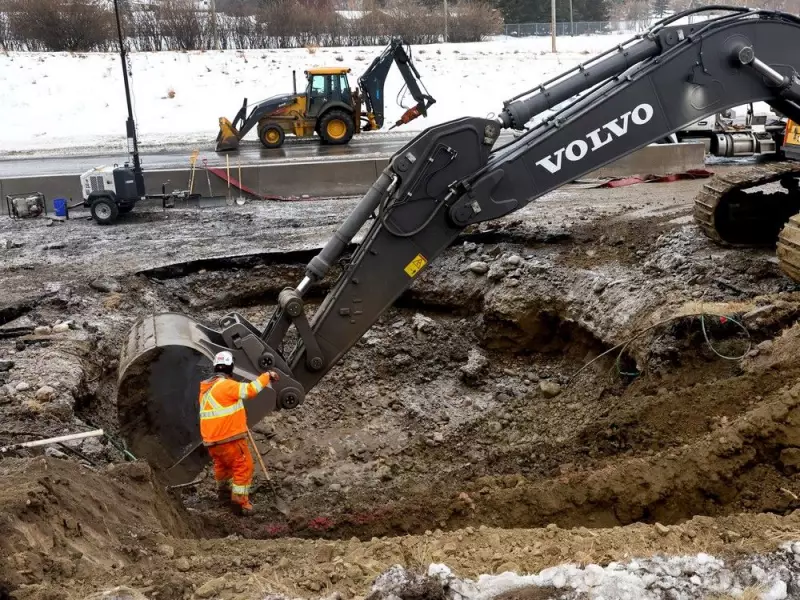
The Bearspaw south feeder main, a crucial artery built in the 1970s that carries 60 per cent of the outflow from the Bearspaw water treatment plant, suffered a catastrophic break on Tuesday night. This incident occurred less than two kilometres east of a previous rupture that happened on June 5, 2024.
City officials now estimate repairs will take approximately two weeks to complete. During a New Year's Day update, Michael Thompson, Calgary's general manager of infrastructure services, addressed the severity of the situation, noting the expedited timeline for a permanent fix.

Immediate Restrictions and Accelerated Replacement Plan
In response to the crisis, Stage 4 outdoor watering restrictions remain firmly in place not only in Calgary but also in the neighbouring communities of Airdrie, Chestermere, Strathmore, and the Tsuut'ina Nation. These measures are critical to preserving the city's dwindling water reserves while repairs are underway.
Mayor Jeromy Farkas stated unequivocally that the feeder main has reached the end of its reliable service life. "We can keep patching it. We can keep reacting, but it will continue to fail until there is an alternative built," Farkas said. "No amount of short-term fixes will change that."
Consequently, the city is fast-tracking the Bearspaw South Feeder Main Improvement Project. This project, which was already on an accelerated schedule, will now be pushed forward even more aggressively. The plan involves constructing a new, parallel steel pipeline to replace the aging infrastructure.
A Long-Term Solution Takes Shape
The replacement project will be built in two stages, ultimately adding a six-kilometre pipe parallel to a similar section of the existing main. The city has already begun the procurement process, issuing a request for proposal last month to invite construction bids for the first stage.
Once finished, the new pipeline will replace the entire section of the Bearspaw south feeder main located north of the Shaganappi pump station. This project aims to secure Calgary's water transmission system for future generations, moving beyond the reactive repairs that followed the 2024 break, where 29 sections of the pipe were either replaced or reinforced.
As crews work around the clock at the rupture site near Highway 1 and 29th Avenue N.W., the message from city officials is clear: conservation is imperative, and a permanent, modern solution is the only path forward to ensure a reliable water supply for Calgary.