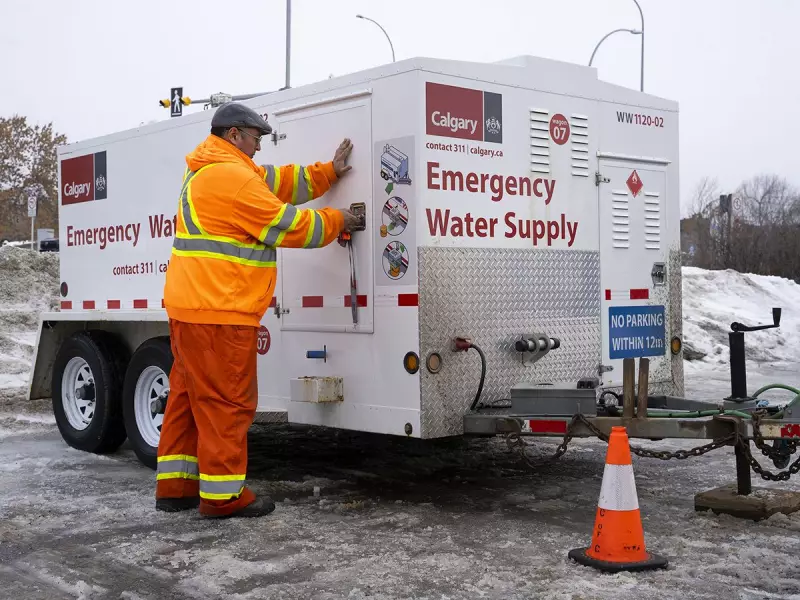
The recent rupture of the Bearspaw South feeder main has plunged parts of northwest Calgary into a water crisis, but it has also opened a critical conversation about the city's long-term water resilience. The incident, which occurred in January 2026, has prompted residents to call for a fundamental rethink of how Calgary uses its most precious resource.
A Catalyst for "Outside the Box" Thinking
In a letter to the editor, Calgary resident Elena Zaldivar sees the pipeline break as a pivotal opportunity. She questions whether the city should explore adding more redundancies to its water system to prevent future widespread disruptions.
More importantly, Zaldivar pushes for a review of how potable drinking water is allocated. She asks if it's time to stop using treated water for commercial purposes like irrigating golf courses and parks, operating car washes, or making ice at community arenas. The letter further probes the feasibility of re-engineering systems to avoid using drinking water for lawn watering, toilet flushing, and even washing.

"Is more efficient use of non-potable water something that could be incorporated in the city’s building codes?" Zaldivar writes, acknowledging that the cost of such a systemic overhaul would be a key consideration. She concludes that this crisis is the right moment to encourage innovative, "outside the box" thinking among the city's administrators.
Criticism of Provincial Oversight
The water crisis has also reignited debates about provincial involvement in municipal affairs. In a separate letter, Paul C. Breeze of Calgary expresses astonishment at Premier Danielle Smith's remarks suggesting provincial oversight for Calgary's water supply.
Breeze critiques the province's track record, pointing to long-standing issues in healthcare and highway speed control. He highlights the province's handling of the Calgary Green Line LRT project, noting that a review initiated in 2021 yielded no comments until 2024, causing costly delays.
Perhaps most pointedly, Breeze references the devastating 2013 flood, stating that as of 2026, there is still no upstream mitigation on the Bow River. Based on this history, Breeze firmly argues that the provincial government's record "has not earned you the right to meddle in Calgary’s water supply."
A Plea for International Advocacy
Amidst the local concerns, the crisis in Calgary has also prompted a letter with an urgent international focus. Another resident shares a profound personal concern for the escalating protests in Iran, which began on December 28, 2025.
The writer reports being cut off from family and loved ones due to an internet blackout imposed by Iranian authorities, with no information about their safety amid reports of violent crackdowns. The letter is a desperate plea for advocacy, urging Canadian media and authorities to amplify the voices of protesters, demand internet restoration, support human rights investigations, and advocate for sanctions.
The water main break in Calgary has, therefore, become more than a local infrastructure story. It has served as a catalyst for discussions on urban sustainability, intergovernmental relations, and a stark reminder of the global fight for human rights and information freedom.