Saskatoon Grapples with Alarming Surge in Dutch Elm Disease Cases
The City of Saskatoon is considering significant action following an explosive increase in Dutch elm disease (DED) infections across its urban forest. According to a recent municipal report, confirmed cases have skyrocketed, presenting a serious environmental and budgetary challenge for city officials.
Dramatic Year-Over-Year Increase in Infections
The statistics reveal a troubling trend: while there were only four documented cases of Dutch elm disease in 2023, that number jumped to 11 cases in 2024 before exploding to 41 confirmed infections in 2025. This represents nearly a quadrupling of cases between 2024 and 2025 alone, and a tenfold increase since 2023.
The city report indicates that the disease has now become widespread throughout Saskatoon, prompting officials to reconsider their approach entirely. Rather than focusing primarily on prevention, the municipality is now looking to implement active management strategies to combat the fungal outbreak.

Funding Request and Management Strategy Shift
As part of this strategic pivot, the city is seeking an additional $1.7 million in capital funding specifically allocated for urban forestry and pest management. This substantial budget request was formally submitted to Saskatoon's environment, utilities and corporate services committee for consideration.
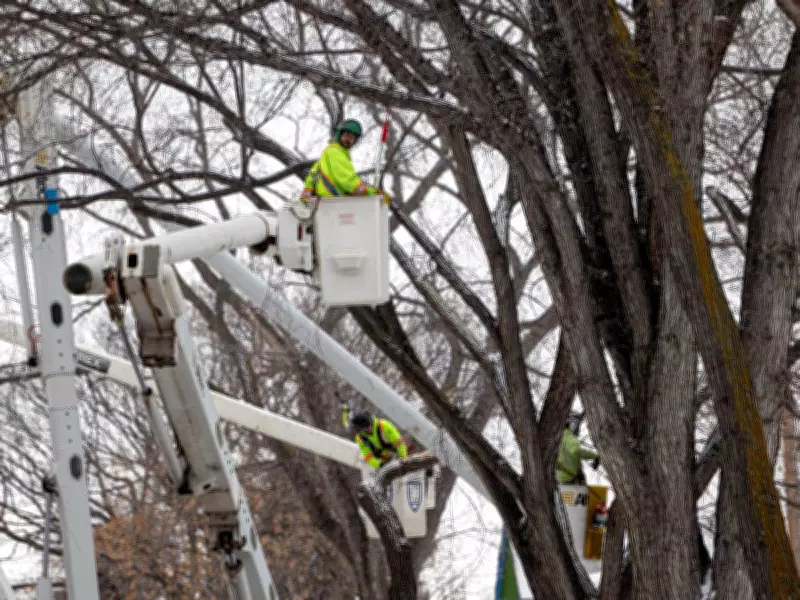
The proposed funding would support several critical initiatives, including increased fungicide injections, equipment purchases, truck rentals, and seasonal staffing to oversee tree removal operations. Additionally, the money would help implement contracts for elm removal, stump grinding, and tree replanting programs throughout affected areas of the city.
Understanding Dutch Elm Disease and Its Impact
Dutch elm disease is caused by a fungal pathogen that systematically clogs an elm tree's vascular system, preventing proper water conduction and ultimately killing the tree. The disease spreads primarily through several species of bark beetles, but can also transmit through root grafting between neighboring trees.
In response to the growing threat, Saskatchewan maintains an annual pruning ban between April 31 and August 31, coinciding with peak beetle activity periods when the risk of disease transmission is highest.
Current Response and Future Projections
The city implemented a response plan last year that emphasized rapid removal of infected trees. This initiative resulted in the parks department discovering and removing 14,400 kilograms of wood stored on residential properties, while residents and commercial customers disposed of more than 2,200 tonnes of elm wood.
Despite these efforts, the municipal report offers a sobering assessment: "With the drastic increase and widespread geographic distribution of DED in 2025, it is highly likely that the disease is now endemic in our community. DED will be nearly impossible to prevent moving forward." The document further warns that cases are expected to continue increasing throughout the current year.
Expert Perspective and Management Goals
Robin Adair, owner of Arbour Crest Tree Services, emphasizes the severity of the situation, noting that the city faces substantial work to get ahead of the disease. While arborists typically strive to preserve trees whenever possible, Adair confirms that elm trees infected with DED are not salvageable.
"Once a tree has DED, it's gone. There's nothing you can do to fix it," Adair stated. He did note that an injectable fungicide called Arbotect can help prevent healthy elm trees from contracting the disease, but only if the tree hasn't already grafted roots with a nearby infected specimen.
The city report references Winnipeg's management approach, which aims for a best-case scenario of losing only two percent of elm trees annually. Applying this benchmark to Saskatoon would mean approximately 550 trees lost each year, a rate that would significantly extend the average life expectancy of the city's mature elms if achieved.
As Saskatoon confronts this environmental challenge, municipal officials must balance immediate response actions with long-term urban forestry management strategies, all while navigating significant budgetary considerations and community impacts.