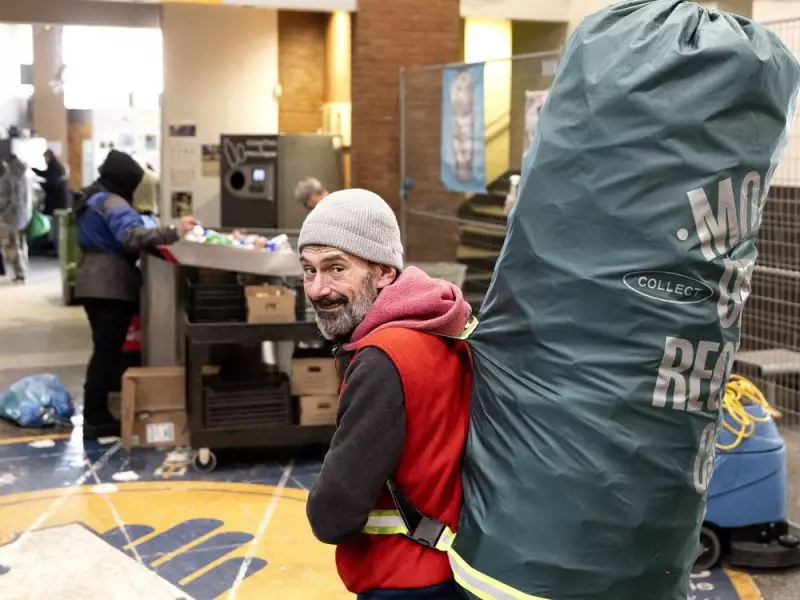
In an innovative move to support a marginalized workforce, a Montreal-based team has unveiled a specialized backpack designed for those who collect recyclable containers. Dubbed the "Dignity Bag," this voluminous green pack is more than just a tool; it's a statement aimed at casting a positive light on a profession often shrouded in stigma.
A Tool for Dignity and Safety
The lightweight, waterproof backpack can hold up to 240 aluminum cans, providing a robust and practical alternative to the flimsy plastic bags typically used. Its design directly addresses the physical challenges of the job. For safety, reflective lettering on the back reads "Montréal Urban Recycling Crew," offering visibility for collectors who often work at night.
The bag was conceived by Stuart Macmillan and Jean-Philippe Dugal of the creative design firm No Fixed Address (NFA). Dugal was personally motivated, having family members who collect cans. They partnered with the Montreal co-operative Les Valoristes, an organization founded in 2012 to support material recoverers.

"We saw the opportunity on two fronts," explained Macmillan. "They don't have the proper tools for the job, and there's a huge gap in public understanding of who they are and how much their work benefits the city and society. They are a very important part of the recycling system."
The Reality of Can Collecting in Montreal
Alex Verdun, a can picker in his 50s who has worked Montreal's streets for five years, exemplifies the profession's realities. He collects roughly 1,000 cans daily, working shifts of up to 12 hours, often at night. This earns him between $100 and $125, money he uses to cover rent and expenses.
"I like being my own boss," Verdun said. However, the job is physically taxing, leading to joint and back strain from leaning into bins, and cuts from broken containers. There are no benefits, sick days, or workers' compensation. Social stigma remains a persistent hurdle.
"It's still not a job that's socially acceptable," Verdun stated. "Those who collect cans in Quebec are still looked down upon."
Les Valoristes: Providing a Hub of Respect
The challenge of where to return large hauls led Les Valoristes to establish a dedicated depot, now operating from the former Voyageur bus station at Berri St. and de Maisonneuve Blvd. Here, collectors can bring any container—even crushed ones—and receive immediate cash payment, bypassing the often restrictive machines at grocery stores.
On a single frigid morning in December, dozens of collectors arrived with their hauls in shopping bags, boxes, and even a toboggan. The depot processes between 20,000 and 50,000 containers daily. In the past year, collectors brought over 7 million containers to this single location.
"Because of these people, millions of cans that would otherwise be rotting in parks or going to landfills are being recycled," said Karine Projean, co-director of Les Valoristes.
Beyond the transaction, the depot provides social interaction and respect. A 2021 Montreal study found that 88% of collectors have housing, and nearly half have completed high school. Their ranks include young people, employed individuals, and even an 88-year-old woman. Earnings fund rent, food, family visits, and simple pleasures like a shared lunch.
Changing Perceptions, One Bag at a Time
The creators are still refining the Dignity Bag's design, considering a squatter shape for easier carrying. With a production cost of about $40 each, they hope municipal governments and community organizations will fund them for distribution. Initial demand has come from collectors as far away as Trois-Rivières and Rimouski.
For Alex Verdun, the bag represents a step toward recognition. "I think it will help bring some respect for what we do," he said. He notes small signs of change: some residents now separate their cans for easier collection and offer a friendly hello.
"That's really appreciated," Verdun said, highlighting that dignity often comes in simple gestures—and sometimes, in a large, well-designed green bag.