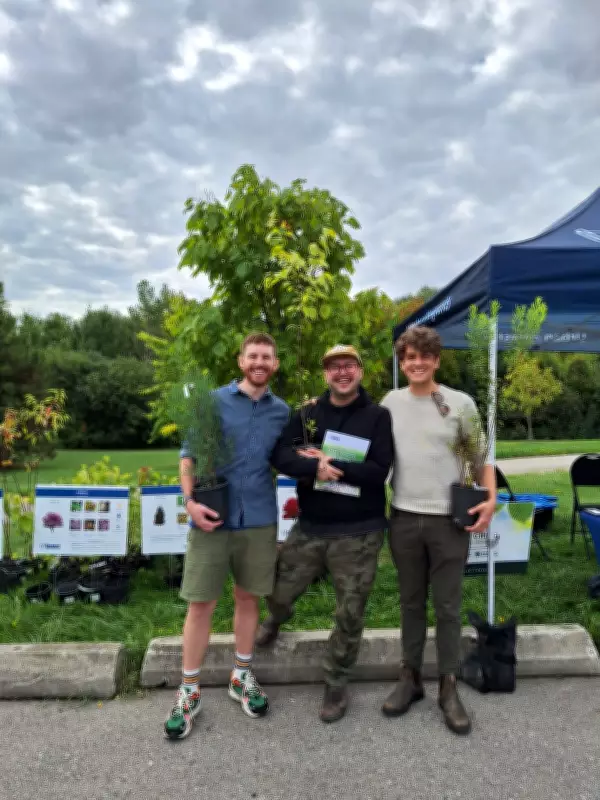
Across Canada, tree giveaway programs are taking root and transforming urban landscapes into greener, more livable spaces. These initiatives not only offer environmental benefits but also serve as a powerful tool for building community connections.
How Tree Giveaway Programs Work
In Ontario, major cities like Toronto, Ottawa, Mississauga, Brampton, and Kitchener host annual or semi-annual tree and shrub giveaways in spring and fall. These programs are part of broader efforts to increase the urban tree canopy, which measures the percentage of land covered by trees. A robust tree canopy is crucial for assessing a city's resilience to climate change, especially at the neighborhood level. Less affluent areas often lack parks and green spaces, making them hotter and less hospitable during warm weather, a phenomenon known as urban heat islands. Tree giveaways help address this equity issue by prioritizing low-canopy neighborhoods.
Toronto, for example, aims to expand its tree canopy from 28 percent to 40 percent by 2050. Since 2020, the Toronto Free Tree Program has distributed over 12,000 trees and shrubs. Residents can register online at www.toronto.ca/treegrants to receive up to two trees or shrubs per household. The plants come in one or two-gallon pots, ranging from one to four feet in height. The program targets specific neighborhoods each year, and trees must be planted on private property, such as front, side, or back yards, not on city-owned land.

Environmental and Health Benefits
Trees provide shade, clean the air, support biodiversity, and improve mental health. According to Credit Valley Conservation, they can reduce city core temperatures by up to 11 degrees Celsius by blocking asphalt and concrete from the sun and releasing water vapor. This cooling effect also reduces energy consumption for air conditioning and lowers heat-related illnesses, decreasing demand for emergency services.
Native species available through the Toronto program include arrowwood shrubs, which grow up to 10 feet tall and 12 feet wide, featuring white flowers and dark purple berries that attract pollinators and birds. Grey dogwood reaches 10-15 feet in height and width, with white blooms and blue-white berries that provide food for wildlife.
Community Connection and Resilience
Beyond environmental gains, these programs foster community ties. Municipalities, nonprofits, and residents collaborate to replant cities, making them more resilient. As Mark Wessel, a sustainability advocate from Ridgeway, Ontario, notes, one tree at a time, these initiatives grow something much larger than a canopy. Wessel encourages participation and emphasizes that tree giveaways are a simple yet impactful way to contribute to a greener future.