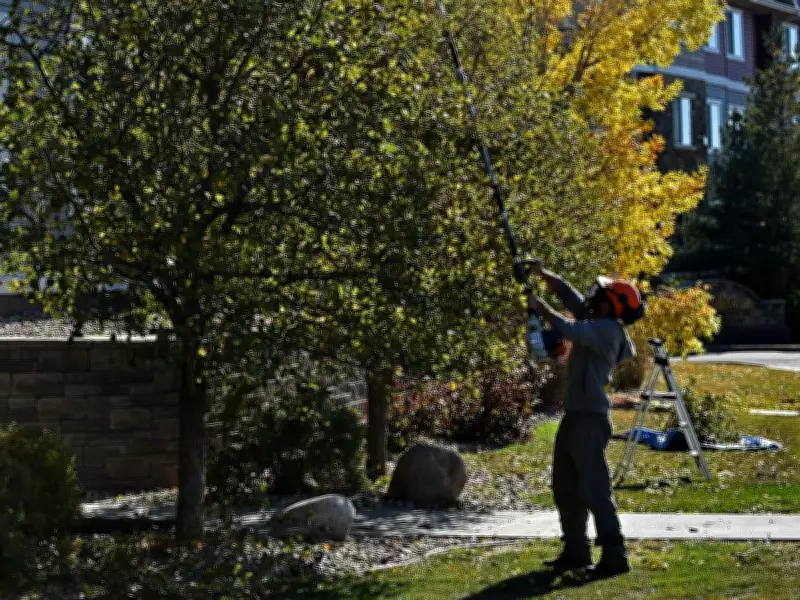
Edmonton Urban Planning Committee Confronts Tree Protection Debate
During a recent urban planning committee meeting in Edmonton, registered speakers delivered a powerful and unified message in favor of implementing a private tree protection bylaw. The overwhelming consensus among participants highlighted the urgent need to safeguard mature trees throughout the city, creating an unexpected point of agreement between various stakeholder groups.
Committee Reviews Zoning Bylaw Amendments
The committee members were actively reviewing amendments recommended by city administration, following a motion introduced by Mayor Andrew Knack last November. This motion aimed to accelerate the city's zoning bylaw review by one year, seeking to find common ground between established homeowners and those attempting to enter the competitive housing market. After two days of detailed presentations and discussions, protecting mature trees emerged as a potential area of consensus, despite administration specifically recommending against a private tree protection bylaw.
Advocates Present Compelling Case for Tree Protection
Jan Hardstaff, representing the residential infill working group, emphasized the critical timing of this initiative. "I think a private tree bylaw is well overdue," Hardstaff stated firmly. "We recommend the city immediately introduce a development permit process that would prevent trees from being removed without a development or demolition permit. That would prevent the clear-cutting of lots and demolishing homes, leaving lots vacant for 10 or 20 years sometimes."

Hardstaff continued with a stark warning about environmental consequences: "We're losing canopy at a rapid rate. That is not going to help us be resilient to climate change."
Edmonton's Canopy Coverage Lags Behind Other Cities
Kristine Kowalchuk, president of the Edmonton River Valley Conservation Coalition, presented concerning data about the city's current tree coverage. Edmonton currently maintains approximately 13 percent canopy cover with a goal of reaching 20 percent by 2071. This contrasts sharply with other major Canadian urban centers including Ottawa, Toronto, Montreal, and Victoria, which Kowalchuk noted already achieve 25 percent coverage with ambitious targets of 40 percent by 2050.
Kowalchuk outlined multiple benefits provided by urban trees:
- Reduction of urban heat through shade and evaporation
- Decreased crime rates in neighborhoods with mature trees
- Improved mental health outcomes for residents
- Enhanced ground cooling and better drainage systems
The Challenge of Increasing Urban Canopy
The conservation coalition president posed a critical question about Edmonton's future: "To achieve even 20 percent canopy target will require an additional 2,900 hectares of new canopy on private land—how will this be possible?" She argued persuasively that "if we're to increase our city's canopy or even maintain what we have, protecting trees on private property is necessary."
Kowalchuk presented research indicating that urban areas require 30 to 40 percent canopy coverage to effectively protect against the urban heat island effect. She emphasized that this range is particularly appropriate for Edmonton's unique aspen parkland ecosystem, especially when including the substantial tree coverage in the river valley areas.
Her closing argument resonated with economic concerns: "The loss of trees shortchanges and endangers generations of Edmontonians to come. If you want to keep our city affordable, protecting trees is the easiest thing to do."
Opposition Voices Express Concerns
A minority of speakers voiced opposition to the proposed tree protection measures, expressing concerns about potential negative impacts on development processes. These opponents suggested that additional regulations would create unnecessary red tape for developers and could potentially prevent homeowners from removing problematic or dangerous trees from their properties. The debate continues as Edmonton balances environmental protection with urban development needs.