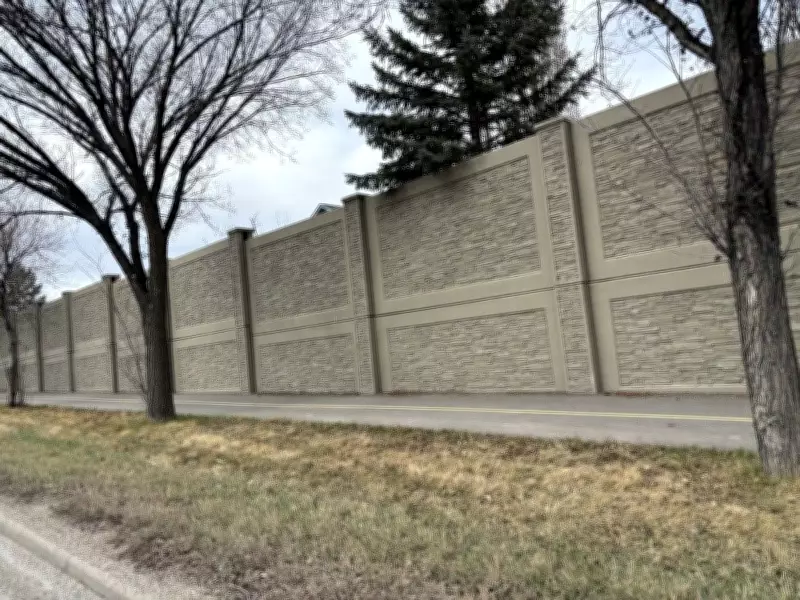
As I traverse Calgary by foot, bicycle, and car, I increasingly feel as though I reside within a walled metropolis. This perception likely stems from my proximity to Crowchild Trail, where extensive noise barriers stretch nearly its entire length, shielding neighborhoods from the relentless din of traffic. Living just nine houses away from what locals call the "Crowchild Wall," I witness firsthand how these structures define our urban environment.
The Origins: Screening Fences of the 1970s
Calgary's earliest urban walls were known as "screening fences," emerging in late 1970s subdivisions. Typically standing around six feet tall and constructed from wood or stucco, these barriers served primarily to provide privacy for residences adjacent to public pathways and parks, rather than addressing noise concerns. Today, approximately 200 kilometers of these screening fences exist across Calgary, with about 75 percent located on private property. Many are gradually being replaced by modern noise barrier walls along major, noisy roadways as part of city initiatives.
Community Art and Historical Murals
Interestingly, some of these aging sound fences have been transformed into vibrant community canvases. In 2018, forty homeowners in the North Hill community collaborated to paint their previously bland fence into a colorful mural depicting Calgary's historical themes, demonstrating how functional infrastructure can evolve into artistic community assets.

Calgary's Comprehensive Noise Barrier Program
The City of Calgary maintains a detailed noise barrier program, with comprehensive information available on its website. This resource outlines eligibility criteria for noise barrier installation and provides application procedures, along with a list of locations that have already undergone evaluation for potential barriers.
New noise barriers in Calgary are typically implemented through three primary methods:
- Developer installation during new construction when noise mitigation is deemed necessary
- City construction when roadways adjacent to existing residential communities undergo upgrades requiring noise reduction
- Qualification through the noise barrier program when City Council allocates specific budget funds
Maintenance and Budget Considerations
The city conducts detailed inspections of noise barriers every two years to assess their condition, with structures identified as being in poor condition inspected annually. For the 2023-2026 period, Calgary has allocated an estimated budget of $6.12 million specifically for noise barrier replacement projects. The city has also identified eleven priority locations for barrier implementation during this budget cycle.
Under normal conditions, road noise can typically be heard up to 1,000 feet (approximately 300 meters) from its source, highlighting the significant impact transportation corridors have on surrounding communities.
Surface Transportation Noise Policy
Calgary has implemented a sophisticated surface transportation noise policy designed to mitigate unwanted sound from nearby roads and railways, thereby protecting residents' quality of life. The city employs advanced methods to measure sound levels near major transportation corridors, ensuring systematic approaches to noise management.
When developers construct residential projects adjacent to applicable transportation corridors where expected sound levels exceed the city's noise limits, they become responsible for providing sound mitigation at their own expense. Developers retain choice in attenuation measures, subject to city approval, allowing for flexibility in addressing specific noise challenges while maintaining community standards.
This evolving approach to urban noise management reflects Calgary's commitment to balancing growth with quality of life considerations, transforming what began as simple visual screens into sophisticated systems that protect residents while shaping the character of neighborhoods throughout the city.