Historic Bomb Cyclone Paralyzes Northeast, Another Storm Looms
Communities across the northeastern United States mobilized on Tuesday to recover from a devastating winter storm that meteorologists have labeled the most powerful in a decade. The system, characterized as a classic bomb cyclone and nor'easter, unleashed staggering snowfall totals, shattered records, and triggered massive travel disruptions.
Record Snowfall and Widespread Disruptions
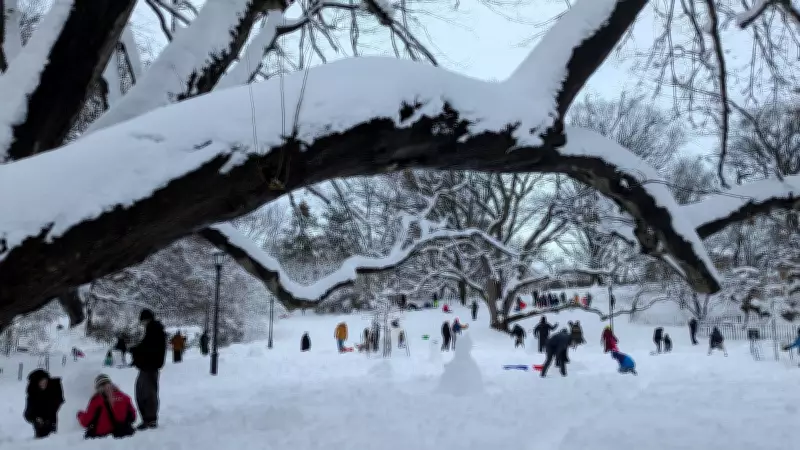
The storm, which peaked on Monday, deposited more than 2 feet of snow in numerous areas. Rhode Island bore the brunt, with some locations exceeding 3 feet. The National Weather Service confirmed this surpassed the historic totals from the Blizzard of 1978. Central Park in New York City recorded 19 inches, while Warwick, Rhode Island, led the nation with over 91 centimeters. A wind gust of 84 mph was measured in Montauk Point, New York.
The impacts were severe and far-reaching. More than 2,000 flights in and out of the U.S. were canceled on Tuesday, primarily affecting airports in New York, New Jersey, and Boston. Rhode Island's T.F. Green International Airport suspended operations after receiving nearly 38 inches of snow, breaking a 1978 record. The storm also caused power outages for hundreds of thousands of residents in Massachusetts, New Jersey, Delaware, and Rhode Island, though service was gradually being restored.

Emergency declarations were issued by New York, Philadelphia, and several states. The disruption was so profound that The Boston Globe canceled its daily print edition for the first time in over 150 years, as staff could not safely reach its printing plant.
School Reopenings Spark Controversy Amid Ongoing Cleanup
As snow-clearing efforts, aided by machinery like a railroad plow nicknamed "Darth Vader," progressed, the decision to reopen schools became a point of contention. New York City Mayor Zohran Mamdani announced schools would resume in-person learning on Tuesday, despite concerns about snow-clogged sidewalks.
This move was criticized by local officials and union leaders. Staten Island Borough President Vito Fossella argued schools should remain closed, while United Federation of Teachers President Michael Mulgrew described the situation as "a big mess," predicting low attendance from both students and staff due to travel difficulties. In contrast, Philadelphia opted for online learning, and many districts in Long Island and New York suburbs canceled classes again.
Another Winter System Threatens the Region
Even as recovery efforts continued, forecasters issued a new warning. The National Weather Service is tracking another storm system expected to bring a mix of rain and snow to the Northeast later this week. While not predicted to be as intense, meteorologist Frank Pereira cautioned that even a few additional inches could significantly hinder cleanup operations in already hard-hit areas.
"Any additional snow at this point is probably not going to be welcome," Pereira stated from the weather service office in College Park, Maryland. The potential for further accumulation underscores the prolonged challenge facing the region.
Community Response and Neighborly Aid
Amid the official response, residents demonstrated resilience and community spirit. In Brooklyn, individuals like Christa Prince were spotted assisting neighbors with shovels and snowblowers. "We're just making a path for this car," Prince explained. "It's not our car but you know, we're just doing our neighbor a kind deed." Such scenes highlighted the collective effort to overcome the storm's aftermath, even as the threat of more winter weather looms on the horizon.