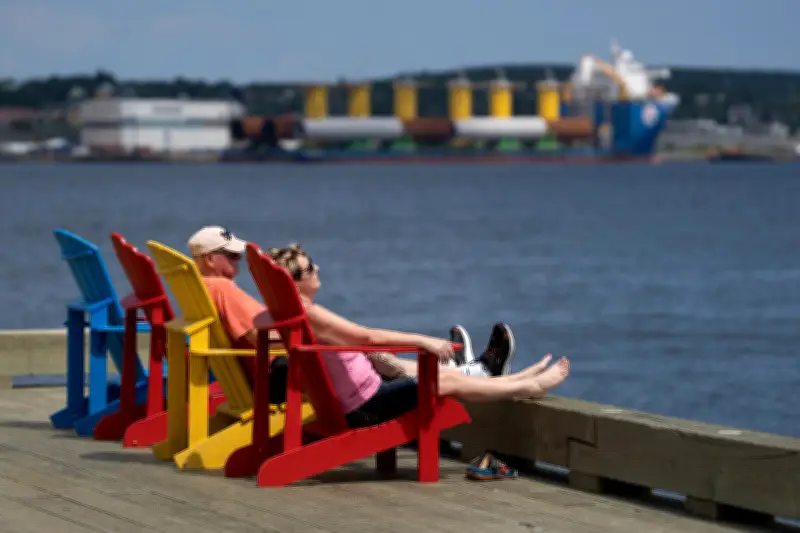
Heat warnings are in effect Saturday for parts of New Brunswick and Nova Scotia, as a heat wave continues to grip the Maritime provinces. Environment Canada issued the warnings for several regions, including Fredericton, Moncton, Saint John, and Halifax, with temperatures expected to reach the low 30s Celsius. Humidex values will make it feel like 38°C in some areas.
Regions Affected
The warnings cover much of southern and central New Brunswick, as well as mainland Nova Scotia. In New Brunswick, affected areas include Fredericton, Moncton, Saint John, and the interior of the province. In Nova Scotia, the warnings extend from Halifax to the Annapolis Valley and parts of the South Shore. Cape Breton is not included in the current warnings.
According to Environment Canada, the heat wave is expected to persist through the weekend, with little relief overnight as temperatures remain in the high teens to low 20s. Cooler temperatures are forecast to arrive early next week.

Health Risks and Precautions
Officials are urging residents to take precautions against the heat, especially vulnerable populations such as the elderly, children, and those with pre-existing health conditions. Symptoms of heat-related illness include dizziness, nausea, rapid breathing, and confusion. People are advised to stay hydrated, avoid strenuous outdoor activities during peak heat hours, and check on neighbours and family members.
“Heat warnings are issued when very high temperature or humidity conditions are expected to pose an elevated risk of heat illnesses, such as heat stroke or heat exhaustion,” said Environment Canada in a statement. “Drink plenty of water even before you feel thirsty and stay in a cool place.”
Record Temperatures
The Maritime provinces have been experiencing record-breaking temperatures this week. On Thursday, Halifax reached 33°C, breaking the previous record for July 3. Similar records were set in Moncton and Fredericton. The heat wave has also led to power outages in some areas, with Nova Scotia Power reporting scattered outages due to increased demand for air conditioning.
In addition to the heat, the extreme conditions have caused sidewalks to buckle in Kitchener, Ontario, and have contributed to wildfires in northeastern Ontario after lightning strikes. However, the focus remains on the Maritimes as residents brace for another day of scorching temperatures.