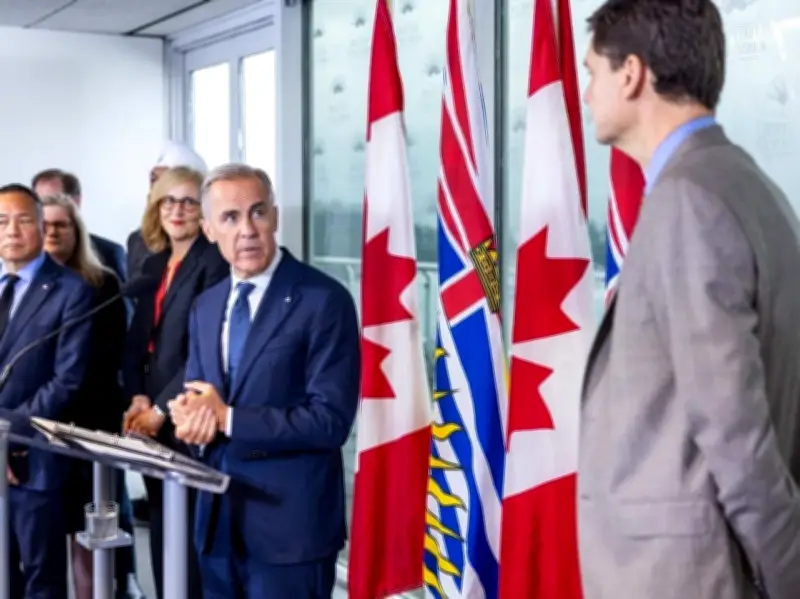
Prime Minister Mark Carney has revealed that building a new oil pipeline from Alberta to southern British Columbia will require a gusher of taxpayer money—up to $60 billion. The announcement has ignited criticism over why taxpayers must fund the project when Canada's oil and gas sector is predicted to collect an extra $90 billion in windfall profits this year due to energy supply shocks from the war in Iran and the closure of the Strait of Hormuz.
The Cost Breakdown
The pipeline, stretching 1,200 kilometers largely along the existing Trans Mountain Expansion (TMX) route, will cost between $35.2 billion and $43.7 billion. Of that, 90% will come from federal and Alberta taxpayers, with 10% initially—and up to 20% eventually—from Pembina Pipeline Corporation. However, the private sector component is not guaranteed unless certain conditions are met to Pembina's satisfaction. An additional $17 billion in taxpayer money will fund major infrastructure projects in British Columbia to secure Premier David Eby's non-opposition. Eby remains opposed but now accepts Ottawa's constitutional authority to approve the inter-provincial pipeline.
Political and Economic Context
The memorandum of understanding Carney signed with Alberta Premier Danielle Smith in November 2025 called for “construction of one or more private sector constructed and financed pipelines, with Indigenous Peoples co-ownership … with at least one million barrels a day of low emission Alberta bitumen, with a route that increases export access to Asian markets as a priority.” Critics argue the current plan strays far from that vision. The pipeline will end south of Vancouver at an expanded export terminal in Delta, B.C., for Asian markets, avoiding the northern coast where a federal tanker ban remains. It is contingent on the $20-billion Pathways Project to reduce oilsands emissions by 16 million tonnes annually, with costs shared by taxpayers and the Oil Sands Alliance.

Timeline and Opposition
The optimistic timeline: designation as a project of national interest by October 1, 2026; construction start by September 1, 2027; and completion between 2032 and 2034, pending regulatory approval and Indigenous participation. Environment and some Indigenous groups still oppose the pipeline. Carney argues the spending will leverage hundreds of billions in private investment, create hundreds of thousands of jobs, and ensure energy security amid U.S. protectionism. However, critics note that Carney, formerly the UN's special envoy for climate change and a leading advocate for carbon taxes, has angered both anti-fossil-fuel lobbyists and fossil-fuel proponents. Conservative Leader Pierre Poilievre and Premier Smith view the policy as vindication of their long-standing argument that Canada should not keep its resources in the ground when fossil fuels supply 86.2% of the world's energy.