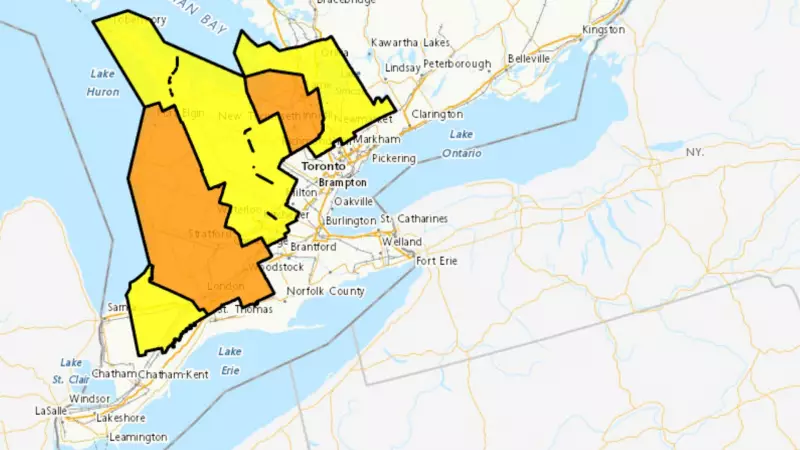
A powerful winter storm descended upon midwestern Ontario on December 30, 2025, prompting a series of road closures and severe weather warnings from Environment Canada. The system created hazardous travel conditions and blizzard-like weather across the region as the year drew to a close.
Widespread Weather Warnings and Impacts
Environment Canada had multiple weather watches and warnings active for parts of Ontario. The storm brought a dangerous combination of heavy snow, strong winds, and reduced visibility, leading to the classification of blizzard conditions in several areas. Authorities urged residents to avoid non-essential travel as roads became treacherous and visibility dropped significantly.
The severe weather prompted immediate action from municipal officials. In response to the accumulating snow, parking bans were enacted in the cities of Kitchener, Waterloo, Cambridge, and Wilmot Township. These bans are designed to allow snowplows to clear streets effectively and ensure emergency vehicle access. The storm's intensity even forced a local library to close its doors early for the safety of staff and patrons.

Regional Travel Disruptions and Safety Concerns
The blizzard conditions caused significant disruptions to regional transportation. Police reported incidents of dangerous driving, including a wrong-way driver spotted on Highway 7/8 in Kitchener, compounding the risks posed by the storm. The hazardous weather also had a ripple effect on air travel, with flight delays in Columbus, Ohio, ultimately pushing back the start of an Ottawa Senators hockey game.
This storm was part of a broader pattern of severe winter weather affecting Canada as 2025 ended. Other provinces, including New Brunswick and Quebec, dealt with their own crises, from fatal house fires to overwhelmed emergency rooms. The Ontario blizzard served as a stark reminder of the power of Canadian winters and the importance of heeding official warnings from Environment Canada.
Staying Safe During the Winter Storm
Officials reiterated standard safety advice for residents in the affected regions of midwestern Ontario. Key recommendations include:
- Avoid unnecessary travel until conditions improve and roads are cleared.
- If travel is essential, ensure your vehicle has a winter emergency kit.
- Obey all parking bans to facilitate efficient snow removal.
- Monitor local news and official Environment Canada alerts for updates.
The storm on December 30 underscored the rapid onset of severe winter weather and its capacity to disrupt daily life. With the new year approaching, authorities emphasized preparedness as the key to safety during the long Canadian winter season.