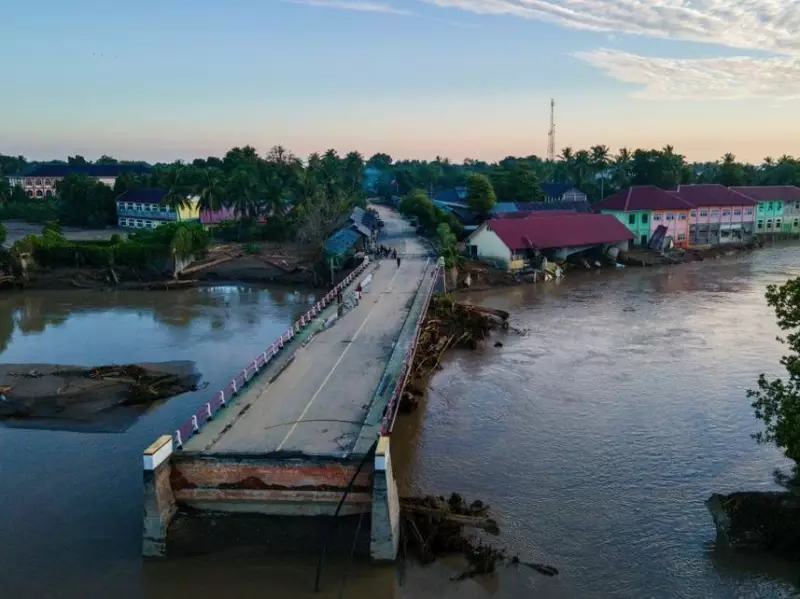
Military forces in Sri Lanka and Indonesia have been mobilized to assist victims of catastrophic flooding that has claimed close to 1,000 lives across four Asian nations in recent days. The disaster, triggered by separate severe weather systems, has caused widespread destruction and left hundreds more missing.
Torrential Rains Wreak Havoc Across Region
Last week, intense and prolonged rainfall battered the entire island of Sri Lanka and extensive areas of Indonesia’s Sumatra island, southern Thailand, and northern Malaysia. The resulting floods and landslides have created one of the deadliest natural disaster events in the region in recent years.
Indonesia's Mounting Crisis and Political Pressure
In Indonesia, the death toll has reached at least 442 people, with many others still unaccounted for. This marks the country's deadliest natural disaster since the 2018 Sulawesi earthquake and tsunami, which killed over 2,000.

Visiting North Sumatra on Monday, President Prabowo Subianto stated the government's immediate priority was to deliver essential aid. "There are several isolated villages that God willing, we can reach," he said, noting the deployment of helicopters and aircraft.
However, President Prabowo is facing growing calls to declare a national emergency. Unlike Sri Lanka's leader, he has not yet publicly appealed for international assistance. The Indonesian government has dispatched three warships carrying supplies and two hospital ships to the most severely affected zones, where many roads remain completely blocked.
Sri Lanka Appeals for International Help
Sri Lanka has been equally devastated, with authorities reporting at least 334 fatalities as of Sunday. The disaster was triggered by Cyclone Ditwah, which caused massive flooding and landslides.
President Anura Kumara Dissanayake has declared a state of emergency and explicitly called for international aid. Military helicopters are being used to reach communities cut off by the disaster. In a national address, Dissanayake called this "the largest and most challenging natural disaster in our history," vowing to "build a better nation than what existed before."
The scale of damage in the central region is only now becoming clear as workers clear roads obstructed by mudslides and fallen trees. The losses represent the worst for Sri Lanka since the 2004 Asian tsunami.
On the Ground: Scenes of Destruction and Resilience
In affected areas like Sungai Nyalo village in West Sumatra, floodwaters have receded, leaving behind a landscape blanketed in thick grey mud that coats homes, vehicles, and crops. Despite the danger, many residents are reluctant to evacuate. "Most villagers chose to stay; they didn’t want to leave their houses behind," explained Idris, a 55-year-old local.
As the death toll approaches the grim milestone of 1,000, the focus across the region remains on search, rescue, and delivering life-saving aid to survivors, with military assets playing a crucial role in the ongoing relief efforts.