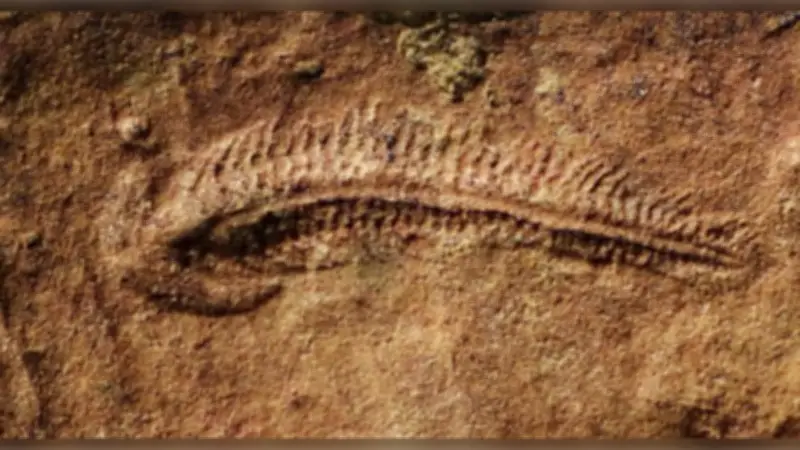
A fossil of the ancient worm-like creature Spriggina floundersi, collected in South Australia, may represent the oldest known right-handed animal, according to new research. The specimen, studied by scientists including Scott Evans of the American Museum of Natural History, provides evidence of handedness in a creature that lived over 550 million years ago.
Discovery and analysis of the fossil
The fossil was found in the Ediacara Hills of South Australia, a region famous for its exceptionally preserved Precambrian fossils. Researchers examined the asymmetrical features of Spriggina floundersi, noting a consistent right-sided bias in its body plan. This suggests that the creature exhibited a form of handedness, a trait previously thought to have evolved much later.
According to Evans, the fossil shows a clear preference for right-side orientation, making it the earliest known example of handedness in the animal kingdom. The study was published in a peer-reviewed journal and has sparked interest among paleontologists studying the evolution of asymmetry.

Implications for understanding ancient life
Handedness, or lateralization, is common in modern animals, including humans, where the right hand is often dominant. The discovery in Spriggina floundersi pushes back the origin of this trait by hundreds of millions of years. The creature lived during the Ediacaran period, before the Cambrian explosion of complex life.
“This finding suggests that handedness may have been an ancient adaptation, possibly related to feeding or locomotion,” Evans explained. The fossil’s right-sided asymmetry is preserved in its segmented body and feeding structures.
Significance of the Ediacaran fossils
The Ediacara biota, including Spriggina floundersi, represents some of the earliest complex multicellular organisms. These fossils provide crucial insights into the evolution of body plans and behaviors. The new study adds handedness to the list of traits that appeared early in animal evolution.
The fossil is housed at the American Museum of Natural History, where it continues to be studied. Researchers hope to find additional specimens to confirm whether handedness was widespread among Ediacaran organisms.